
All-on-4 vs All-on-6 in Turkey: Which Do You Need?
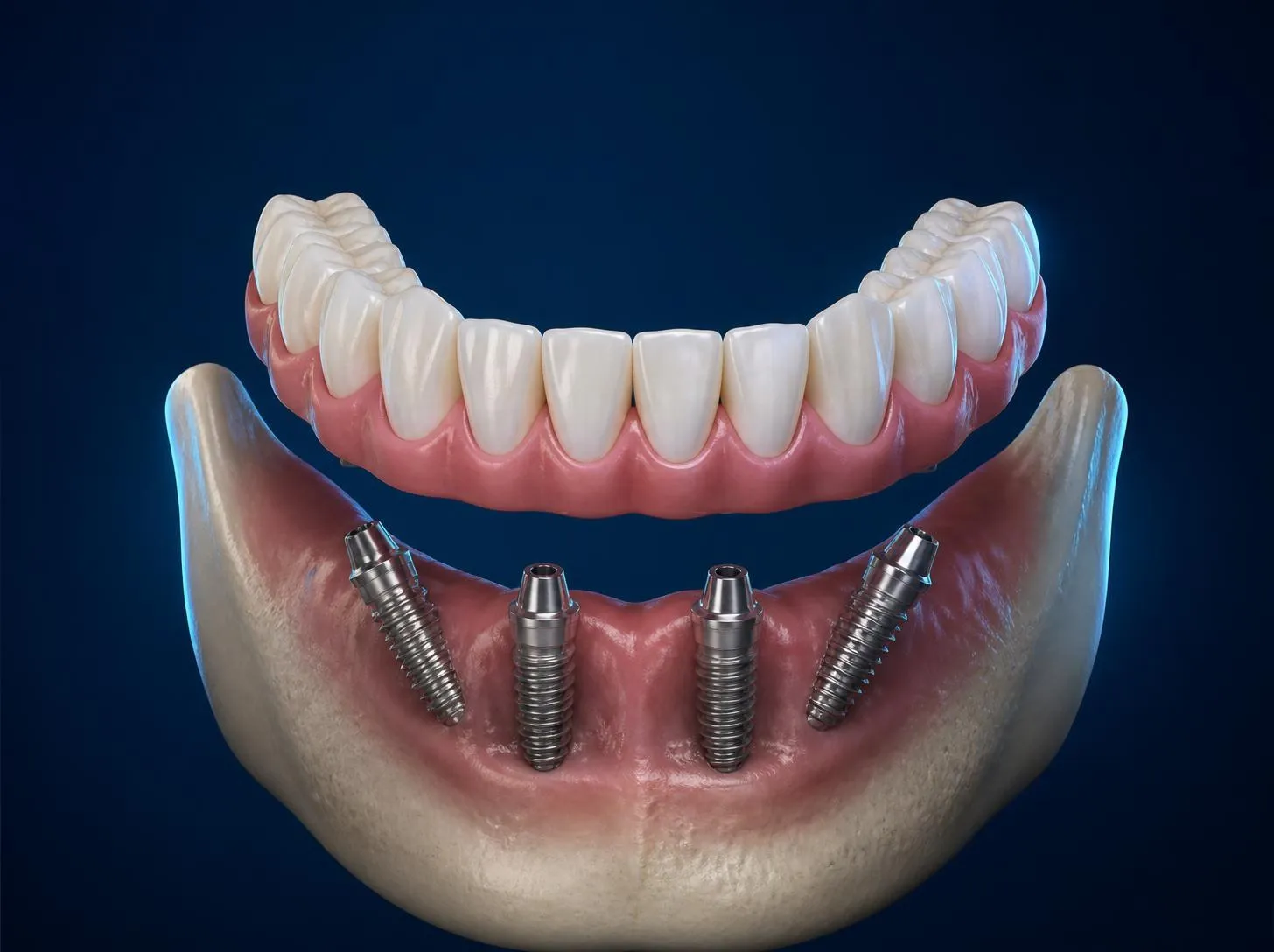
All-on-4 and All-on-6 both replace a whole arch of teeth with one fixed bridge held on implants. All-on-4 uses four implants, with the back two angled, and often avoids a bone graft. All-on-6 uses six, spreading the load further. Research on upper-jaw cases shows similar survival for both, so the right one depends on your bone, not on which sounds better.
What Are All-on-4 and All-on-6?
Both are ways of replacing every tooth in a jaw with a fixed bridge. Instead of one implant per tooth, a small number of implants hold the whole arch.
The bridge is screwed onto the implants, so it does not come out like a denture. You brush it, eat with it and smile with it like a set of natural teeth.
The names simply describe the number of implants per jaw: four, or six.
So what changes with two extra implants?
What Is the Difference Between All-on-4 and All-on-6?
The main difference is how the implants are placed and how the biting force is shared.
| All-on-4 | All-on-6 | |
|---|---|---|
| Implants per jaw | 4, the back two angled | 6, spread along the jaw |
| Bone needed | Less, often no bone graft | More, sometimes a graft |
| How load is shared | Over four implants | Over six implants |
| Trips to Turkey | Two, three to six months apart | Two, three to six months apart |
| Typical price with UK Smiles | From around £3,200 per jaw | From around £3,400 per jaw |
| Typical UK price | Around £8,000 to £14,000 per jaw | Around £10,000 to £18,000 per jaw |
Who Is All-on-4 Best For?
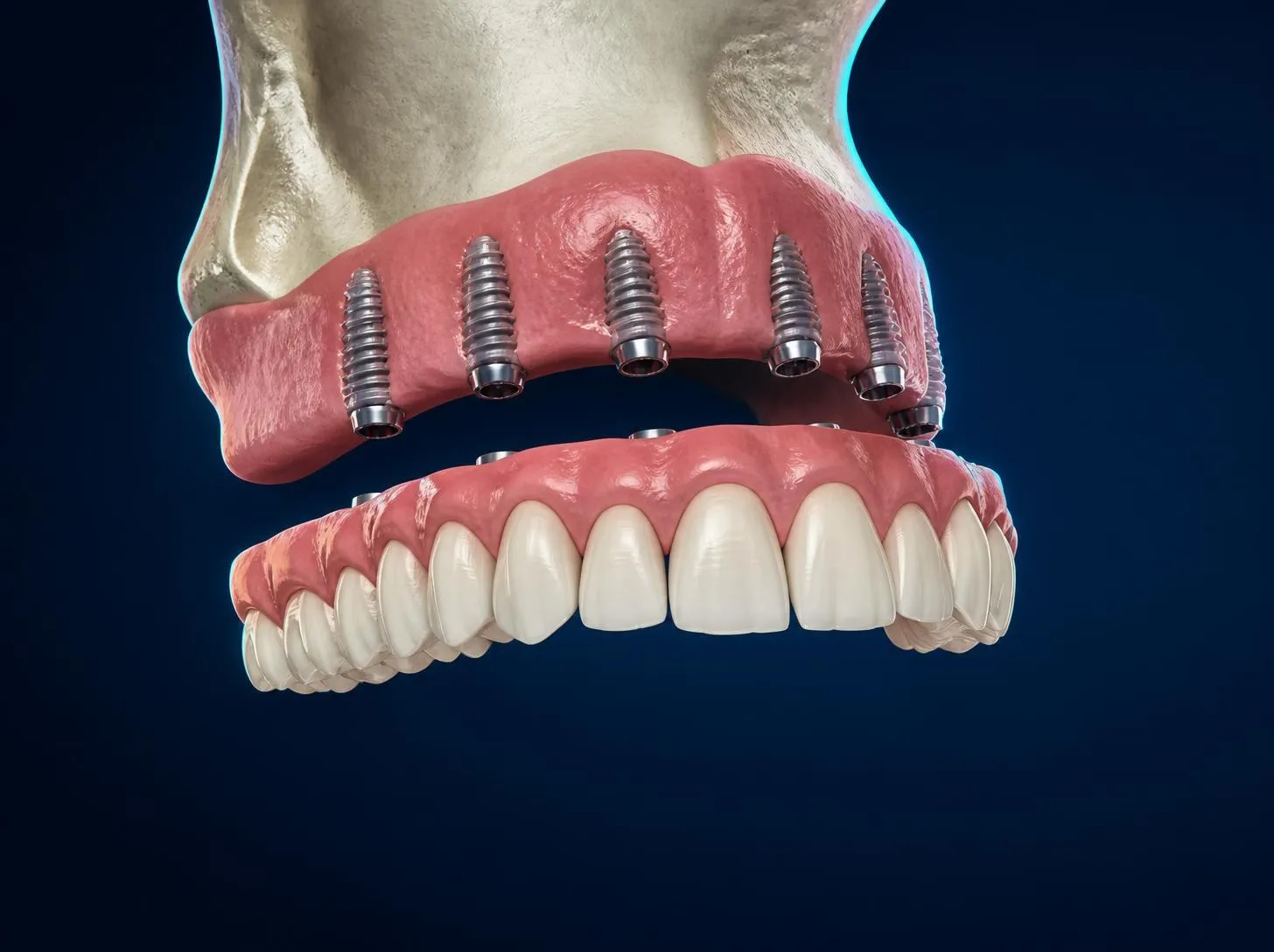
In All-on-4, the two front implants go in straight and the two back implants are tilted. Tilting lets them anchor into the denser bone towards the front of the jaw.
That matters because bone shrinks once teeth are lost, especially after years of wearing dentures. All-on-4 is often the way to get fixed teeth without a bone graft first.
- People who have worn dentures for years and have lost bone at the back of the jaw.
- People who want to avoid a bone graft and the extra healing time it brings.
- People who want the lowest full-arch price. Fewer implants means a lower starting cost.
Our page on All-on-4 dental implants in Turkey covers the treatment in more detail.
Who Is All-on-6 Best For?
All-on-6 places six implants along the jaw. With more support underneath, each implant carries less of the load.
- People with good bone volume along the jaw, or who are happy to have a graft if needed.
- Heavy biters or people who grind, where spreading the force over more implants gives extra margin.
- Upper jaws, where the bone is often softer and some dentists prefer more implants.
- People who want a back-up. If one implant ever has a problem, there are more left holding the bridge.
For the full picture on six-implant bridges, see our guide to All-on-6 implants in Turkey.
But are six implants actually more reliable than four?
How Do They Compare With Dentures and Single Implants?
Most people weighing up All-on-4 or All-on-6 are also wondering about the alternatives. Here is how the main options for a full jaw compare.
| Option | Fixed or removable | Implants per jaw | Best for |
|---|---|---|---|
| Full denture | Removable | None | The lowest cost, if you are happy with a removable plate |
| Implant-retained denture | Removable, clips onto implants | Usually 2 to 4 | A more secure denture without a full fixed bridge |
| All-on-4 | Fixed | 4 | Fixed teeth with less bone, often without a graft |
| All-on-6 | Fixed | 6 | Fixed teeth with more support, where the bone allows |
| One implant per tooth | Fixed | Up to 12 or more | Rarely needed for a whole jaw; more surgery and cost |
Dentures rest on the gum and can move when you eat or speak. A fixed bridge on implants does not, which is why so many denture wearers choose All-on-4 or All-on-6.
Does It Matter Which Jaw?
Yes. The upper and lower jaws are built differently, and that affects the plan.
- Upper jaw. The bone is usually softer and the sinuses sit just above the back teeth. Angled implants in All-on-4 can avoid the sinuses, while some dentists prefer more implants in softer bone.
- Lower jaw. The bone is usually denser, but a nerve runs through the back of the jaw. Angling the back implants keeps them clear of it.
- Both jaws. Many people have both done. They can have the same number of implants or a different number in each jaw, depending on the scan.
What Does the Research Say?
A 2024 systematic review and meta-analysis in Heliyon compared fixed upper-jaw bridges on four implants with bridges on six.
Implant survival was 98.5% with four implants and 97% with six. The bridges themselves survived at 99.8% and 99.6%. The authors found no significant difference in implant or bridge survival between the two.
They did find significantly more bone loss around the implants in the four-implant group, though it was still small, around 1 mm against 0.5 mm, which is one reason a dentist might lean towards six when the bone allows.
The takeaway: both work well. The choice comes down to your bone, your bite and your budget, not to six being "better" by default.
Why Do Full-Arch Implants Take Two Trips?
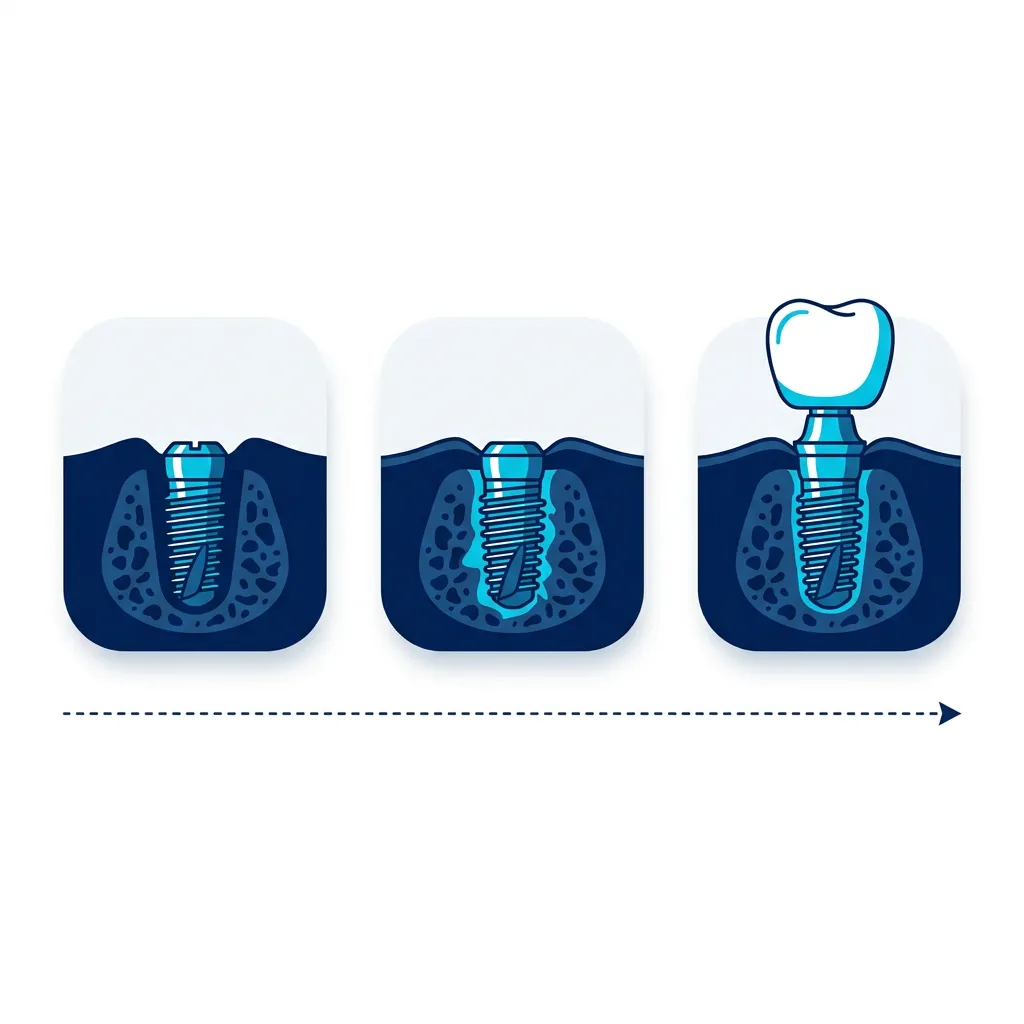
Implants need time to fuse with the bone before they carry a permanent bridge. That healing usually takes three to six months.
- First trip. Any remaining teeth that need to go are removed, the implants are placed, and fixed temporary teeth are often fitted so you go home with a full smile.
- Healing at home. Over three to six months the implants fuse with the bone. You eat soft food at first and keep up with cleaning.
- Second trip. The final bridge is made and fitted, checked for bite and comfort, and you fly home with your permanent teeth.
For a day-by-day view, read our guide to how long dental implant treatment in Turkey takes. If you have seen "teeth in a day" offers, our article on whether a tooth implant can be done in one day in Turkey explains what that really means.
What Is Recovery Like, Week by Week?
Recovery is much the same for All-on-4 and All-on-6. Everyone heals differently, so treat this as a typical guide and follow your own dentist's instructions.
| When | What to expect | What you can eat |
|---|---|---|
| First 2 to 3 days | Swelling, some bruising and soreness, managed with painkillers and cold packs | Liquids and very soft foods, nothing hot |
| First 2 weeks | Swelling settles and stitches dissolve or are removed | Soft foods you can mash with a fork |
| Weeks 2 to 8 | Back to normal daily life, with the temporary teeth | Soft foods, avoiding anything hard or very chewy |
| Months 3 to 6 | Implants fusing with the bone, ready for the second trip | Gradually more normal, still gentle on the temporaries |
| After the final bridge | Permanent teeth fitted and the bite checked | Most normal foods |
Most people are back at work within a few days of flying home, depending on the job.
How Much Do All-on-4 and All-on-6 Cost in Turkey?
With UK Smiles, All-on-4 typically costs from around £3,200 per jaw and All-on-6 from around £3,400 per jaw, with your hotel in Lara and VIP airport transfers included.
In the UK, the same treatment typically costs around £8,000 to £14,000 per jaw for All-on-4 and £10,000 to £18,000 per jaw for All-on-6.
The final figure depends on the implant brand, the material of the bridge and whether you need extra work such as a bone graft. MegaGen implants are standard, with Straumann, Nobel Biocare and Osstem also available.
Having both jaws done roughly doubles the total, and both are often treated on the same two trips.
For the wider picture, see our page on dental implants in Turkey and their prices.
What Are the Teeth on Top Made Of?
The temporary teeth fitted on the first trip are lighter and simpler, designed to see you through healing.
The final bridge is made once the implants have fused. Zirconia is a popular choice for the permanent bridge because it is very strong and resists staining.
Your treatment plan will name the material for both the temporary and the final teeth, so you know exactly what you are getting.
How Does the Dentist Decide Between Four and Six?
The decision comes from a 3D scan of your jaw, not a brochure. The dentist looks at:
- Bone height and width, and where the bone is strongest.
- Upper or lower jaw, since the bone and the nerves and sinuses nearby differ.
- How hard you bite and whether you grind.
- Your general health, including smoking and conditions such as diabetes that affect healing.
- Your budget and timing, including whether you want to avoid a graft.
Worried about safety? Our honest guide to whether dental implants in Turkey are safe covers what to check before you book.
Who May Not Be Suitable?
Most adults who have lost most or all of their teeth can have full-arch implants. Some things mean the dentist will want to check more carefully first, or plan differently.
- Smoking. It slows healing and raises the risk of implant problems. Stopping, at least around the surgery, makes a real difference.
- Diabetes that is not well controlled. Healing is slower. Well-controlled diabetes is usually fine.
- Some medicines. Bone-strengthening drugs for osteoporosis, blood thinners and some cancer treatments can affect surgery and healing; bone-strengthening drugs can raise the risk of a rare jaw-bone healing problem. Mention every medicine you take.
- Radiotherapy to the head or neck. This needs specialist planning.
- Very severe bone loss. If there is too little bone even for angled implants, the dentist may suggest a bone graft first, or refer you for specialist options such as zygomatic implants, which anchor in the cheekbone.
Be completely open about your health on the medical form. It is there to keep you safe, not to turn you away.
What Are the Risks, and How Do You Reduce Them?
Full-arch implants are surgery, so there are risks, whichever option you choose. Knowing them helps you lower them.
- An implant not fusing. Occasionally an implant does not bond with the bone. Not smoking and following the healing instructions both help.
- Infection around the implants. Gum inflammation around implants can lead to bone loss over time. Daily cleaning under the bridge and regular check-ups are the best protection.
- Chipped or broken teeth on the bridge. More likely if you grind. A night guard protects the bridge.
- Swelling and discomfort after surgery. Normal for the first few days, and the reason you start on soft food.
How Do You Look After a Full-Arch Bridge?
A fixed bridge cannot decay, but the gum and bone around the implants still need looking after.
- Brush twice a day, including along the gum line where the bridge meets the gum.
- Clean under the bridge every day with a water flosser, interdental brushes or special floss.
- Wear a night guard if you grind.
- Keep up regular check-ups and hygiene visits, so any gum problems around the implants are caught early.
Full-Arch Implants With UK Smiles
Send us a recent X-ray or 3D scan, or we can arrange one, and the dentist will tell you whether All-on-4 or All-on-6 suits your jaw, and why.
The Dental Centre gives a written warranty of 20 years on the implants once they have fully fused with the bone, and 5 years on the teeth fitted on top.
There is nothing to pay up front, so you can book with complete peace of mind. All you need to do is book your flights and fill in our booking form, and we will sort the rest.
Frequently Asked Questions
-
Is All-on-6 better than All-on-4?
Not automatically. A 2024 review of upper-jaw cases found implant and bridge survival were very similar with four or six implants. All-on-6 spreads the biting force over more implants and may suit people with good bone volume, while All-on-4 can often avoid a bone graft. The right choice depends on your scan.
-
How much does All-on-4 cost in Turkey compared with All-on-6?
With UK Smiles, All-on-4 typically costs from around £3,200 per jaw and All-on-6 from around £3,400 per jaw. In the UK, the same treatment typically costs around £8,000 to £14,000 per jaw for All-on-4 and £10,000 to £18,000 for All-on-6.
-
How many trips to Turkey do I need for All-on-4 or All-on-6?
Two trips, three to six months apart. The implants are placed on the first trip, usually with fixed temporary teeth, and your final bridge is fitted on the second once the implants have fused with the bone.
-
Do I need a bone graft for All-on-4?
Often not. In All-on-4 the two back implants are angled to use the stronger bone towards the front of the jaw, which is why it is commonly chosen for people who have lost bone after years of wearing dentures. A 3D scan confirms whether a graft is needed.
-
Will I have teeth while the implants heal?
In most cases, yes. Fixed temporary teeth are often fitted on the first trip, so you go home with a full set while the implants heal underneath.
-
How long do All-on-4 and All-on-6 implants last?
The implants themselves can last decades with good care. The bridge on top typically needs replacing after some years. With UK Smiles, the Dental Centre gives a written warranty of 20 years on the implants once they have fully fused with the bone, and 5 years on the teeth fitted on top.
-
Can I have All-on-4 on one jaw and All-on-6 on the other?
Yes. Each jaw is planned on its own scan, so it is common to have a different number of implants in the upper and lower jaw.
-
How soon can I go back to work after All-on-4 or All-on-6?
Most people are back at work within a few days of flying home, depending on the job. Swelling and soreness are usually worst in the first two to three days.
-
Can I get All-on-4 if I have worn dentures for years?
Often, yes. Long-term denture wearers commonly lose bone at the back of the jaw, and All-on-4 is designed to work with the bone that remains. A 3D scan shows whether you have enough.
Sources
- Sharaf MA, Wang S, Mashrah MA, Xu Y, Haider O, He F. Outcomes that may affect implant and prosthesis survival and complications in maxillary fixed prosthesis supported by four or six implants: A systematic review and meta-analysis. Heliyon, 2024.