Dental Implants in Turkey

At UK Smiles, we arrange dental implants at the Dental Centre in Antalya, with consultations at our UK office in Leeds and full support once you are home. Whether you need to replace one missing tooth, several teeth or a full arch, implants give you a fixed, natural-looking replacement. Your price is fixed in writing before you book, and the implants carry a 20-year warranty once they have fused with the bone. The smile you deserve, from the name you can trust.

  • Single, multiple or full-arch implants
  • MegaGen as standard from £270, with four other brands available
  • UK-based aftercare and support
A UK Smiles patient smiling with a drink in a hotel garden in Antalya

What Are Dental Implants?

A dental implant is a small titanium post placed into the jawbone to replace the root of a missing tooth, topped with a crown. In Turkey, dental implants cost far less than in the UK, which is why so many patients travel for treatment.

Quick answer · Updated

A single dental implant in Turkey typically costs from around £270 with UK Smiles, using a MegaGen implant. Treatment takes two trips, three to six months apart, while the implant fuses with the bone.

Price
From around £270 per MegaGen implant
Trips
Two, three to six months apart
Implant brand
MegaGen as standard (£270), with Osstem, Neodent, Nobel Biocare and Straumann also available
Warranty
In writing: 20 years on the implants once they have fully fused with the bone, and 5 years on the crowns or teeth fitted on top
Full arch
All-on-4 from around £3,200 per jaw, All-on-6 from around £3,400 per jaw

Clinically reviewed by Dr Mehmet Kaplan, Head Dentist, 22 years' experience

Get My Free Quote

Free and no obligation

Real result

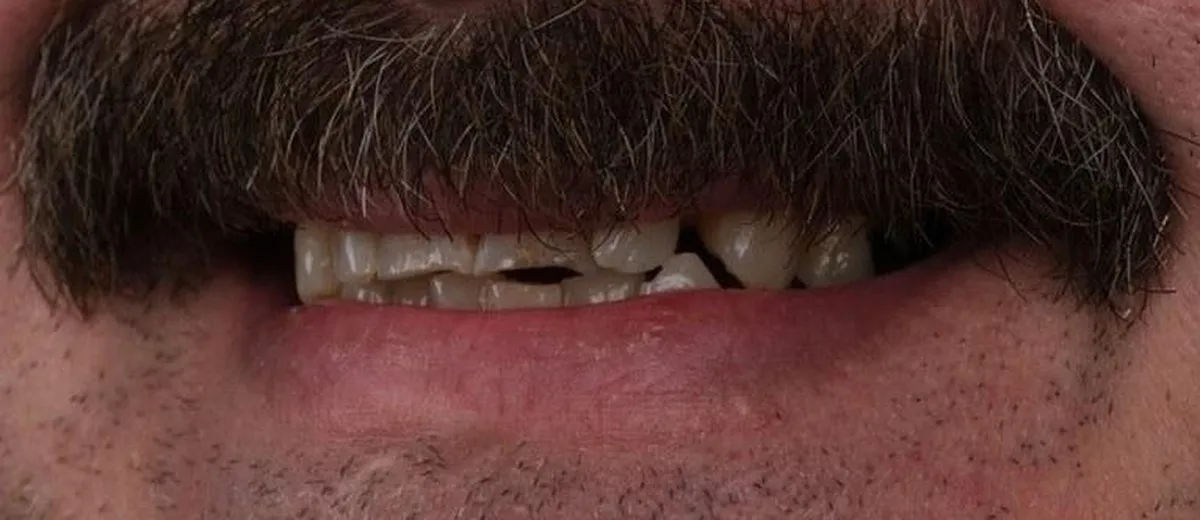
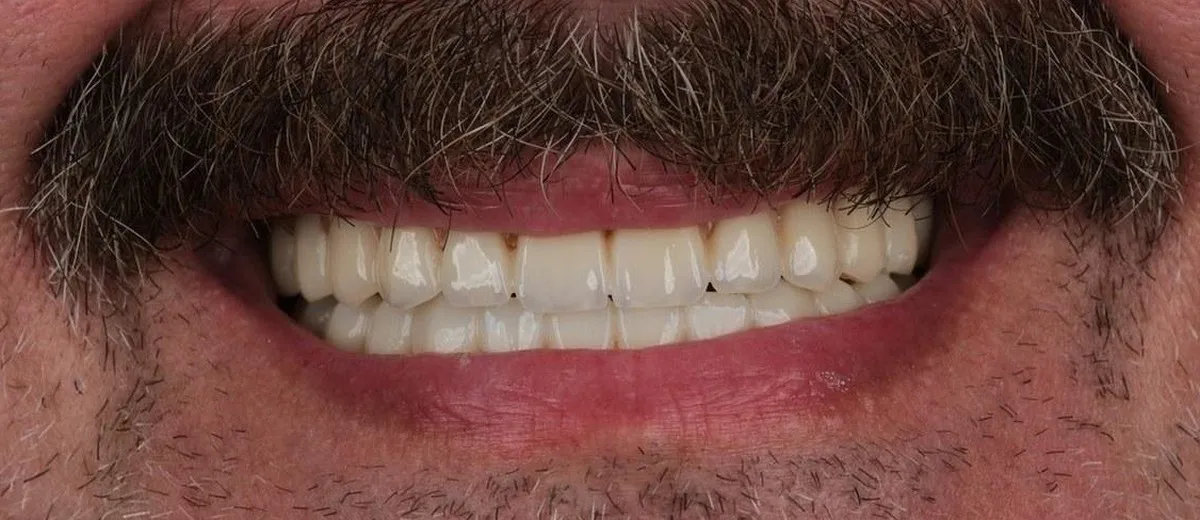
Nick's before and after

Drag the handle to compare. Same patient, same clinic, photographed before treatment and after the final fit.

Nick before All-on-6, 12 implants and 24 zirconia crowns with UK Smiles

Nick · All-on-6, 12 implants and 24 zirconia crowns · Read the full story

How it works

How a Dental Implant Works

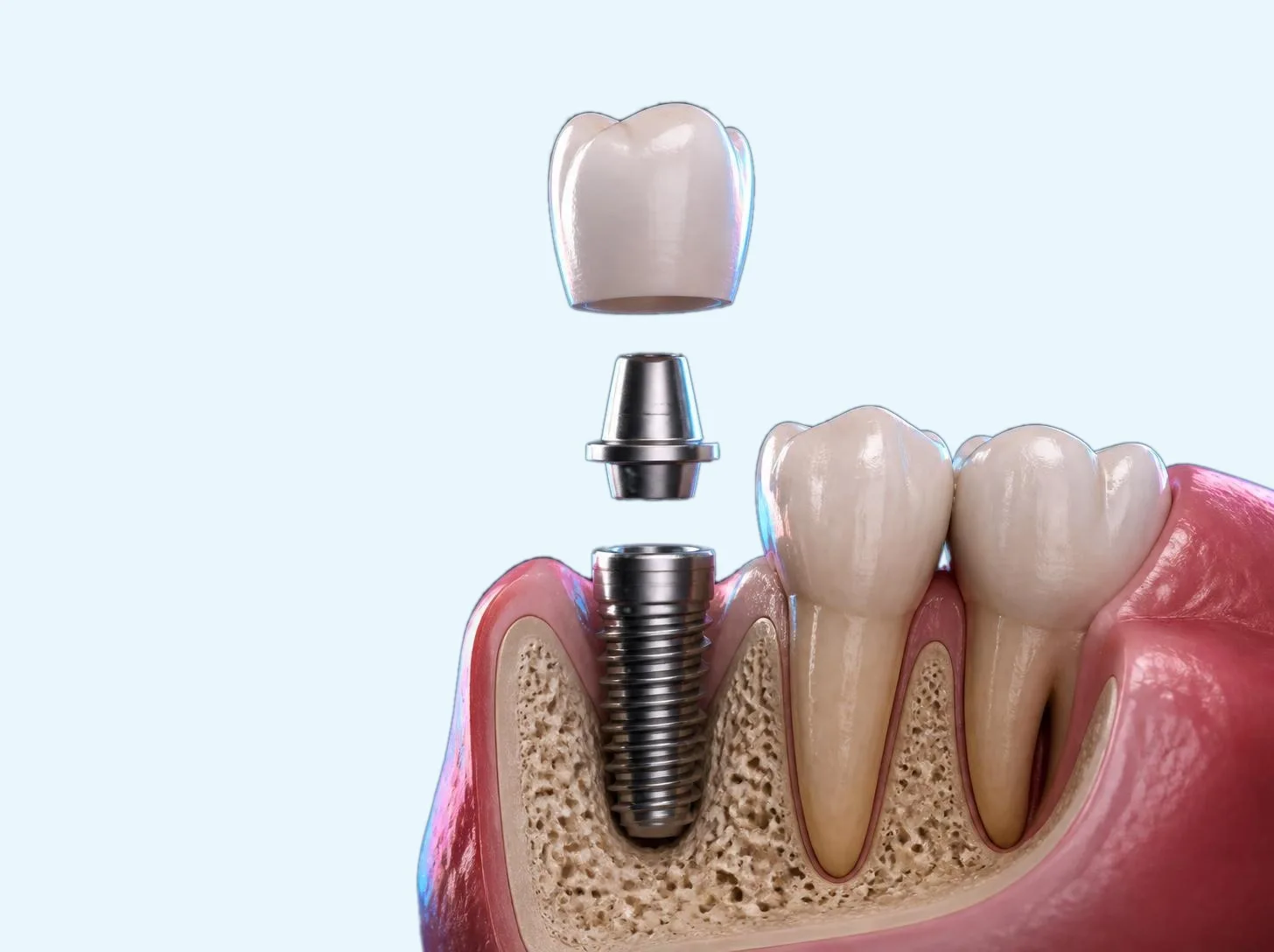
An implant replaces a missing tooth from the root up, in three parts.

3D illustration of a dental implant in the jawbone, with the abutment and crown shown above it
Illustration, not to scale
  1. Crown

    The visible tooth, made to match the teeth around it.

  2. Abutment

    The small post that joins the implant to the crown.

  3. Titanium implant

    Replaces the root and bonds with the jawbone as it heals.

  4. Your natural teeth

    The teeth either side are left untouched.

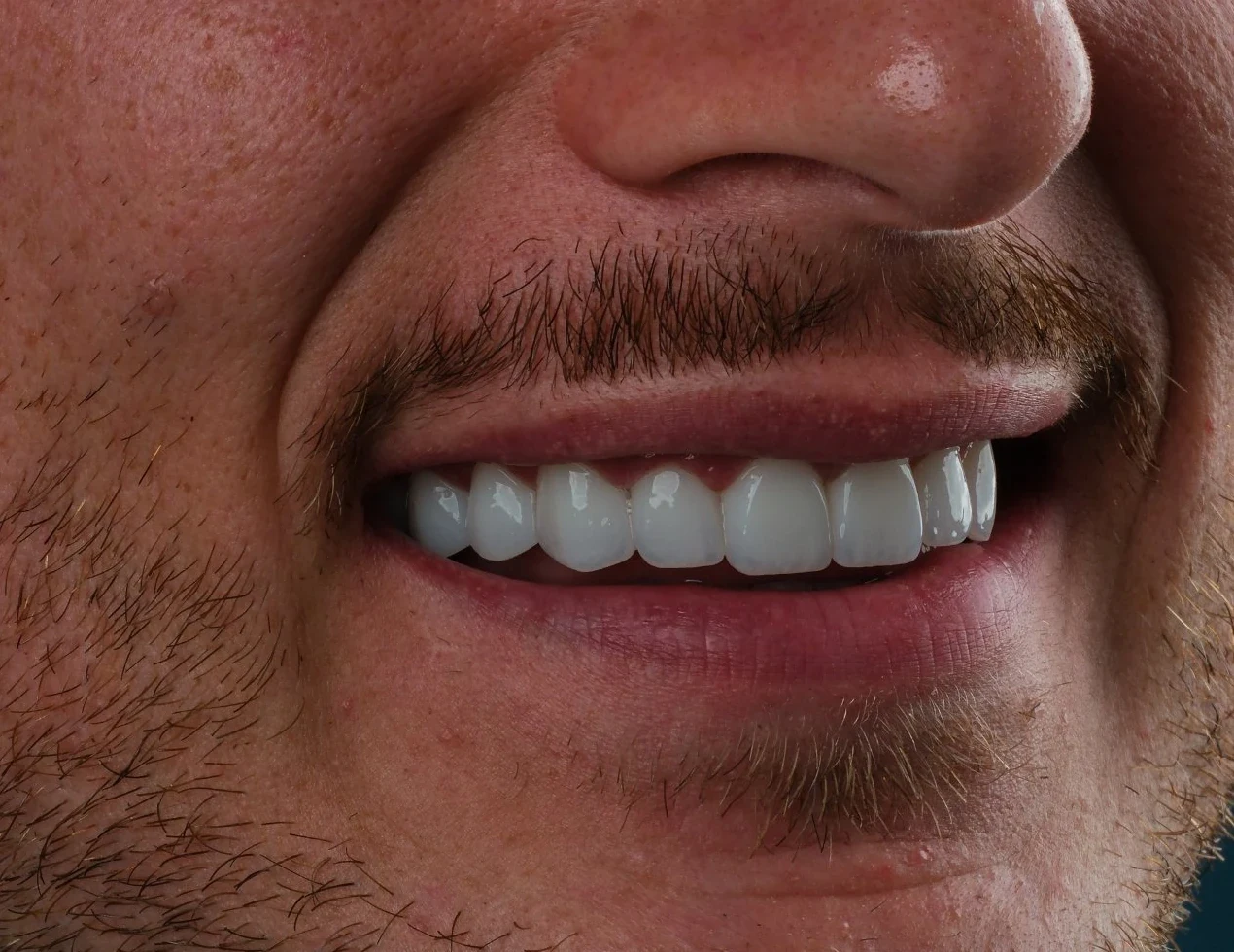
A real UK Smiles patient

Close-up of our founder Sam's smile 1234567

Designed around you

The Details

  1. Texture

    Natural enamel has fine ridges and lobes that scatter light. We build that micro-texture into every crown, so the smile looks alive in daylight and on camera, never flat.

  2. Gum Line

    The best smiles show just 1 to 2mm of gum. We set each tooth length and the gum arch (the zenith) over every tooth, so you show the right amount, not a gummy smile.

  3. Translucency

    Real teeth let light through at the tips. Our layered zirconia copies that incisal translucency, so the edges glow softly instead of looking like a solid white block.

  4. Proportion

    Front teeth about four-fifths as wide as they are long, the laterals a touch smaller, the canines matching the centrals, all chosen to suit your face shape.

  5. Shade

    Matched to your skin tone and the whites of your eyes, with a natural gradient from a brighter edge to a warmer gum end. Bright, but believable.

  6. Smile Line

    The top edges follow the curve of your lower lip. Widening the arch slightly fills the dark corners (the buccal corridor) for a fuller, better proportioned smile.

  7. Bite

    Your occlusion, how the top and bottom teeth meet, is balanced too. An even bite spreads the load across the implants and the teeth on top, protects them from chipping, eases jaw strain and keeps eating and talking comfortable.

Texture. Natural enamel has fine ridges and lobes that scatter light. We build that micro-texture into every crown, so the smile looks alive in daylight and on camera, never flat.

Gum Line. The best smiles show just 1 to 2mm of gum. We set each tooth length and the gum arch (the zenith) over every tooth, so you show the right amount, not a gummy smile.

Translucency. Real teeth let light through at the tips. Our layered zirconia copies that incisal translucency, so the edges glow softly instead of looking like a solid white block.

Proportion. Front teeth about four-fifths as wide as they are long, the laterals a touch smaller, the canines matching the centrals, all chosen to suit your face shape.

Shade. Matched to your skin tone and the whites of your eyes, with a natural gradient from a brighter edge to a warmer gum end. Bright, but believable.

Smile Line. The top edges follow the curve of your lower lip. Widening the arch slightly fills the dark corners (the buccal corridor) for a fuller, better proportioned smile.

Bite. Your occlusion, how the top and bottom teeth meet, is balanced too. An even bite spreads the load across the implants and the teeth on top, protects them from chipping, eases jaw strain and keeps eating and talking comfortable.

How a fixed full arch works

All-on-4 or All-on-6: where the implants go

A full arch of fixed teeth does not need an implant for every tooth. Four or six implants, placed where the bone is strongest, carry a single zirconia bridge. Tap to compare.

Upper arch seen from below, not to scale. Cyan dots are implants; the tinted band is the fixed zirconia bridge.

All-on-4

The two back implants are tilted so they anchor in the dense bone at the front of the jaw and stay clear of the sinuses (upper) and the nerve (lower). That angle is what lets four implants do the job without bone grafts.

Implants per arch
4 (2 straight, 2 angled)
Teeth on the bridge
12
Back implants
Tilted about 30 degrees
Bone grafting
Usually avoided
Suits
Less bone at the back, faster and simpler surgery

Which one is right for you comes from your CT scan, not a brochure. The 3D scan on Day 2 shows how much bone you have at the back of each jaw and where the sinus and the nerve sit. Plenty of bone further back and a strong bite point to All-on-6; less bone at the back, or a wish to avoid grafting, points to All-on-4 with its angled implants. The surgeon talks you through it before anything is decided.

Get your exact price

Answer a few quick questions and the team will come back to you with exactly what you need and what it costs, fixed in writing. Free, no obligation, and nothing to pay up front.

  • 4.9 from 310 reviews
  • Licensed dental centre in Antalya
  • UK office in Leeds
Get My Exact Price

Free online quote form

Dental Implant Prices in Turkey: The Full Breakdown

Around £445 a tooth

A single MegaGen implant with its abutment and a zirconia crown typically costs around £445 with UK Smiles. The same tooth typically costs £2,000 to £3,000 privately in the UK.

Dental implant costs in Turkey compared with typical UK private prices. Each tooth includes the implant, abutment and zirconia crown.
What you need Turkey with UK Smiles Typical UK price
1 tooth: MegaGen implant, abutment and zirconia crownAround £445£2,000 to £3,000
2 teeth on 2 implantsAround £890£4,000 to £6,000
3 teeth on 3 implantsAround £1,335£6,000 to £9,000
4 teeth on 4 implantsAround £1,780£8,000 to £12,000
All-on-4, one jawAround £3,200£8,000 to £14,000
All-on-4, both jawsAround £6,400£16,000 to £28,000
All-on-6, one jawAround £3,400£10,000 to £18,000
All-on-6, both jawsAround £6,800£20,000 to £36,000

Single tooth price by implant brand

MegaGen is our standard. If you would prefer another brand, this is what one tooth typically costs, including the implant, abutment and zirconia crown.

Implant brandImplant and abutmentWith zirconia crown
MegaGen (our standard)£270Around £445
Osstem£400Around £575
Neodent (Straumann Group)£475Around £650
Nobel Biocare£600Around £775
Straumann£800Around £975

What is included, and what is not

  • Included: the implant, abutment and zirconia crown, your 3D scan and X-rays, local anaesthetic, and a written warranty. Full-arch packages also include your hotel, VIP transfers and medication on both trips.
  • Fixed before you fly: your price is set out in writing before you book, tooth by tooth.
  • Not included: your flights. You need two trips a few months apart, so allow for two sets.
  • Only if your scan shows you need them: a bone graft (around £130 per cc), a sinus lift (around £120 to £140), extractions (around £50 a tooth) and sedation (around £200 an hour). Our guide to bone grafts and sinus lifts in Turkey explains when they are needed.

Prices are typical UK Smiles prices for 2026. UK figures are typical private prices and vary by practice. Your own price depends on your scan and is confirmed in writing before you book.

How much could you save?

UK vs Turkey Savings Calculator

Tap your treatment, then how many teeth. The calculator works out what you would save against a typical UK private price.

The UK figure is a typical price per crown at a UK cosmetic dentist, checked October 2026. Your written plan gives your exact figure.

Source: UK private dental price guides for crowns and veneers, 2026.

Savings Calculator

20 zirconia crowns

UKTypical cosmetic dentist £0
TurkeyUK Smiles package £0
You save0% less £0

1Treatment

2How many teeth?

Packages include your hotel in Lara and airport transfers.

The UK figure is a typical price per crown at a UK cosmetic dentist, checked October 2026. Your written plan gives your exact figure.

Source: UK private dental price guides for crowns and veneers, 2026.

How Much Do Dental Implants Cost in Turkey?

A single tooth, made up of a MegaGen implant, its abutment and a zirconia crown, typically costs around £445 with UK Smiles. In the UK, the same tooth typically costs £2,000 to £3,000. The implant and abutment on their own are £270, and the full price breakdown shows every option side by side. Full-arch options like All-on-4 start from £3,200 per jaw in Turkey, compared with around £8,000 to £14,000 per jaw in the UK. For every treatment, see our full Turkey dental price list.

Our full-arch packages roll the implants, zirconia teeth, hotel, transfers, X-rays and medication into one price covering both trips. Flights are booked separately. The saving comes from lower running costs and the exchange rate, not the implant itself, with brands like MegaGen used the same way they are worldwide. Below is what UK Smiles charges directly:

  • All on 6

    £6,800

    • 6 x Upper MegaGen Implants
    • 6 x Lower MegaGen Implants
    • 24 Zirconium Crowns
    • Hotel
    • VIP airport transfers
    • Patient co-ordinator
    • X-rays
    • Medication
    • (All for both trips)
    Get My Price

Dental Implant Procedure

  1. Consultation and 3D Scan

    Plan your implant placement.

  2. Implant Surgery

    Placement of titanium posts into the jawbone.

  3. Healing Phase

    Three to six months osseointegration.

  4. Final Restoration

    Crowns, bridges, or fixed full arch attached.

Send My Photos for a Quote

Send a few photos, we do the rest

What happens on the day

Implant day, hour by hour

This is the first trip, when the implant goes in. The second trip, three to six months later, is when the crown is fitted, and it is a much gentler week.

  1. Before you start

    Scan, plan, and the sedation question

    The 3D scan from your consultation is checked against your mouth and the plan is confirmed. Local anaesthetic is standard. If you are anxious, the clinic can arrange sedation for suitable patients: you are deeply relaxed and most people remember very little, but you keep breathing for yourself and there is no general anaesthetic.

    How it feels A conversation. You can still change your mind about sedation at this point.

  2. 0 to 20 min

    Numbing

    Numbing gel on the gum, then local anaesthetic. The dentist waits until the area is completely numb before starting, and tops it up during the procedure if you feel anything.

    How it feels A scratch, then nothing. If you have chosen sedation, this is roughly where your memory of the day goes hazy.

  3. 30 to 60 min per implant

    Placing the implants

    A small opening is made in the gum, a hole is drilled in the bone and the MegaGen implant is screwed into place. The gum is closed over it with a stitch or two, or a small healing cap is fitted.

    How it feels Pressure, vibration and some pushing. No sharp pain. Most people say it was less than they expected.

  4. That evening

    Back at the hotel

    The numbness wears off over two to four hours. The clinic gives you aftercare instructions for pain relief, cold packs, soft food and not smoking. Swelling and bruising are normal and usually peak on day two or three, then fade. Do not spit, rinse hard or use a straw for the first day.

    How it feels Sore and swollen rather than in pain, like the day after a tooth out. Follow the aftercare instructions and rest.

  5. Days 2 to 5

    Checks, then rest

    The clinic checks the site and makes any adjustments needed. The rest of the week is yours, gently.

    How it feels Improving daily. Keep the food soft and let it heal.

  6. 3 to 6 months later

    Trip two: your finished teeth

    The bone has grown around the implant. If the gum was closed over the implant, a small opening uncovers it under local anaesthetic. Over five nights the abutment and the zirconia crown are fitted, tried in and adjusted. No major surgery.

    How it feels The easy trip. Trial fit, final fit and a holiday.

Timings are typical for a straightforward case. If bone grafting is needed the healing time is longer, and the dentist tells you that from your scan, before you book.

Your trips to Antalya

Two short trips, with healing in between

Implants need time to bond with the bone, so the work is split across two five-night trips a few months apart. Both follow the same easy rhythm.

  1. Day 1

    Land in Antalya

    No appointment

    Airport pick-up and transfer to your hotel in Lara. We confirm your morning pick-up time.

  2. Day 2

    Scan and planning

    Half a day in clinic

    Consultation with the implant surgeon, a 3D CT scan of your jaw and the final plan for where each implant will sit.

  3. Day 3

    Implant surgery

    2 to 4 hrs in clinic

    Implants are placed under local anaesthetic, with sedation arranged in advance for suitable patients. Most people describe the days after as tender rather than painful.

  4. Day 4

    Rest day

    Day off

    Take it easy: soft food, the hotel pool and an early night. The clinic is a phone call away if you need anything.

  5. Day 5

    Check-up

    1 hr in clinic

    The surgeon checks the healing, fits or adjusts any temporary teeth and goes through what to expect over the coming months.

  6. Day 6

    Fly home

    Private transfer

    Transfer to the airport. Your implants now bond with the bone over the next few months while life carries on as normal.

Then 3 to 6 months of healing at home while the implants bond with the bone. Life carries on as normal, and the UK team stays in touch.

Hotel in Lara, private transfers and every appointment are arranged for you. How the trip works · Get your plan and dates

Get My Free Quote

Free and no obligation

Real Implant Patients, Trip by Trip

Two UK Smiles patients who had implants in Antalya, from their first appointment in Leeds to their finished smile.

Nick, a UK Smiles implant patient, after treatment in Antalya

Nick

All-on-6, both jaws

Before
Consultation and X-rays at our Leeds office, where he went through his options before deciding on All-on-6.
First trip
Surgery: 12 MegaGen implants placed, six in each jaw.
Second trip
Once healed: 24 zirconia crowns fitted, natural design, shade A1.
Read Nick's implant story and watch the video
Anna, a UK Smiles implant patient, after treatment in Antalya

Anna, 61

Implants, bridges and zirconia crowns

Before
Years of crowns coming loose and an old front bridge with a false gum line. She started at our Leeds office with X-rays and a plan.
First trip
The failing crowns and front bridge came out and implants were placed for the missing teeth.
Second trip
Once healed: the smile rebuilt with zirconia crowns in a natural design, shade BL3.
Read Anna's implant story and watch the video

Recent results

A few of our customer smiles

Start My Smile Journey

Free quote, no obligation

Everything else you need to know

The Full Guide to Dental Implants in Turkey

Why Choose Implants in Turkey?

Patients travel for implants in Turkey because of the savings, a fraction of UK prices.

  • 20-year implant warranty

    In writing, on the implants once they have fused with the bone, plus 5 years on the teeth fitted on top.

  • Named implant brands

    MegaGen as standard, with Osstem, Neodent, Nobel Biocare and Straumann available, so you know exactly what is going in.

  • All-in packages

    Hotel, VIP transfers, X-rays and medication included across both trips. Flights are booked separately.

How a Dental Implant Works, and Its Benefits

Unlike a bridge or a denture, an implant replaces the tooth from the root up. The post fuses with the jawbone over a few months, which gives the new tooth the same firm footing as a natural one.

Once the post has healed, the dentist fits a small connector, called an abutment, and then the crown on top. The crown is the part you see, and it's made from zirconia as standard, the strongest crown material we use, so it stands up to chewing forces while being shaded to match the teeth around it.

Benefits include:

  • A fixed, stable tooth replacement that does not come out.
  • Natural look and function.
  • Helps preserve the jawbone, which shrinks once a tooth is lost.
  • Restores chewing and speech.

What Types of Dental Implants Are Available in Turkey

What Types of Dental Implants Are Available in Turkey?

There are three main types of implant treatment, which can be combined: single implants for one missing tooth, implant-supported bridges for several teeth in a row, and full-arch systems like All-on-4 and All-on-6 that replace a whole jaw on four or six implants.

A single implant suits one gap. All-on-4 and All-on-6 are for people missing most or all of their teeth, fixing a full set of fixed teeth onto a handful of implants. All of them are carried out at the Dental Centre in Antalya over two trips, a few months apart.

Type Info
Single Tooth ImplantReplaces one missing tooth with an implant and crown.
Multiple ImplantsSupports a bridge to replace several missing teeth.
Full Arch ImplantsSecure an entire set of teeth with 4 to 6 implants (All-on-4 or All-on-6).
Implant + Crowns CombinationFor patients needing both replacement teeth and restored natural teeth.

Single Implant or Full Mouth: Which Do You Need

Single Implant or Full Mouth: Which Do You Need?

It depends on how many teeth are missing, and where. This is how the options compare with UK Smiles.

Your situation Usual treatment Typical price
One missing toothOne implant and a zirconia crownAround £445
Two or three missing teeth in a rowTwo implants supporting a bridgePriced per implant and per tooth on your quote
Most or all teeth missing in a jawAll-on-4 or All-on-6: a fixed bridge on four or six implants£3,200 or £3,400 a jaw

Replacing a whole jaw one tooth at a time costs more and needs more bone. Ten single implants with crowns would come to around £4,450, against £3,200 for All-on-4 on the same jaw, before any extras. That is why a full-arch option is usually recommended once most teeth in a jaw are gone. Our guide to choosing between All-on-4 and All-on-6 explains the next step, and you can compare full mouth dental implant packages side by side.

Watch Broken or Missing Teeth? The options for replacing missing teeth, from a single implant to a full arch.

How the Healing Works

Why two trips

Healing explained: what happens between your visits

An implant is only as good as the bone holding it, and bone takes months to grow, not days. That is why the work is split across two short trips with healing in between.

  1. Day 1

    Implant placed

    The titanium root is placed in the jaw. The bone around it has not gripped it yet, so nothing is loaded on it and you chew on the other side.

  2. Month 3

    Bone grows around it

    This is the part you cannot rush. New bone grows into the threads of the implant and locks it in place, a process called osseointegration. It happens quietly while you get on with life at home.

  3. Month 3 to 6

    Final tooth fitted

    Back in Antalya: the implant is checked, the abutment fitted and your zirconia crown designed, tried in and fixed. From here it works like a natural tooth.

Healing time varies with your bone and your health, which is why the exact gap between trips comes from your CT scan and the surgeon, not a brochure. Smoking slows it down noticeably.

Your Aftercare Timeline

After you fly home

What to expect, and when to call

Normal symptoms fade week on week; problems build. That one rule sorts almost every worry. Here is what each stage usually looks like, and the short list of things that need a message the same day.

  1. Day 1

    First 24 hours

    Normal

    • Swelling and bruising that builds for two to three days before it settles
    • A dull ache controlled with the painkillers you were given
    • A little oozing from the site

    What to do

    • Cold compress on the cheek, 15 minutes on, 15 off, for the first few hours
    • Soft, cool food; no straws, no smoking, no alcohol
    • Sleep with your head slightly raised

    Message us the same day

    • Bleeding that does not stop with 30 minutes of gentle pressure
    • Pain the painkillers do not touch
  2. Days 2 to 7

    First week

    Normal

    • Swelling at its worst around day 2 to 3, then easing
    • Stitches going soft and loose; that thread feeling against your tongue is fine
    • Tenderness when chewing near the site

    What to do

    • Warm salt water rinses from 24 hours, after every meal
    • Finish the full course of any antibiotics
    • Brush everything except the surgical site; keep the site clean with rinses

    Message us the same day

    • Swelling still growing after 72 hours, or a high temperature
    • A bad taste or smell from the site
    • A stitch that has come out and the gum edges have opened
  3. Weeks 2 to 4

    First month

    Normal

    • Gum closing over and firming up
    • The site feeling normal to the tongue
    • Chewing comfortably on the other side

    What to do

    • Back to normal brushing at the site once it is closed
    • Keep chewing away from the implant until we say otherwise
    • Week 4: send us clear photos of the site for a quick review

    Message us the same day

    • Pain that returns after having settled
    • Any movement in a temporary tooth or bridge
    • Pus, or gum that is red and angry rather than pink and firm
  4. Months 3 to 6 and beyond

    Healing and your final teeth

    Normal

    • Nothing to feel: the implant is quietly bonding with the bone
    • Then your second trip: healing check, impressions, trial fit and final teeth

    What to do

    • Keep the area spotless; implants depend on healthy gums for life
    • A UK check-up and hygienist visit roughly every six months
    • Night guard every night if you grind, once the final teeth are fitted

    Message us the same day

    • Any movement or looseness at the implant, ever
    • Gum that bleeds or recedes around it
    • Pain when biting down on the final tooth

You message the same UK team that booked you, not a call centre. Photos are enough for most questions, and if anything ever needs looking at in person, we arrange it. UK consultations in Leeds · The full day-by-day guide

Can You Get Dental Implants on the NHS

Can You Get Dental Implants on the NHS?

Rarely. The NHS says implants are usually only available privately. They are sometimes offered on the NHS when someone cannot wear dentures for a medical reason, such as after mouth cancer or an accident.

For most people, the NHS option for missing teeth is a denture or a bridge, which come under the Band 3 charge of £332.10 in England.

Option Typical cost What you get
NHS denture or bridge (England)£332.10, Band 3A removable denture, or a fixed bridge onto the teeth either side
UK private implant£2,000 to £3,000 a toothAn implant, usually with the crown
UK Smiles in TurkeyAround £445 a toothA MegaGen implant, abutment and zirconia crown, over two trips

Sources: NHS website, Dental treatments and How much NHS dental treatment costs, checked October 2026.

Is Turkey Safe for Dental Implants

Is Turkey Safe for Dental Implants?

The implants themselves are the same ones used in the UK. MegaGen, Osstem, Neodent, Nobel Biocare and Straumann are all used by UK dentists. What varies from place to place is the planning, the clinic and the aftercare.

UK dentists do see problems from treatment abroad. In a British Dental Association survey of more than 1,000 dentists, 95% had examined patients who had travelled abroad for dental treatment, and 86% of those had treated cases that developed complications. Crowns and implants were the treatments most likely to need follow-up work.

What a safe implant plan looks like, wherever you go

  • A 3D scan before anything is planned, so the nerve, sinus and bone are mapped first.
  • A named implant brand, recorded in an implant passport with the serial numbers.
  • A licensed clinic, listed on the official HealthTürkiye platform.
  • Healing time between trips, so the final teeth go on once the implant has fused.
  • A written warranty, and someone in the UK to see if something goes wrong.

With UK Smiles, every one of these is part of the plan: a 3D scan, MegaGen implants as standard with an implant passport, a licensed dental centre in Antalya listed on HealthTürkiye, a 20-year warranty on the implant once it has fused, and our UK office in Leeds. For more detail, read our guide on whether it is safe to have dental implants in Turkey.

Survey: British Dental Association, dental tourism survey of UK dentists.

Is It Worth Going to Turkey for Dental Implants

Is It Worth Going to Turkey for Dental Implants?

For most people, yes. A single implant with a crown is around £445 with us, against £2,000 to £3,000 privately in the UK. That is a difference of around £1,550 to £2,550 a tooth before flights, and it grows with every implant.

Usually worth it if

  • You need several implants or a full jaw
  • You can make two trips a few months apart
  • You want a premium brand without UK prices

Think twice if

  • You need one implant and cannot travel twice
  • You have untreated gum disease or uncontrolled diabetes, which raise the risk wherever you are treated
  • You qualify for NHS implants after cancer or an accident

The trade-offs

  • Two trips and two sets of flights
  • A few days off work after surgery
  • Routine check-ups at home are paid for as normal

Check flight prices for your dates before you decide. Your written quote is fixed before you book.

Extra Treatments You Might Need, and What They Cost

Extra Treatments You Might Need, and What They Cost

Not everyone needs these. Your 3D scan shows whether you do, and anything extra is on your written quote before you book, so there are no surprises in the chair.

TreatmentWhat it isTypical price
Bone graftBuilds up the jawbone where it has shrunk, so an implant has enough to hold onto. Can add healing time.Around £130 per cc of graft material
Sinus liftLifts the sinus floor and adds bone above the upper back teeth, where bone is often thin.Around £120 to £140
Tooth extractionRemoving a failing tooth, often on the same day the implant goes in.Around £50 a tooth
SedationFor anxious patients. You are deeply relaxed and remember little, but stay breathing for yourself. Local anaesthetic is always included.Around £200 an hour

How Long Do Dental Implants Take in Turkey

How Long Do Dental Implants Take in Turkey?

Dental implants in Turkey usually take two trips a few months apart. On the first visit the post is placed, then it's left to fuse with the bone for around three to six months. On the second visit the permanent crown goes on. See our planning your trip guide for what to expect between visits.

Many cases allow temporary teeth in between, so you're not left with a visible gap while the implant heals.

Watch Will I Be Toothless for Months? Furkan on the biggest dental implant myth, and how temporary teeth cover the healing time.

Same-Day Implants in Turkey: What It Really Means

Same-Day Implants in Turkey: What It Really Means

"Same-day implants" sounds like you walk out with finished teeth. That is not what it means, and it is worth knowing before you compare quotes.

With UK Smiles, same day means the failing tooth is taken out and the implant is placed in the same appointment, rather than waiting months for the gap to heal first. It saves you a separate procedure, and the implant starts bonding with the bone straight away.

The implant still needs three to six months to fuse with the bone before the permanent crown can go on. So you still make two trips, and you may have a temporary tooth or, for a full arch, a temporary fixed bridge in between.

It can suit many people having a tooth removed, as long as there is enough healthy bone and no active infection at the site. The dentist decides from your scan. For more detail, read whether a tooth implant can be done in one day in Turkey.

Dental Implant Brands We Use

Dental Implant Brands We Use

We only use established, internationally recognised implant systems, so your dentist at home can identify and work on your implants.

Our Standard Choice: MegaGen Implants

MegaGen is a South Korean implant company whose implants are used by dentists around the world, including in the UK. Its implants have been tested in published clinical studies, including these on its AnyRidge system:

  • In a study across six centres, 57 single AnyRidge implants were placed and loaded straight away, some of them directly into fresh extraction sockets. After 4 years only one had been lost, a 98.1% survival rate.
  • In a study of fixed full arches, 215 AnyRidge implants were placed in 24 patients, many straight into extraction sockets. Over one to three years of follow-up, two failed.

These are smaller and shorter studies than the large reviews of implants as a whole, but the results are strong. MegaGen implants also offer:

  • Titanium implants, the standard material backed by decades of research.
  • Designed for digital 3D planning, so placement is mapped out before surgery.
  • Used by dentists worldwide, including in the UK, so parts and support are easy to find.

MegaGen costs less than Straumann or Nobel Biocare because of the brand, not because the treatment is different. The scan, the surgery, the dentist and the aftercare are the same whichever system you choose, and your quote names the brand so you know exactly what you are getting before you book.

Sources: Raes F, Eccellente T, Lenzi C, et al. Immediate functional loading of single implants: a multicenter study with 4 years of follow-up. J Dent Res Dent Clin Dent Prospects, 2018;12(1):26-37. Bechara S, Lukosiunas A, Dolcini GA, Kubilius R. Fixed full arches supported by tapered implants with knife-edge thread design and nanostructured, calcium-incorporated surface: a short-term prospective clinical study. Biomed Res Int, 2017:4170537.

Other Trusted Implant Brands

If you would prefer a different brand, these are also available (prices below):

  • Nobel Biocare, one of the original implant companies, with decades of published research.
  • Straumann, a Swiss implant maker with a long research record.
  • Osstem, one of the most widely used implant systems in the world.
  • Neodent, part of the Straumann Group.

All the implant systems we use are CE marked.

Dental implant prices in Turkey by brand

Prices are per implant. Your quote names the brand, and the dentist will tell you if a different system suits your case better.

Implant brandUK Smiles price
MegaGen (our standard)£270
Osstem£400
Neodent (Straumann Group)£475
Nobel Biocare£600
Straumann£800

How successful are dental implants?

A 2019 systematic review of 18 long-term studies found that 96.4% of implants were still in place after 10 years. Survival was a little lower in people aged 65 and over, which is why your health, gums and bone are checked before anything is planned.

Source: Howe MS, Keys W, Richards D. Long-term (10-year) dental implant survival: a systematic review and sensitivity meta-analysis. Journal of Dentistry, 2019;84:9-21.


Dental Implant Risks, and How They Are Managed

Dental Implant Risks, and How They Are Managed

Implants are a routine, well-studied treatment, but they are still surgery. These are the problems that can happen wherever you have implants done, and what the dental team does about each one.

Infection after surgery

Soreness and swelling for a few days is normal. Pain that gets worse instead of better, pus or a bad taste can mean infection.

How it is managed: medication and clear aftercare instructions are included, and an infection is usually treated with antibiotics and cleaning.

An implant that does not bond

Occasionally an implant does not fuse with the bone during healing. Smoking and uncontrolled diabetes make this more likely.

How it is managed: it is usually spotted before your final teeth are fitted. The implant is removed, the area heals and a new one is placed.

Nerve irritation in the lower jaw

A nerve that gives feeling to the lower lip and chin runs through the lower jaw. An implant too close to it can cause tingling or numbness.

How it is managed: your 3D scan maps the nerve before surgery, so the implant is planned clear of it.

Sinus problems in the upper jaw

The sinus sits just above the upper back teeth. Without enough bone beneath it, an implant cannot be placed safely.

How it is managed: the scan shows this before you book, and a sinus lift builds up the bone first if it is needed.

Gum disease around the implant, years later

Called peri-implantitis, this is the main long-term threat to implants. It works like gum disease around natural teeth.

How it is managed: cleaning around your implants, not smoking, and regular check-ups with your dentist at home.

A problem once you are home

Most issues after you fly home are small, such as a loose screw or a sore spot, but you should not be left to sort them out alone.

How it is managed: contact our UK team. We can see you at our Leeds office and deal with the clinic in Antalya for you. See how UK aftercare works.

Your Implant Warranty, in Plain English

Your Implant Warranty, in Plain English

The warranty is given to you in writing, so you know what is covered before you travel.

20 years

on the implant itself

The titanium implant is covered for 20 years once it has fully fused with the bone. The dentist checks this before your final teeth are fitted.

5 years

on the teeth on top

The crowns, bridge or fixed full arch fitted onto your implants are covered for 5 years.

Why the 20 years starts after the implant has fused

For the first three to six months the implant is still healing, and how it heals depends partly on things outside the dentist's control, such as smoking and aftercare. Once it has fused with the bone, the long-term cover starts.

Keeping your warranty valid

Your written warranty sets out the conditions. In practice it means looking after your implants: cleaning around them every day, following the aftercare advice (including on smoking), and seeing a dentist at home for regular check-ups.

Benefits of Dental Implants vs Dentures

Benefits of Dental Implants vs Dentures

Dental Implants Dentures
Fixed in placeRemovable
Preserve bone densityCan accelerate bone loss
Natural look and feelMay slip or feel bulky
Implants can last decades with good careUsually need relining or replacing every few years

Good to Know Before You Decide

  • Nervous about the dentist?

    Most of the people we treat were. How the clinic handles anxiety, sedation and the stop signal.

    Read about nervous patient care →
  • How booking works

    Nothing to pay up front, for complete peace of mind. Just book your flights, fill in our booking form, and we’ll sort the rest.

    See how booking works →
  • Meet us in Leeds first

    Hold the moulds and shade tabs, have an X-ray next door, and leave with a plan and a fixed price. Free, no obligation.

    Book a Leeds consultation →

Considering an alternative treatment? Check out other options below:

Get My Free Quote

Free and no obligation

Straight talk

Reasons implants might not be right for you

Implants have a very high success rate when the person and the mouth are right for them. These are the things that change the plan, or rule it out, and what the clinic does about each one.

  • Not enough bone

    An implant needs bone to hold it. Teeth that have been missing for years, and gum disease, both shrink the jawbone.

    What we do The 3D scan shows how much bone there is. The dentist explains the options, and any extra healing time, before you book.

  • Gum disease that is not under control

    Active gum disease is the biggest cause of implants failing. It has to be treated and stable first.

    What we do The dentist assesses your gums first and explains what needs to be stable before implants can be placed.

  • Heavy smoking

    Smoking roughly doubles the chance of an implant failing to bond with the bone, and slows healing.

    What we do Tell us if you smoke. The dentist explains the added risk and what would help, so you can decide with the facts.

  • Uncontrolled diabetes, or certain medicines

    Poorly controlled diabetes, bisphosphonate medicines for bone, some blood thinners and recent radiotherapy to the jaw all affect healing.

    What we do Give us your full medical history and medication list. The dentist reviews it and tells you whether implants are suitable.

  • You cannot make two trips

    Implants need months of healing before teeth can be fixed to them. There is no honest way to do it in one visit.

    What we do We explain the two-trip plan up front, so you can decide whether it works for you before booking.

  • You are under 18

    The jaw is still growing. An implant placed now would end up in the wrong position.

    What we do Implant treatment is for adults. We are happy to talk it through when the time is right.

Your X-ray or CT scan tells the dental team most of this before you book, so nothing here should be a surprise on the day.

Ready to Start?

UK Smiles handles everything, from your consultation and treatment plan to travel support and aftercare. Book your free consultation. The smile you deserve, the name you can trust.

FAQs About Dental Implants in Turkey

  • How much do dental implants cost in Turkey?

    A single tooth, made up of a MegaGen implant, its abutment and a zirconia crown, typically costs around £445 with UK Smiles. That compares with around £2,000 to £3,000 for the same tooth privately in the UK. Full-arch packages are around £6,400 for All-on-4 and £6,800 for All-on-6, both jaws, with your hotel and transfers included.

  • How much is a full set of dental implants in Turkey?

    With UK Smiles, All-on-4 is typically around £3,200 a jaw or £6,400 for both, and All-on-6 around £3,400 a jaw or £6,800 for both. Each jaw gets a fixed bridge of 12 zirconia teeth, and the price includes your hotel and VIP transfers on both trips. Flights are extra.

  • Are there hidden costs with dental implants in Turkey?

    There should not be. Your price is set out in writing before you book. The only extras are bone grafts, sinus lifts, extractions or sedation, and only if your scan shows you need them. Each is priced in your quote before you travel, so nothing is added on the day without your agreement.

  • Are implants in Turkey safe?

    Implants are one of the most studied treatments in dentistry. A 2019 review of 18 long-term studies found about 96% of implants were still in place after 10 years. Safety in Turkey comes down to where you go, so check the implant brand, who plans your treatment, the written warranty and how aftercare works once you are home. With UK Smiles treatment is at a licensed oral and dental health centre, the largest category of dental facility in Turkey, listed on the official HealthTürkiye platform. You get MegaGen implants as standard, a 3D scan before anything is planned, a written warranty, and consultations and aftercare through our UK office in Leeds.

  • Can I get dental implants on the NHS?

    Rarely. The NHS says implants are usually only available privately, and are sometimes offered when someone cannot wear dentures for a medical reason, such as after mouth cancer or an accident. Most people are offered a denture or bridge instead, under the Band 3 charge of £332.10 in England.

  • Is it worth going to Turkey for dental implants?

    For most people, yes. A single implant with a zirconia crown is around £445 with UK Smiles, against £2,000 to £3,000 privately in the UK, so the difference is around £1,550 to £2,550 a tooth before flights. You need two trips a few months apart, so it suits people who can travel twice.

  • How long do dental implants last?

    The long-term research is encouraging: a 2019 review of 18 studies found about 96% of implants were still in place after 10 years, and with good care implants can often last a lifetime. The crowns on top typically last 10 to 15 years and can be replaced without touching the implant. The implant is covered by a 20-year written warranty once it has fused with the bone, and the teeth on top by 5 years.

  • What is the difference between dental implants and All-on-4 / 6?

    Standard implants replace single or multiple teeth. All-on-4 and All-on-6 replace a whole jaw of teeth on just four or six implants, rather than one implant per tooth.

  • Do dental implants hurt?

    The surgery is done under local anaesthetic, so most people feel pressure and vibration rather than pain. Expect soreness, swelling and some bruising for a few days afterwards, usually at its worst on day two or three. If you are anxious, sedation can be arranged for suitable patients.

  • How many trips to Turkey do implants take?

    Two. On the first trip the implants are placed. They then need three to six months to fuse with the bone, and on the second trip your final crowns or fixed teeth are fitted. The second trip is usually about five nights, with no surgery.

  • Will I have teeth between the two trips?

    For All-on-4 and All-on-6, a temporary fixed bridge is fitted on the first trip, so you fly home with a full smile and eat soft food while you heal. For single implants, many cases allow a temporary tooth in the meantime, and the dentist tells you from your scan.

  • What if I do not have enough bone for implants?

    Bone shrinks once teeth have been missing for a while. Your 3D scan shows how much bone there is before you book. If there is not enough, a bone graft or a sinus lift (for the upper back teeth) can build it up first, which can add healing time. You will know this, and any extra cost, before you travel.

  • Can I have implants if I smoke or have diabetes?

    Often, yes, but both raise the risk. Smoking slows healing and makes it more likely an implant will not bond, so stopping, at least around the surgery, helps. Well-controlled diabetes is usually fine; poorly controlled diabetes affects healing. Give us your full medical history and the dentist will tell you honestly whether implants are suitable.

  • Am I too old for dental implants?

    There is no upper age limit. What matters is your general health, your gums and the amount of bone you have, not your age. Implants are for adults only, because the jaw is still growing before 18.

  • Can a dental implant fail?

    Occasionally an implant does not fuse with the bone in the first few months. This is usually spotted before the final teeth are fitted, and the implant can be removed, the area left to heal and a new one placed. Later on, the main risk is gum disease around the implant, which good cleaning and regular check-ups at home help prevent.

  • Can I fly home after implant surgery?

    Most people fly home at the end of the first trip as planned. If you need a sinus lift, the dentist may give you specific advice about flying afterwards, so mention it before you book flights.

  • What if something goes wrong when I am back in the UK?

    Contact our UK team first. We can see you at our Leeds office, speak to the clinic in Antalya on your behalf and work out the next step under your written warranty.

  • Will a UK dentist look after implants placed in Turkey?

    Yes. Any dentist can check and clean around your implants at your normal check-ups. MegaGen, Osstem, Neodent, Nobel Biocare and Straumann are all used in the UK, so tell your dentist which brand you have.

  • Do I get an implant passport?

    Yes. Every patient gets an implant passport recording the brand, type and serial numbers of the implants placed. Keep it safe and show it to your dentist at home, so they know exactly what is in your mouth if any part ever needs replacing.

  • Can I have an implant on the same day a tooth is taken out?

    Often, yes. The tooth is removed and the implant placed in the same appointment, as long as there is enough healthy bone and no active infection. You still need the three to six month healing period before your permanent crown is fitted.

  • Is sedation available for implant surgery?

    Yes, for suitable patients. Local anaesthetic is always included. Sedation is an extra, typically around £200 an hour, and is worth asking about if you are anxious or having several implants placed.

  • What are the teeth on top of the implants made of?

    Zirconia as standard. It is the strongest crown material we use, so it copes with chewing forces, and it is shaded to match your other teeth or chosen with you for a full set.