

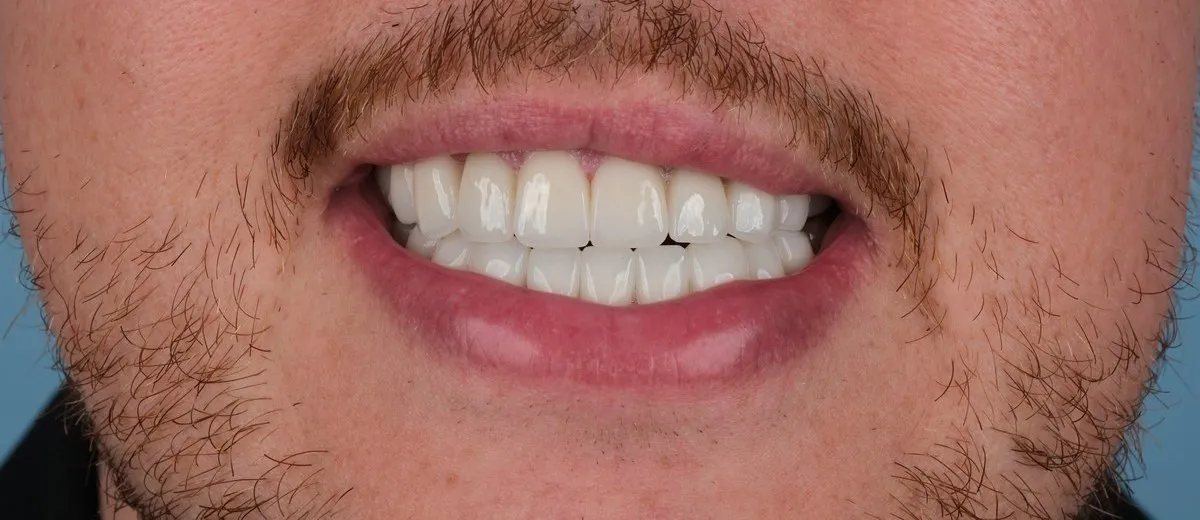
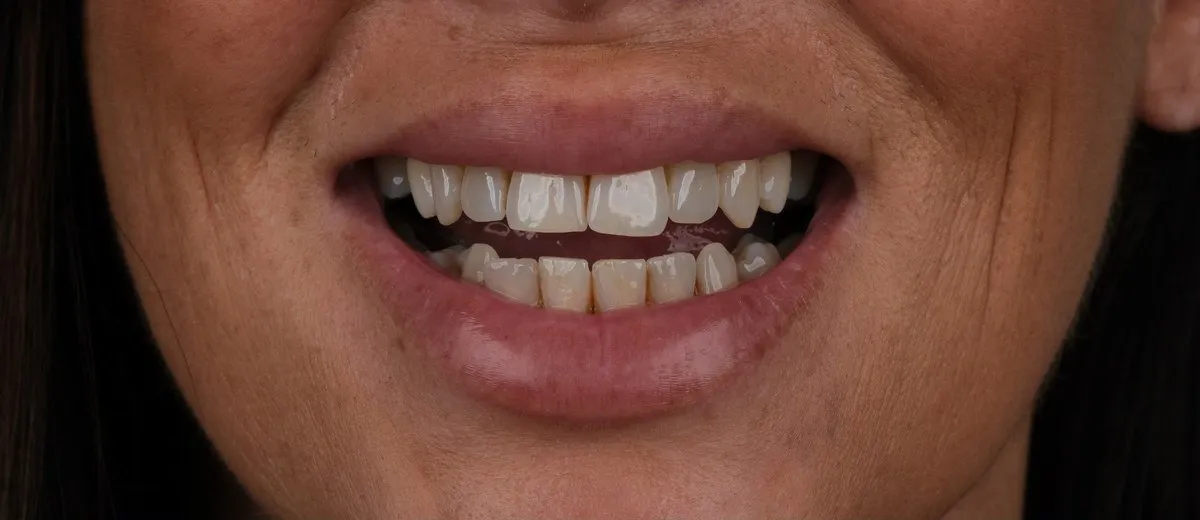
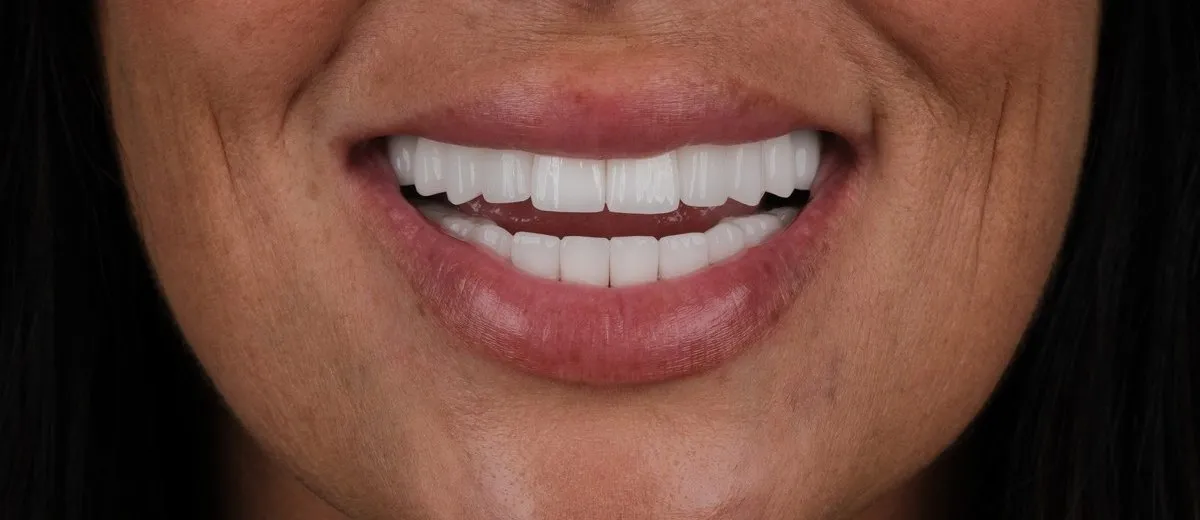
Jody · Full set of zirconia crowns, shade BL2 · Read Jody's story
At UK Smiles, we arrange dental crowns at a licensed dental centre in Antalya, listed on the official HealthTürkiye platform, where every crown is designed and milled with CAD/CAM technology for a precise fit. Whether you need one tooth repaired or a full set, crowns from Turkey cost a fraction of UK prices without compromising on care or quality, giving you the smile you deserve, from the name you can trust.

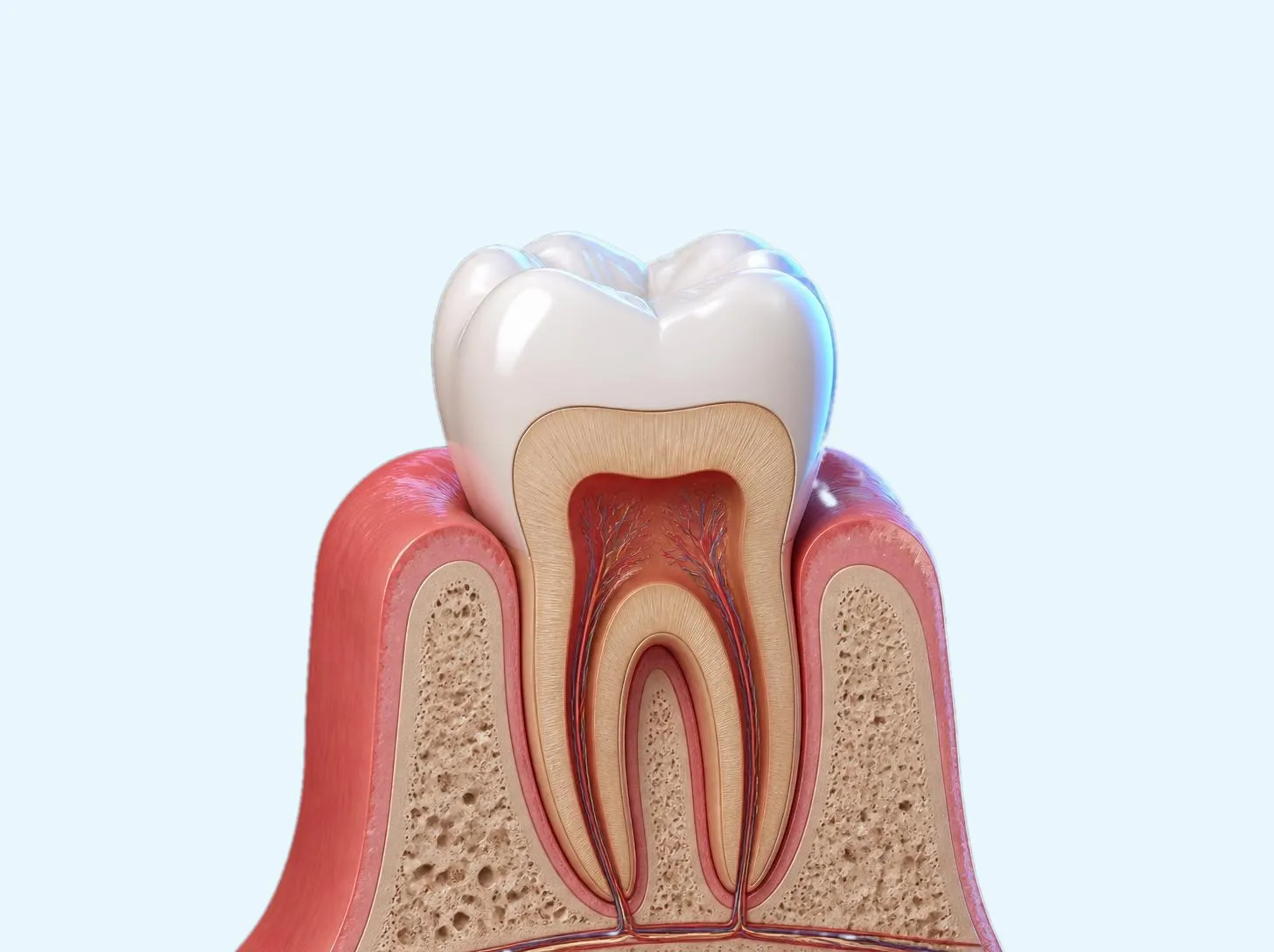
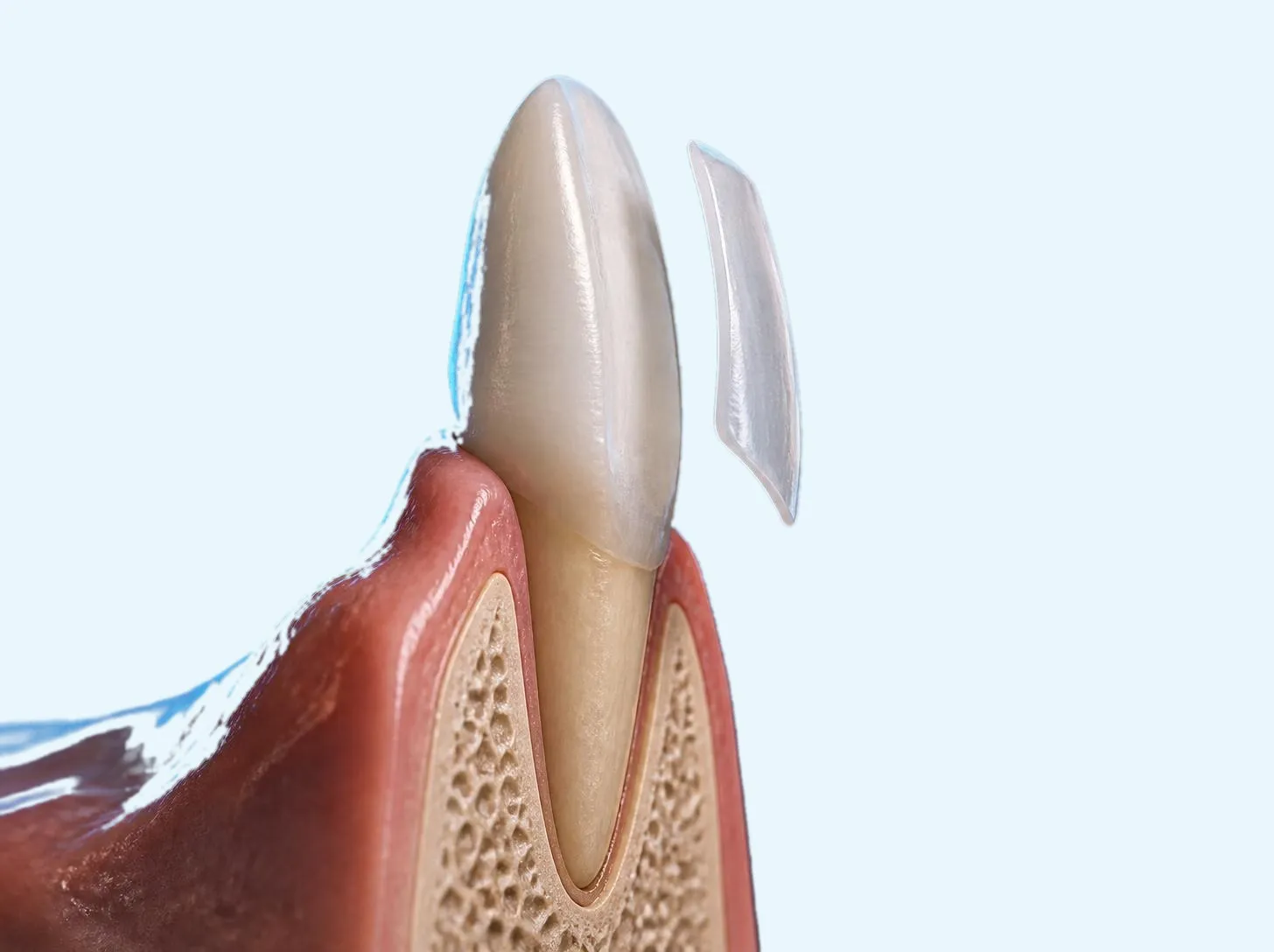
A dental crown is a tooth-shaped cap that covers the whole visible part of a broken, weak or damaged tooth, restoring its strength and improving how it looks. Crowns are used for both medical and cosmetic reasons: to protect a heavily filled or root-filled tooth, to match your other teeth in shape and shade, or to close small gaps. A crown can also sit on top of a dental implant to replace a missing tooth.
Quick answer · Updated
A full set of 20 crowns in Turkey typically costs from around £2,980 in zirconia or around £4,370 in Emax with UK Smiles, with your hotel in Lara and VIP transfers included. Most people need about five days in Antalya.
Clinically reviewed by Dr Mehmet Kaplan, Head Dentist, 22 years' experience
UK prices are typical private prices in 2026. Flights are not included.
Free and no obligation
Real result
Drag the handle to compare. Same patient, same clinic, photographed before treatment and after the final fit.
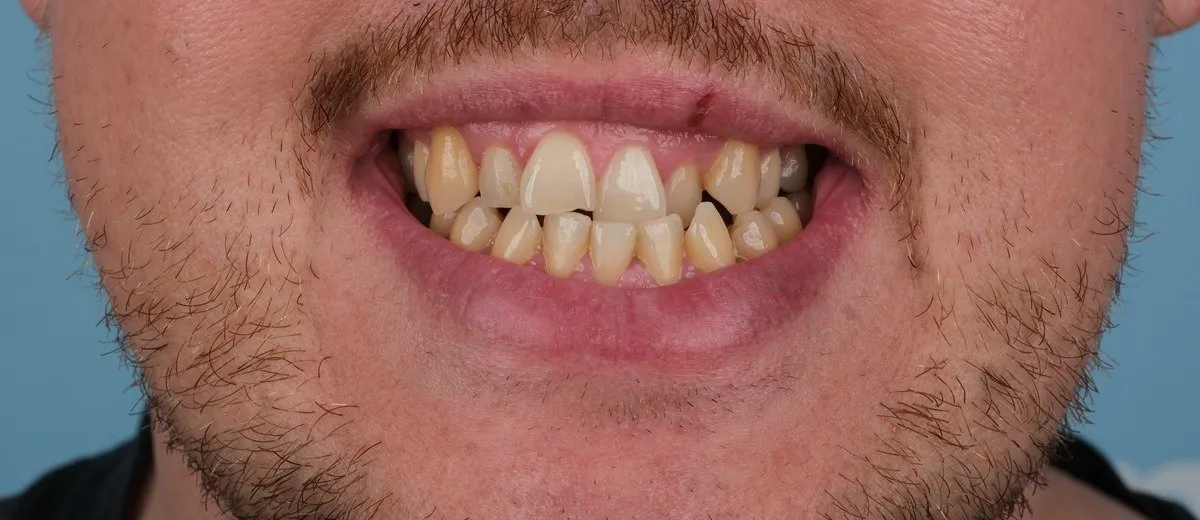
Daniel · Full set of zirconia crowns · Read the full story
Single crowns are priced per tooth. A full set comes as a crown package of 16 or 20 teeth, in zirconia or Emax, with your hotel in Lara and VIP transfers included, and the more teeth in the package, the less each crown works out at.
| Option | Zirconia | Emax |
|---|---|---|
| Single crown | £175 | £280 |
| 16-tooth package | £2,560about £160 a tooth | £3,626about £227 a tooth |
| 20-tooth package | £2,980about £149 a tooth | £4,370about £219 a tooth |
| Typical UK private price | £700 to £1,500 a tooth | £750 to £1,500 a tooth |
Packages include your hotel in Lara and VIP transfers. Your quote is fixed in writing before you book. For every treatment, see our full dental price list for Turkey.
Answer a few quick questions and the team will come back to you with exactly what you need and what it costs, fixed in writing. Free, no obligation, and nothing to pay up front.
Free online quote form
How it works
A crown sits over your own tooth like a cap, protecting it and giving it a new shape and shade.
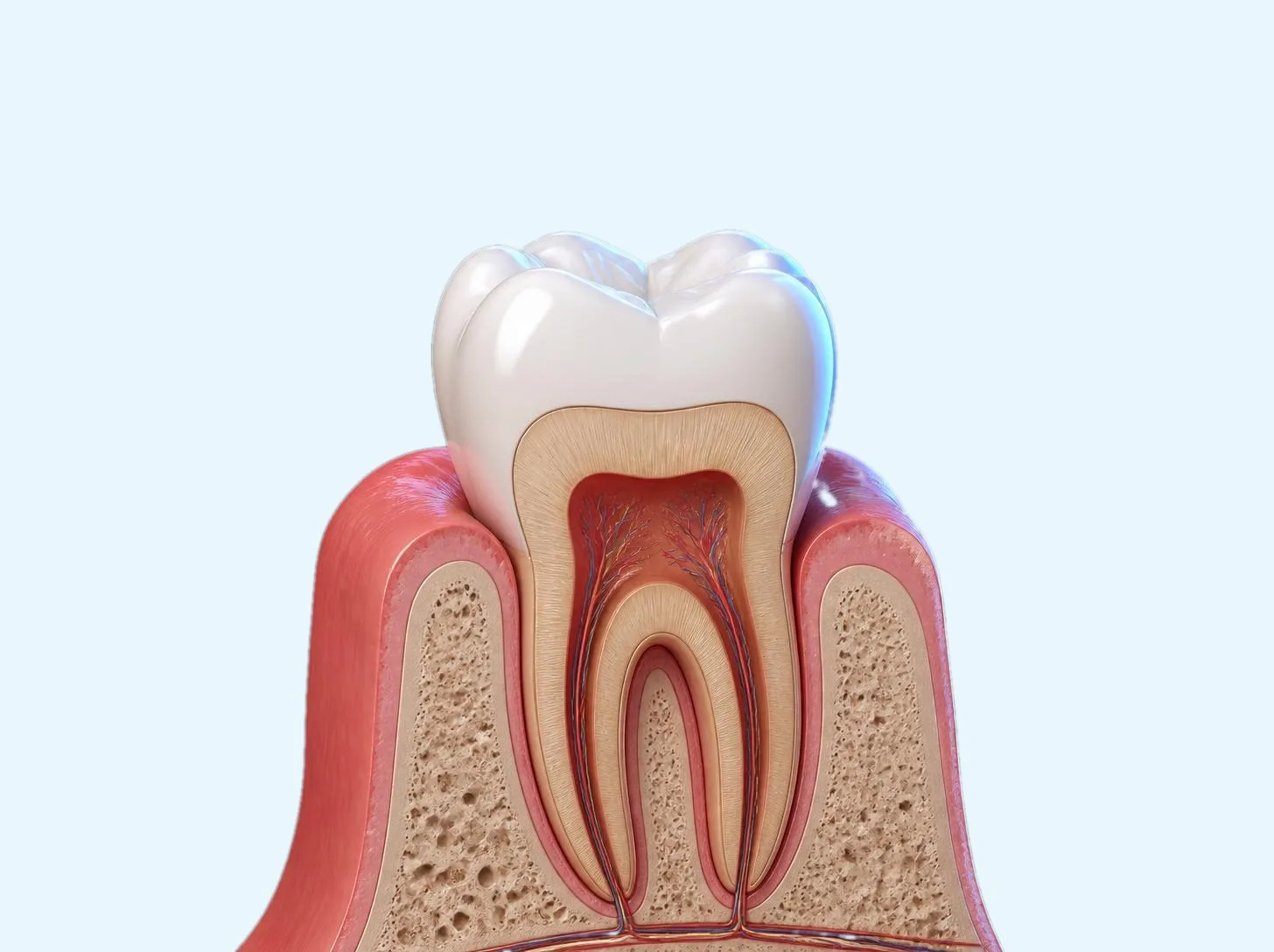
Covers the whole visible part of the tooth, down to the gum line.
Shaped slightly, then protected under the crown.
Nothing changes below the gum.
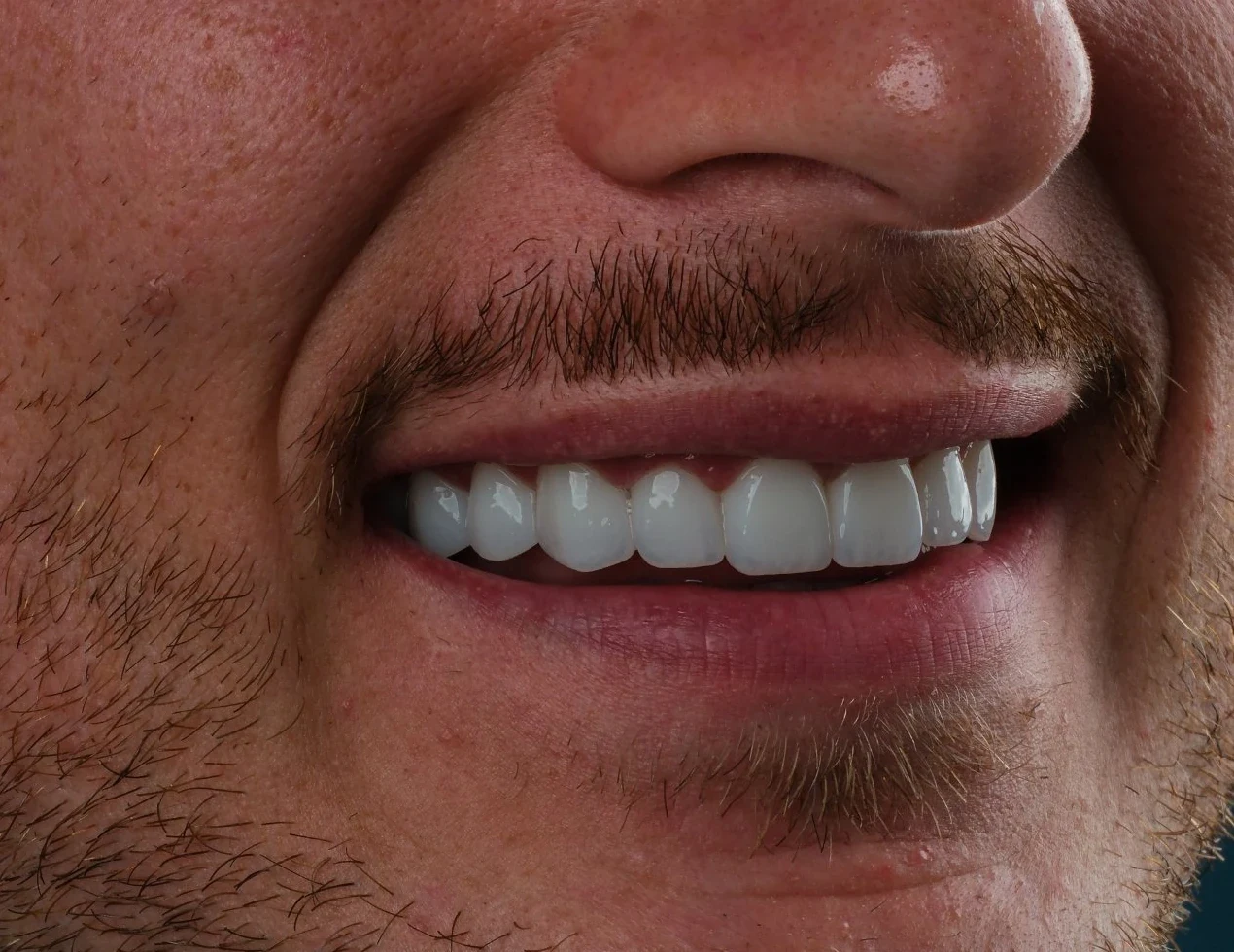
A real UK Smiles patient
 1234567
 Designed around you
Natural enamel has fine ridges and lobes that scatter light. We build that micro-texture into every crown, so the smile looks alive in daylight and on camera, never flat.
The best smiles show just 1 to 2mm of gum. We set each tooth length and the gum arch (the zenith) over every tooth, so you show the right amount, not a gummy smile.
Real teeth let light through at the tips. Whether your crowns are zirconia or Emax, the edges are built to copy that translucency, so they glow softly instead of looking like a solid white block.
Front teeth about four-fifths as wide as they are long, the laterals a touch smaller, the canines matching the centrals, all chosen to suit your face shape.
Matched to your skin tone and the whites of your eyes, with a natural gradient from a brighter edge to a warmer gum end. Bright, but believable.
The top edges follow the curve of your lower lip. Widening the arch slightly fills the dark corners (the buccal corridor) for a fuller, better proportioned smile.
Your occlusion, how the top and bottom teeth meet, is balanced too. An even bite protects crowns from chipping, eases jaw strain and keeps eating and talking comfortable.
Texture. Natural enamel has fine ridges and lobes that scatter light. We build that micro-texture into every crown, so the smile looks alive in daylight and on camera, never flat.
Gum Line. The best smiles show just 1 to 2mm of gum. We set each tooth length and the gum arch (the zenith) over every tooth, so you show the right amount, not a gummy smile.
Translucency. Real teeth let light through at the tips. Whether your crowns are zirconia or Emax, the edges are built to copy that translucency, so they glow softly instead of looking like a solid white block.
Proportion. Front teeth about four-fifths as wide as they are long, the laterals a touch smaller, the canines matching the centrals, all chosen to suit your face shape.
Shade. Matched to your skin tone and the whites of your eyes, with a natural gradient from a brighter edge to a warmer gum end. Bright, but believable.
Smile Line. The top edges follow the curve of your lower lip. Widening the arch slightly fills the dark corners (the buccal corridor) for a fuller, better proportioned smile.
Bite. Your occlusion, how the top and bottom teeth meet, is balanced too. An even bite protects crowns from chipping, eases jaw strain and keeps eating and talking comfortable.
A thorough assessment from a dental professional to determine whether a crown is the best option, and to put together a plan for you.
Taken to ensure that the roots and root canal are healthy and intact. Without this, dental implants may be needed.
The tooth is prepped, often involving the trimming down of broken or damaged sections to make room for the crown, plus filling of any cavities.
A mould of your mouth is taken so a 3D computer model can be generated and your crown constructed in our lab.
You may leave your first appointment with a temporary crown to help protect the tooth against decay in the meantime.
A second session for the actual fitting of the crown, with local anaesthetic to numb the area appropriately before the procedure begins.
Send a few photos, we do the rest
What happens on the day
This is the appointment people worry about most, so here it is in full. It happens on day two of the trip. The trial fit and final fit later in the week are shorter and there is nothing sharp involved.
You sit down with the dentist and the moulds and confirm the shade, shape and length you chose. Nothing starts until you say yes. If you are nervous, say so here: the team goes at your pace and you agree a stop signal.
How it feels A conversation, not a procedure.
Local anaesthetic, tooth by tooth. A numbing gel goes on the gum first so the injection itself is a small scratch. The dentist waits until you cannot feel anything before touching a tooth, and tops it up during the appointment if you ask.
How it feels A scratch, then a fat lip feeling that spreads. Most people describe it as odd rather than painful.
Each tooth is shaped so the crown fits over it, about 1 mm all round. It is done with a fine drill and water spray, one tooth at a time, with breaks whenever you want them. A full set takes three to four hours.
How it feels Pressure, vibration and the noise of the drill, but no pain. If anything sharpens, you raise a hand and the dentist stops.
Your prepared teeth are scanned with a digital wand rather than a tray of putty. The scan goes straight to the on-site lab with your chosen shade and design, and the technicians start making your new teeth the same afternoon.
How it feels A camera moving round your mouth for a couple of minutes. Nothing to gag on.
You leave with a full set of temporary teeth, so you are never without a smile. They are not the finished article, but they are shaped like the design so you get a preview of the length and look.
How it feels A little bulky for a day. You get used to them quickly.
The numbness wears off over two to four hours. Teeth can feel sensitive to hot and cold for a few days, and the gums can be tender where the work was done. Soft food tonight, ordinary painkillers if you need them, and an early night. Most people are out for breakfast the next morning.
How it feels Tender and tired rather than in pain. The team is a message away if anything worries you.
The finished crowns are tried in without cement. You look in the mirror, smile, talk, take a photo. Want them shorter, squarer, whiter, more natural? They go back to the lab and are adjusted. Nothing is fixed until you are happy.
How it feels The best appointment of the week. About two hours, no numbing needed for most people.
Each crown is bonded in place, the bite is checked and any high spots are polished. You leave with your finished smile and the aftercare instructions, and fly home the next day.
How it feels Some pressure while bonding. Around two hours.
Sensitivity usually settles within a week or two. Tell the dentist if you grind your teeth so it can be built into your plan.
Your week in Antalya
Veneers and crowns are done in a single trip. Three appointments, two days that are yours, and a smile to fly home with. This is the typical shape of the week; your plan confirms your exact dates.
Day 1
No appointment
Your driver meets you at the airport and takes you to your hotel in Lara. Settle in, and we confirm your pick-up time for the morning.
Day 2
3 to 4 hrs in clinic
The big day. Consultation with your senior dentist, X-rays and a 3D scan, then you choose your shape, shade and style together. Teeth are prepared under local anaesthetic and temporaries fitted, so you leave with a smile.
Day 3
Day off
The on-site lab designs and mills your new teeth from the scan. Nothing for you to do but enjoy Lara: beach, pool, old town.
Day 4
About 2 hrs in clinic
Your new teeth go in so you can see them in your own mouth. Want them a touch shorter, squarer or whiter? They go back to the lab for adjustments. Nothing is fixed until you are 100% happy.
Day 5
About 2 hrs in clinic
Your new smile day. Teeth are bonded permanently, your bite is checked and everything polished. You leave with your aftercare plan and your warranty paperwork.
Day 6
Private transfer
Picked up from the hotel about three hours before your flight. The UK team checks in with you a few days after you land.
Hotel in Lara, private transfers and every appointment are arranged for you. How the trip works · Get your plan and dates
Free and no obligation
Every photo and video here is a real UK Smiles patient who had crowns at the clinic in Antalya.
Jody · Full set of zirconia crowns, shade BL2 · Read Jody's story
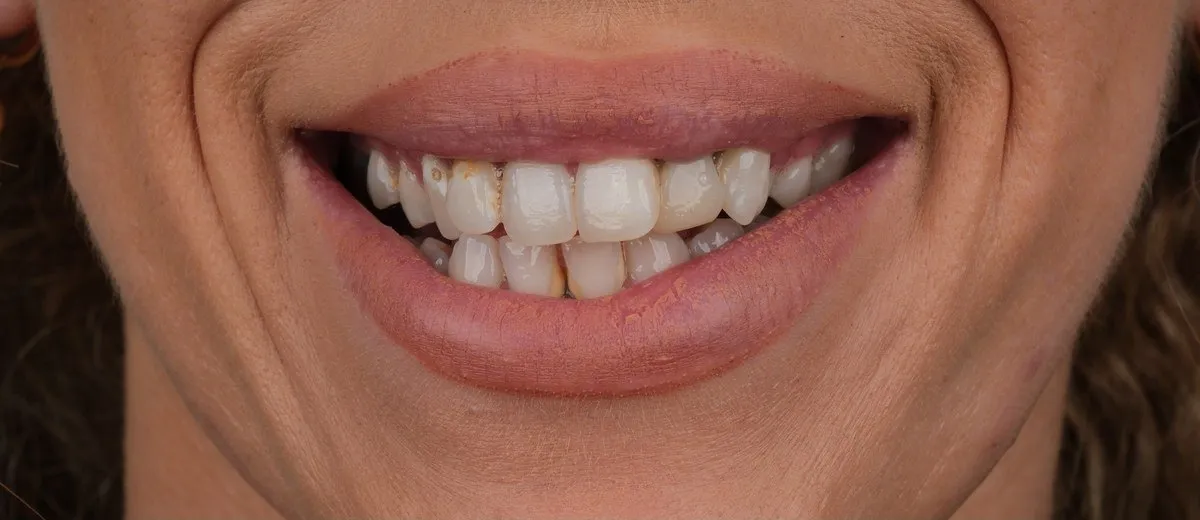
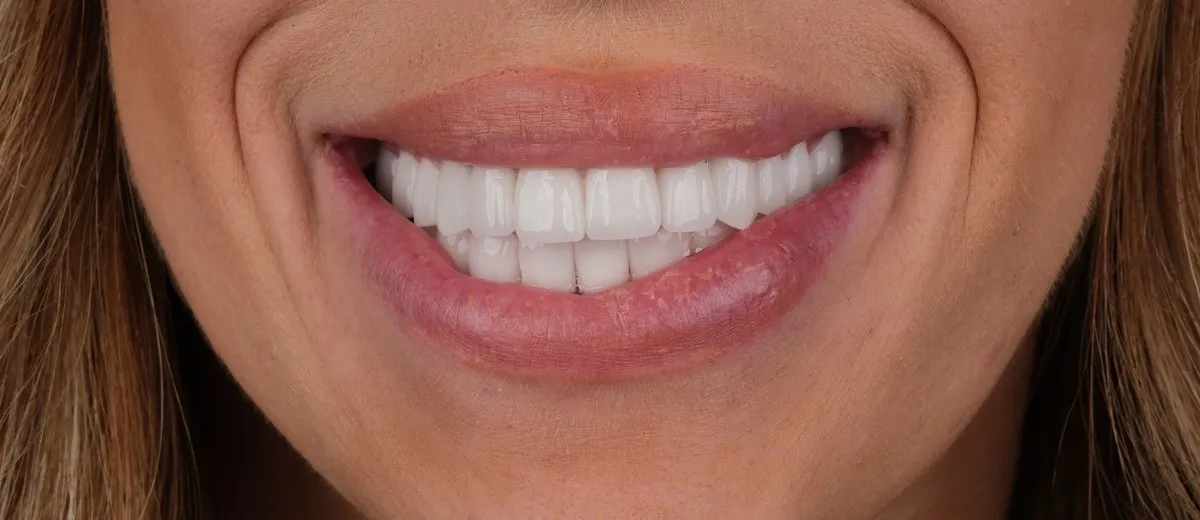
Naomi · Worn, uneven upper teeth rebuilt in zirconia, shade BL2 · Read Naomi's story
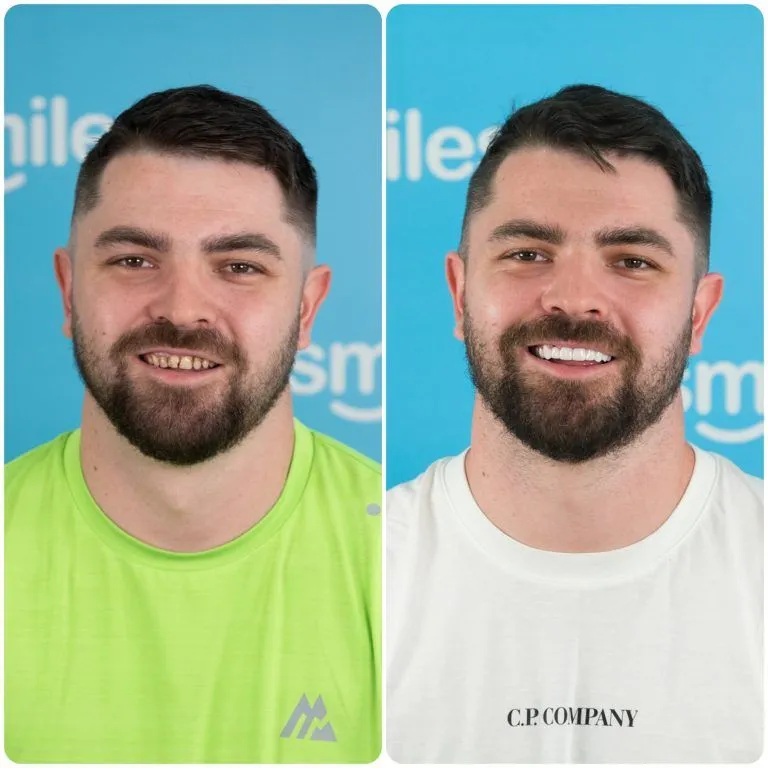
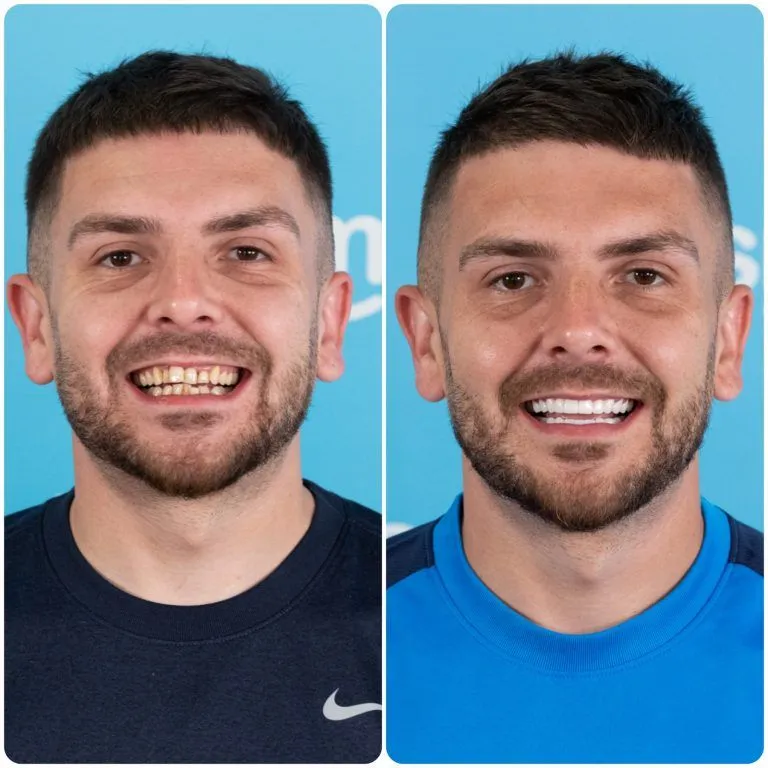
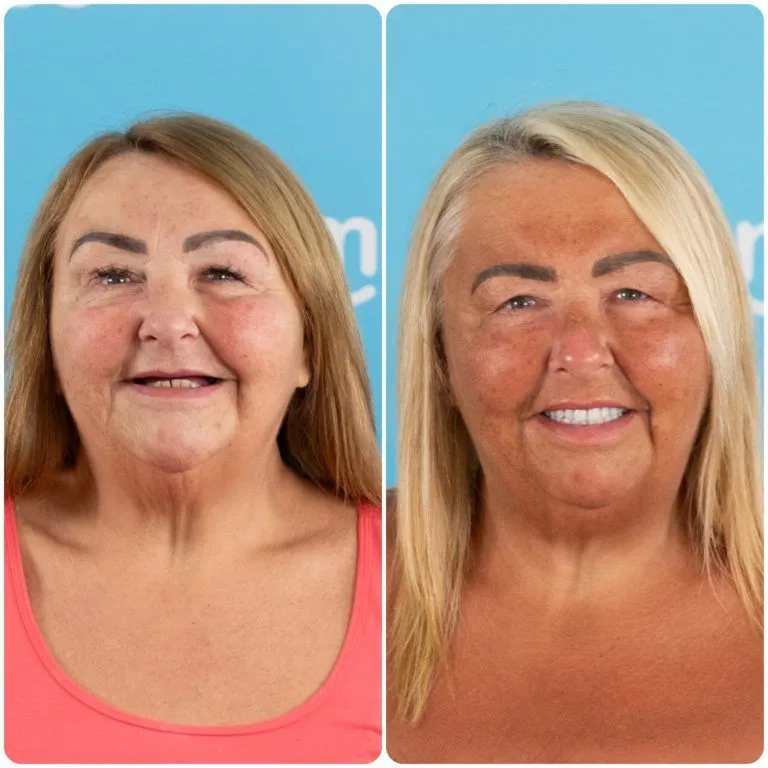
Hundreds more results in our before and after gallery and patient smile stories.
Free quote, no obligation
Everything else you need to know
Your written quote is fixed before you book. These are the things that move it up or down:
Single crowns are priced per tooth. Full sets of 16 or 20 come as a package, so each crown works out cheaper, down to about £149 a tooth for 20 in zirconia.
Zirconia is £175 a tooth and Emax £280. Many people choose zirconia for back teeth and strength, and Emax where translucency matters most.
Your X-rays show whether any tooth needs a filling (around £80), root canal treatment (around £100 per root) or removing (around £50) before it can be crowned.
Packages include your hotel in Lara with breakfast, VIP transfers, digital scans and X-rays. Flights are booked separately, and extra hotel nights are around £50.
A "full set" usually means 16 or 20 crowns, covering the upper and lower teeth that show when you smile. It is a big decision, because every tooth in the set is shaped down on all sides.
16 crowns cover the teeth most people show when they smile. 20 adds the teeth further back, for a wider smile. The dentist maps your plan tooth by tooth from your X-rays.
Healthy teeth in the set can often have veneers instead, which keeps far more of your natural tooth. A mixed plan is priced per tooth, and your quote shows which tooth gets which.
A full set is usually done in one trip of about five days. You wear temporary crowns for a few days while the lab makes your final set, then try them in before they are fitted.
A crown removes roughly 63% to 72% of a front tooth, compared with 3% to 30% for a veneer (Edelhoff and Sorensen, Journal of Prosthetic Dentistry, 2002). That is why a full set of crowns on healthy teeth is rarely the right plan, and the dentist will tell you if veneers would do the job.
Materials, compared
The three materials we work with, and the numbers behind them. There is no single best: the right one depends on what your teeth need.
Monolithic zirconium oxide
Best for: Worn, damaged or dark teeth, back teeth, and full smile rebuilds. The workhorse for crowns and All-on-4/6 bridges.
Premium upgrades available: Sagemax NexxZr and IPS e.max ZirCAD Prime
Lithium disilicate glass ceramic
Best for: Front teeth where looks matter most. The most natural, enamel-like material we use, as thin veneers or as crowns.
Resin, sculpted by hand
Best for: Small chips, gaps and edges on otherwise healthy teeth, done in one visit with no drilling. Budget-friendly, but it stains and needs replacing much sooner.
You may have read about metal, porcelain-fused-to-metal or resin crowns. We do not use them. Every crown we fit is all-ceramic, made from one of two materials, chosen with you at the design stage:
The strongest material we use, at around 1,200 MPa. It takes the biting force of back teeth and a full set without chipping, holds its colour, and is milled from a single block so there is no metal underneath to show at the gum line. Two premium zirconia upgrades are also available for a more natural, multi-layered finish. Zirconia crowns in detail
A lithium disilicate glass ceramic with the most enamel-like translucency, so it is our choice where the crown shows most, on the front teeth. Not as strong as zirconia, so it is used where looks matter more than load. Emax crowns in detail
The spec sheet above shows how the two compare on strength, translucency and lifespan. Both are metal-free, so they suit patients with metal allergies. For every option side by side, including layered and multilayer zirconia, see our guide to the types of crowns available in Turkey.
Crowns and veneers can look the same once they are fitted. The difference is how much of your own tooth they cover, and how much has to be removed.
| Feature | Crown | Veneer |
|---|---|---|
| Covers | The whole tooth, down to the gum | The front surface only |
| Tooth removed (front teeth) | Roughly 63% to 72% | Roughly 3% to 30% |
| Best for | Broken, heavily filled, root-filled or worn teeth | Healthy teeth you want to change in colour or shape |
| Strength | Protects and strengthens a weak tooth | Cosmetic, relies on a healthy tooth underneath |
| UK Smiles price | £175 zirconia, £280 Emax | £280 Emax |
Tooth removed: Edelhoff and Sorensen, Journal of Prosthetic Dentistry, 2002.
If your teeth are healthy and you simply want a whiter, more even smile, Emax veneers keep far more of your natural tooth. Our guide to choosing between crowns and veneers in Turkey goes into more detail.
In these cases veneers, whitening or bonding usually keep much more of your natural tooth. The dentist checks your X-rays and will tell you honestly if crowns are not needed.
Crowns are a reliable treatment, but they are not risk-free. These are the honest downsides, and how each one is managed.
Shaping a tooth for a crown cannot be undone. Once a tooth is crowned, it will always need a crown, so it is worth being sure it is the right treatment.
Some sensitivity to hot and cold is common after preparation and usually settles within a few days to a few weeks. If it lasts or gets worse, get it checked.
A 2023 review of 37 studies found that around 5 in 100 living teeth lost their nerve after a crown or similar restoration, rising to nearer 7 in 100 after 10 years. That tooth then needs root canal treatment. Wearing temporary crowns for more than two weeks was linked to a higher rate. With us, temporaries are normally worn for a few days.
The crown itself cannot decay, but the edge where it meets your tooth can. Brushing, cleaning between your teeth and regular check-ups keep this in check.
New crowns can feel tall at first. The dentist checks your bite at the final fitting and adjusts it before you leave, and it can be fine-tuned again if needed.
Both are uncommon. Solid zirconia has no separate porcelain layer to chip, and a crown that comes loose can usually be cemented back on.
Nerve figures: Al-Manei KK et al., BMC Oral Health, 2023. A grey line at the gum is usually a sign of metal-based crowns. Ours are all-ceramic, and our guide explains what causes a black line at the gum around crowns.
For most people having several crowns or a full set, yes, mainly because of the cost. For a single crown, it depends on what you can get at home.
| Option | What you typically pay | Good to know |
|---|---|---|
| NHS dentist (England) | £332.10Band 3 charge for the course of treatment | Only for treatment the dentist decides you need. You may be offered a metal-coloured crown on a back tooth. |
| UK private dentist | £700 to £1,500a tooth | No travel, but a full set can run well into five figures. |
| UK Smiles in Turkey | £175 to £280a tooth, or around £2,980 for 20 zirconia | Hotel and transfers included. About five days in Antalya, plus flights. |
If you need one crown on a back tooth and can get an NHS appointment, staying at home may cost less once flights are added. The bigger the plan, the more the saving grows.
NHS charge: NHS website, how much NHS dental treatment costs, checked October 2026. To compare quotes properly, see how to read a Turkey teeth quote line by line.
Crowns made in Turkey use the same materials as crowns made in the UK, so the research applies equally. This is what published studies have found:
| Crown type | Survival | Study |
|---|---|---|
| Monolithic zirconia, back teeth | 98%after 5 years | 50 crowns, Journal of Prosthodontic Research, 2021 |
| Zirconia single crowns (mostly layered) | 91.2%after 5 years | Systematic review, Dental Materials, 2015 |
| Metal-ceramic single crowns | 95.7%after 5 years | Same review, for comparison |
| Emax, back teeth | 83.5%after 10 years | Clinical Oral Investigations, 2018 |
The older zirconia figures were held back partly by the porcelain layer on top chipping. Solid (monolithic) zirconia has no separate layer to chip, which is why it does so well. What makes the biggest difference after that is you: brushing, cleaning between teeth, wearing a night guard if you grind, and regular check-ups at home.
Sources: Solá-Ruiz MF et al., J Prosthodont Res 2021; Sailer I et al., Dent Mater 2015; Rauch A et al., Clin Oral Investig 2018. For the full detail, read our guide to every type of dental crown in Turkey compared.
Every crown is covered by a 5-year written warranty, so you know what is covered before you travel.
If a crown loosens, chips or feels wrong after you fly home, contact our UK team. We can see you at our Leeds office and arrange the next step with the clinic in Antalya. How UK aftercare works
Zirconia and Emax are used in UK practices every day, so your own dentist can check, clean and repair your crowns at normal check-ups.
For your first weeks home, read our aftercare guide for new Turkey teeth, and for the long term, how to make Turkey crowns last longer.
Emax is one of our two main materials used for dental crowns.
Learn about Emax crownsZirconium is one of our two main materials used for dental crowns and a common alternative to Emax.
Learn about zirconium crownsNervous about the dentist?
Most of the people we treat were. How the clinic handles anxiety, sedation and the stop signal.
Read about nervous patient care →How booking works
Nothing to pay up front, for complete peace of mind. Just book your flights, fill in our booking form, and we’ll sort the rest.
See how booking works →Meet us in Leeds first
Hold the moulds and shade tabs, have an X-ray next door, and leave with a plan and a fixed price. Free, no obligation.
Book a Leeds consultation →Considering an alternative treatment? Take a look at:
Free and no obligation
Straight talk
Some of the people who ask us about crowns would be better off with something else, or with nothing at all. We would rather tell you that before you book than after.
If your teeth are straight and healthy and you mainly want them whiter, crowns are the wrong answer. They take enamel off teeth that did not need touching.
What we do The dental team looks at your photos and tells you honestly whether the treatment is needed.
Crowns involve removing a layer of tooth, and that does not grow back. Once you have them, you will always have them or a replacement.
What we do We explain that plainly before you decide, so there are no surprises later.
Crowns on an unhealthy mouth fail early. Bleeding gums, loose teeth or cavities need sorting first.
What we do The dentist assesses your gums and teeth first and explains what would need treating, and in what order.
Heavy grinding can chip porcelain, especially thinner veneers. It does not rule you out, but it changes the plan.
What we do Tell us if you grind. The dentist takes it into account when recommending the material and the plan.
Teeth and jaws are still moving. Work done now would need redoing.
What we do Treatment is for adults. We are happy to talk it through when the time is right.
If teeth are missing or too broken down to support a crown, crowns on their own will not do it.
What we do The dentist reviews your photos and X-rays and recommends the option that actually fits your mouth.
Send a few photos and the dental team will tell you honestly whether any of these apply to you, before you book anything.
Not always. Dental implants are used when the tooth is entirely missing or must be removed in its entirety because of its condition. A damaged tooth may be stripped down in many cases, and a crown added to protect it while keeping the roots in place. If your dentist decides that using a crown as a cap is not viable, you may wish to look at dental implant costs and procedures to find a viable alternative.
With UK Smiles a single zirconia crown is £175 and a single Emax crown £280. Full sets come as packages with your hotel in Lara and VIP transfers included: 16 zirconia crowns for £2,560 or 20 for £2,980, and 16 Emax crowns for £3,626 or 20 for £4,370. The same work privately in the UK typically costs £700 to £1,500 a tooth.
With UK Smiles a full set of 20 zirconia crowns is around £2,980, or around £4,370 in Emax. A set of 16 is around £2,560 in zirconia or £3,626 in Emax. Your hotel in Lara and VIP transfers are included, and flights are booked separately.
For several crowns or a full set, it usually is, because private UK crowns are typically £700 to £1,500 a tooth. For a single back tooth, an NHS crown in England is part of the £332.10 Band 3 charge, which may cost less once flights are added.
Most people need about five days and three appointments: a consultation and preparation on the first visit, a trial fitting, and the final fitting. Your plan confirms the exact dates before you book.
The preparation is done under local anaesthetic, so you feel pressure rather than pain. Some sensitivity to hot and cold for a few days or weeks afterwards is common and usually settles on its own.
Zirconia is stronger, so it suits back teeth, heavy biters and full sets. Emax is more translucent and closer to natural enamel, so it is often chosen for front teeth. Many full sets use zirconia, and your dentist will recommend the right material for each tooth.
A veneer covers the front of the tooth and removes very little of it. A crown covers the whole tooth and removes much more, but protects a tooth that is broken, heavily filled or root-filled. If your teeth are healthy, a reputable dentist will usually suggest veneers or a smaller treatment instead.
Crowns made in Turkey use the same materials as UK crowns. Research on modern all-ceramic crowns shows most survive at least five to ten years, and many last much longer with good care: one study found 98% of monolithic zirconia crowns survived five years. Crowns carry a 5-year written warranty.
Not usually. A root canal is only needed if the nerve inside the tooth is infected or badly damaged. Your X-rays show this before treatment, and if one is needed it is added to your quote, typically around £100 per root.
They can. You choose the shape and shade with the dentist, and most people who design their smile with us choose a natural look rather than a bright Hollywood white. Zirconia and Emax are both metal-free, so there is no grey line at the gum.
It is uncommon, but crowns can loosen if the cement underneath washes out, or chip if you bite something very hard. A loose crown can usually be cleaned and re-cemented. If it happens once you are home, contact us and we will arrange the next step under your warranty.
Yes. The crown itself cannot decay, but the edge where it meets your tooth can. Brushing twice a day, cleaning between your teeth and regular check-ups with your dentist at home keep that edge healthy.
Yes. Any dentist can check, clean and repair zirconia and Emax crowns. Keep your treatment record and tell your dentist which material you have.
Usually, yes. After your teeth are prepared you wear temporary crowns for a few days while your final crowns are made, so you are never left without teeth.
The crowns, your digital scans and X-rays, your hotel in Lara with breakfast, and VIP transfers between the airport, hotel and clinic. Flights are booked separately, and any extra treatment such as fillings or root canals is shown on your written quote before you book.
Your package includes a hotel in Lara, close to the beach and a short transfer from the clinic in Antalya. Every trip is planned individually, so we can extend your stay or adjust dates to suit you.