
Celebrity smiles
Johnny Depp Teeth: The Evolution of His Smile
Few smiles have been picked apart in public quite like Johnny Depp's. From the effortless charm of his early roles to the worn, stained teeth that made headlines at Cannes, and then a sudden return to a bright, balanced smile. Here is what actually changed, what dentists suspect was done, and how a natural-looking transformation like this is achieved today.
-
Veneers from
£280 per tooth
Premium Emax porcelain in Antalya
-
Full smile from
£3,000
Hotel and airport transfers included
-
Timescale
2 trips
Prep then fit, never rushed into one
Who is Johnny Depp?
Born in Kentucky in 1963, Johnny Depp built a career on transformation. He broke through on television in the late 1980s, then spent three decades disappearing into roles that ranged from the gentle to the grotesque: Edward Scissorhands, Captain Jack Sparrow, Sweeney Todd. Few actors have made a habit of changing their face, their voice and their teeth quite so completely for a part.
That willingness to alter his appearance is part of why his real smile became such a talking point. When you have spent years watching someone behind prosthetics and gold-capped pirate teeth, the condition of their actual teeth becomes a story in itself.
His teeth through the decades
The 1990s: natural and effortless
In his early career, Depp's teeth looked entirely natural, slightly imperfect, a little uneven, and all the more charming for it. This was the era before the "Hollywood smile" became an expectation rather than an exception, and his smile simply read as a real person's.
The 2000s and 2010s: visible wear
As the years passed, the photographs told a different story. Staining, chips and a gradual loss of brightness crept in, the cumulative effect of time, lifestyle and a career spent in front of cameras. None of this is unusual. Most adults see their teeth darken and wear with age; the difference is that Depp's did so under a global spotlight.
2023: the Cannes headlines
At the 2023 Cannes Film Festival, close-up photographs of his teeth went viral. Commentary online was blunt, focusing on discolouration and unevenness. It was a stark reminder of how quickly a smile can become the headline rather than the work.
2024 onwards: bright and balanced
Not long after, Depp reappeared with a noticeably brighter, more even smile. Crucially, it did not look fake. The teeth were lighter and tidier, but still believable, the hallmark of cosmetic work done with restraint rather than a blinding-white overhaul.
His smile in iconic roles
Depp has often used his teeth as part of a character. Captain Jack Sparrow's gold-capped grin is the obvious example, a deliberate, removable piece of pirate theatre. In What's Eating Gilbert Grape and Edward Scissorhands, his natural teeth helped the characters feel ordinary and human.
It is worth separating costume from cosmetics. The gold caps were a prop. The change people noticed between 2023 and 2024 was something else entirely: a genuine restoration of worn, discoloured teeth back to a healthy, bright baseline.
Confirmed vs speculated: what we actually know
Johnny Depp has never publicly discussed cosmetic dental work, so it is only honest to separate fact from informed guesswork.
- Confirmed: his smile changed visibly between 2023 and 2024, from worn and stained to bright and even.
- Likely: dentists looking at the before-and-after photos most often point to porcelain veneers or crowns, possibly with professional whitening on the lower teeth.
- Unknown: the exact treatment, the number of teeth involved, and where it was carried out. Anyone claiming certainty is guessing.
We are not his dentist, and this article is commentary rather than a clinical record. What we can do is explain how a change like the one in those photographs is normally achieved.
How a transformation like this is done
A jump from worn, discoloured teeth to a bright, even smile usually comes down to one of three routes, or a combination of them:
- Professional whitening: the least invasive option, ideal when the teeth are healthy and well-shaped but simply darkened.
- Porcelain veneers: thin shells bonded to the front of the teeth, used when shape, length or alignment need improving as well as colour. A small amount of enamel is removed first.
- Crowns: full-coverage restorations for teeth that are heavily worn, broken or already root-treated, where a veneer would not be enough.
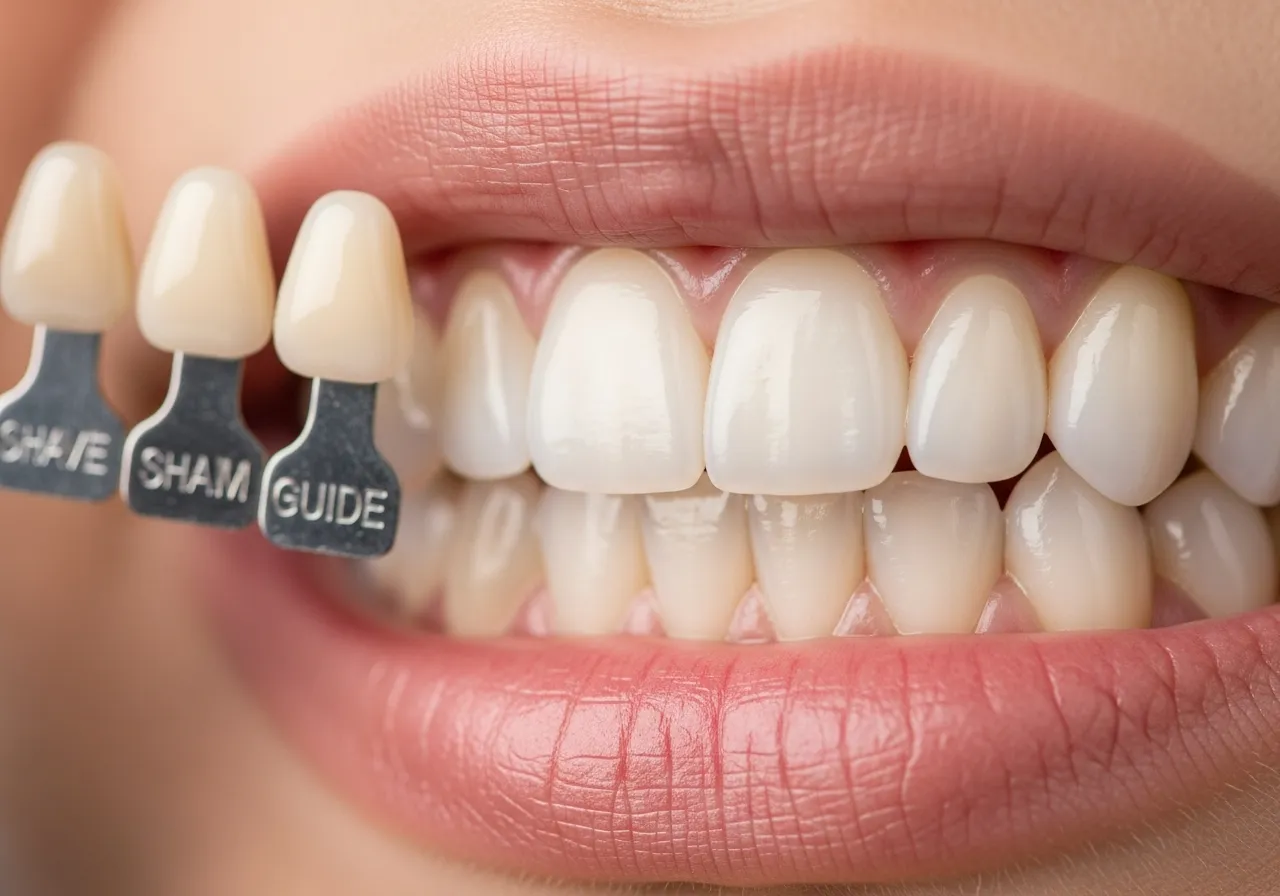
The art is in choosing the least invasive option that achieves the result. Filing down healthy teeth for full crowns when veneers, or even whitening, would have done the job is the single biggest mistake in cosmetic dentistry, and the one our guide to the Turkey teeth trend warns about most. A good dentist starts with a shade guide, a digital smile preview and a plan, not a drill.
Before and after: what really changes
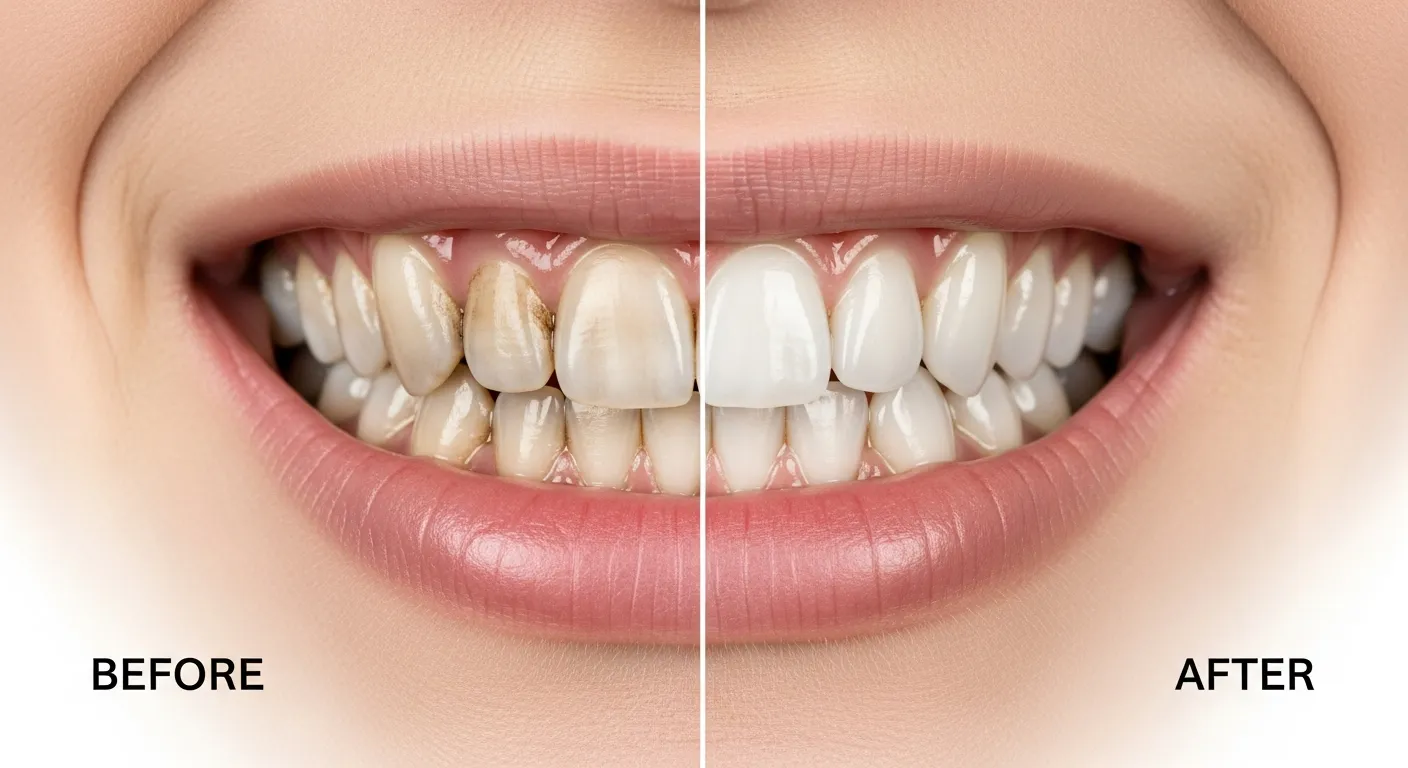
The most convincing smile makeovers are the ones you do not immediately spot. When the shade, length and shape are chosen to suit the face, the result reads as "great teeth" rather than "obvious veneers". The split below shows the kind of change that is possible: dull, uneven and discoloured on one side, bright and balanced on the other.
How to get a Hollywood smile with UK Smiles
You do not need a celebrity budget for a smile like this. At the clinic in Antalya, a full set of premium Emax veneers, hotel and airport transfers included, starts from £3,626, against £8,000 to £15,000 for comparable treatment in a UK private practice. Same materials, same clinical standard, a fraction of the cost. Our guide to how much Turkey teeth cost breaks the numbers down in full.
Here is how we keep the result natural and the process safe:
- Diagnostic first. 3D scan, X-rays and a digital smile preview before any treatment is planned. No drill until the records are in.
- Conservative by default. Whitening or bonding where they would do the job, veneers over crowns wherever the enamel allows it.
- Premium materials. Emax porcelain for veneers, with material batch records kept on file.
- Staged, never rushed. Preparation and fitting across two trips, with UK aftercare for the first 12 months.
Send us a few photos of your smile and we'll come back with an honest, no-obligation plan and quote.
Get my free smile assessmentFrequently asked questions
-
Did Johnny Depp get veneers?
Johnny Depp has never publicly confirmed any cosmetic dental work, so anything written about his teeth is informed speculation rather than fact. What the photographs show is a smile that went from worn, uneven and discoloured to bright and balanced in a short space of time. That pattern is most often achieved with porcelain veneers or crowns, sometimes combined with whitening, but only his own dentist could confirm the detail.
-
How much would a smile like that cost in the UK versus Turkey?
A full upper arch of porcelain veneers typically costs £8,000 to £15,000 in a UK private practice. The same treatment at the clinic in Antalya usually falls between £3,626 and £5,194 for a comparable number of teeth, hotel and airport transfers included. The materials and the clinical standard are the same. The difference is Turkish operating and laboratory costs, not corners cut.
-
What actually is a "Hollywood smile"?
It is a marketing phrase rather than a single treatment. It usually means a full set of bright, even, symmetrical front teeth created with veneers or crowns, designed to look balanced on camera. A well-planned Hollywood smile should still suit your face: shade, length and shape matter far more than simply being as white as possible.
-
How long does a smile makeover take?
Veneer and crown treatment usually runs across two trips. The first trip handles consultation, preparation, scanning and temporaries over five to seven days. The second trip fits the final restorations over four to five days. Whitening alone can be done in a single short visit. We never compress full-mouth work into one rushed three-day trip.
-
Will the result look natural or too white?
That is entirely a design decision made before any treatment begins. We use a shade guide and a digital smile preview so you choose the brightness and shape with your dentist. A natural B1 or A1 shade reads as healthy and real, while the very brightest shades can look artificial in person. Our default is a result that looks like excellent natural teeth, not piano keys.
-
Are veneers permanent?
The preparation is permanent because a thin layer of enamel is removed, so a tooth that has been prepared for a veneer will always need a restoration of some kind. The veneers themselves last around 10 to 15 years before they need replacing. This is exactly why we favour the most conservative option that achieves the result, and recommend whitening or bonding first where they would do the job.