
Why Does My Dental Implant Hurt Years Later?
A dental implant that hurts years after placement usually signals one of four problems: peri-implantitis, a loosened component, bite overload or trouble in a neighbouring tooth. None of them settle on their own, and early treatment is what saves the implant.
A settled implant should be silent. If yours has started speaking up after years of peace, treat that as information, not bad luck.
What Are the 4 Common Causes of Late Implant Pain?
The 4 common causes of late implant pain are peri-implantitis, loose components, bite overload and referred pain from a neighbouring tooth. Each feels slightly different, and each carries its own urgency:
| Cause | What it tends to feel like | How fast to act |
|---|---|---|
| Peri-implantitis | Tender, swollen or bleeding gum around the implant, sometimes a bad taste or smell | Within days |
| Loose screw or crown | Movement, clicking, pain on chewing that eases at rest | Within days, and stop chewing on it |
| Bite overload | Dull ache after meals or on waking, sometimes chipped porcelain | Book promptly |
| Neighbouring tooth | Pain that is hard to place or seems to move between teeth | Book promptly for examination |
Here is the anatomy point that makes sense of all four: a dental implant is titanium, and titanium has no nerve. The implant itself cannot hurt. Late implant pain always comes from the bone, the gum or the teeth around it, which is why the cause can be found and treated.
Time to meet the serious one?
What Is Peri-Implantitis?
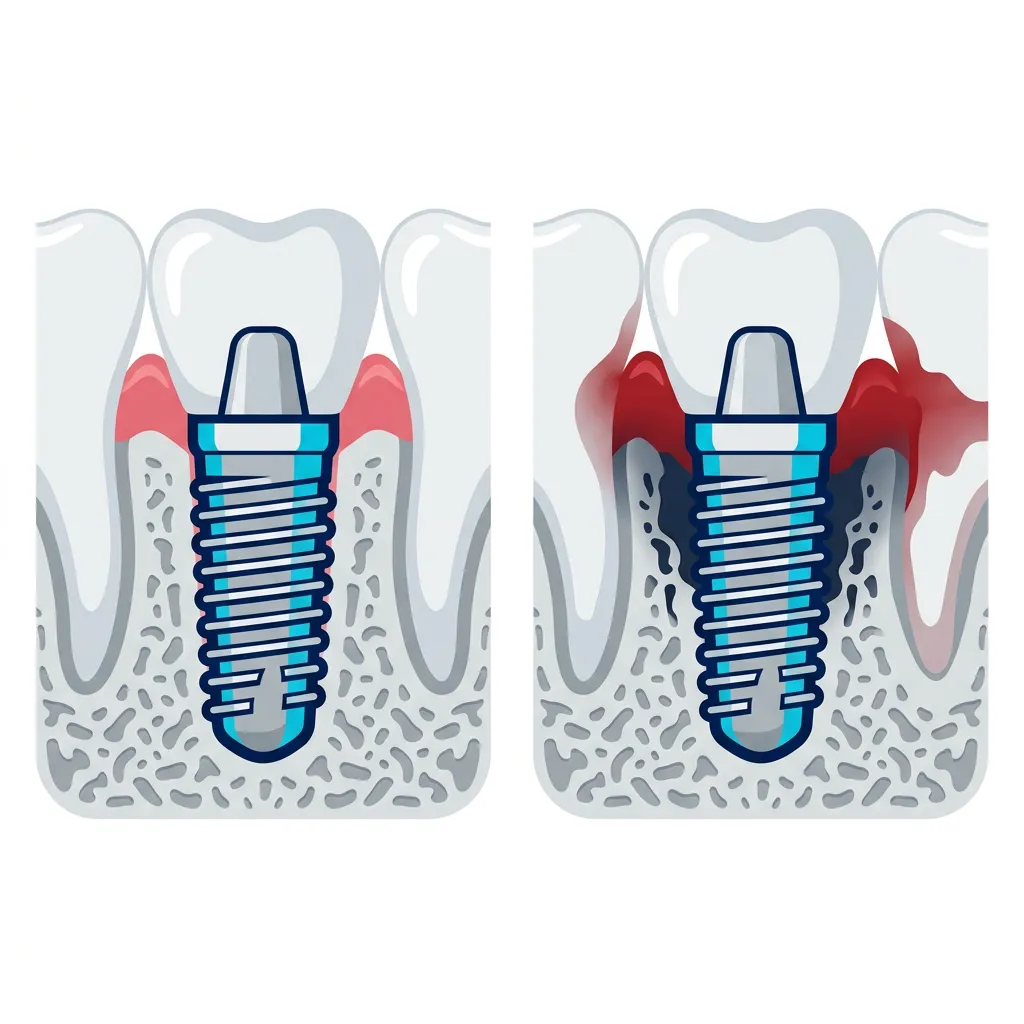
Peri-implantitis is a gum infection around a dental implant that destroys the supporting bone if left untreated. It behaves like gum disease around a natural tooth, and it is the most serious of the four causes because lost bone is hard to rebuild.
The early signs are easy to dismiss: gum that bleeds when you brush the implant, slight swelling, a gum line creeping down the crown, an odd taste. Pain often arrives late in the process, which is exactly why pain around an old implant deserves a same-week appointment rather than a note in your diary.
Caught early, peri-implantitis can usually be stopped with professional cleaning around the implant and a tightened home routine, sometimes with gum treatment on top. If any of this sounds familiar, run through the red flag symptoms in our guide to pain after a dental implant and count how many you recognise.
Can Loose Parts Cause Pain Years After Treatment?
Yes, and it is the most fixable cause on the list. The small screw holding your crown to the implant can slacken after years of chewing, letting the crown rock by fractions of a millimetre. The gum in between gets pinched and inflamed, and chewing starts to ache.
The repair is usually a short appointment: the screw is retightened or replaced and the bite checked. We have covered why implant screws work loose in detail, including what to do if the screw has come out entirely. The one thing not to do is wait, because a rocking crown wears the parts underneath it.
Never suspected your own bite?
How Does Your Bite Overload an Implant?
An implant takes chewing forces rigidly, because it has no periodontal ligament, the natural shock absorber that cushions every natural tooth. When your bite changes, the implant cannot adapt, so it aches instead.
Bites drift more than people realise. Teeth move slowly with age, a new filling or crown elsewhere shifts the contacts, and grinding habits can start or worsen at any stage of life, usually with stress. The result is one implant crown taking more than its share, felt as a dull ache after eating or tenderness on waking.
The fix is mechanical: a bite adjustment, sometimes a night guard. Simple, provided someone actually looks.
Can the Pain Be Coming From Another Tooth?
Yes, and it fools people constantly. Pain from a cracked or infected neighbouring tooth can register as coming from the implant, because the nerves in that region share pathways and the implant is the tooth you worry about most.
The giveaways are pain that seems to move, pain triggered by hot or cold, or an ache you cannot pin to one tooth when you tap along the row. An implant has no nerve to feel temperature, so hot and cold sensitivity almost always points next door. A periapical X-ray, the small one taken in the chair, usually settles it in one visit.
So how urgent is yours?
When Should You Act Fast About Implant Pain?
Act within days if late implant pain comes with any of the following:
- Swelling, pus or a bad taste around the implant.
- A crown, bridge or implant that moves at all.
- Bleeding around the implant that keeps returning.
- Pain that is getting worse rather than better.
- Feeling unwell or facial swelling, which needs urgent dental care the same day.
A mild ache on chewing with none of the above still needs an appointment, just an ordinary one. What it does not need is six months of hoping.
Wherever your implant was placed, in Turkey, the UK or anywhere else, get it examined by a dentist promptly. If we placed it, book a review with our implant team and we will find the cause rather than guess at it. X-rays around the implant answer most of these questions in minutes.
Where to Go From Here
If the examination shows a failing implant rather than a fixable niggle, the next question is accountability. We have set out where responsibility sits when an implant fails, including the difference between early and late failure, what written guarantees cover, and the records that settle disputes.
For the days between now and your appointment, stick to safe ways to relieve implant pain: cold compresses, salt-water rinses and sensible use of the painkillers you would normally take, without masking symptoms your dentist needs to see intact.
Frequently Asked Questions
-
Is it normal for a dental implant to ache years later?
No. A healthy, integrated implant should be completely comfortable indefinitely. New pain around an old implant always has a cause, usually peri-implantitis, a loose component or bite overload, and all three are more treatable the earlier they are found. Book an examination rather than monitoring it.
-
Can peri-implantitis be cured?
Peri-implantitis can usually be stopped, especially when caught early, through professional cleaning, improved home care and sometimes gum treatment. Bone that has already been lost is difficult to restore, which is why acting on bleeding or swelling early matters more than any later treatment.
-
Will implant pain go away on its own?
Rarely. Infection, loose parts and overload all progress, and painkillers only hide the signal while they do. Waiting converts small, cheap fixes into large ones. A short examination with an X-ray finds the cause quickly and often resolves it the same week.
-
Does pain years later mean my implant has failed?
Usually not. Most late pain comes from treatable problems: inflamed gum, a slack screw, an overloaded bite. The sign that points to true failure is an implant body that moves. Even then, a failed implant can often be removed and replaced once the site is healthy.