

How to Clean Turkey Veneers and Crowns Properly
Turkey veneers and crowns need the same twice-daily cleaning as natural teeth, with two changes: a non-abrasive toothpaste and a gentler flossing technique at the margins. Ceramic cannot decay, but the tooth underneath and the gum around it still can.
Get those two changes right and the rest is ordinary hygiene. Get them wrong and you scratch the glaze, snag the margins and give plaque exactly the foothold it wants.
What Do You Need to Clean Turkey Veneers and Crowns?
The full kit for cleaning veneers and crowns is five items: a soft-bristled toothbrush, a non-abrasive fluoride toothpaste, floss or dental tape, interdental brushes sized to your gaps, and an alcohol-free mouthwash. Nothing on that list is expensive or hard to find in a UK supermarket.
- Soft-bristled manual brush, or an electric brush with a pressure sensor
- Non-abrasive fluoride toothpaste, meaning no whitening, charcoal or smoker's varieties
- Floss or dental tape, whichever slides through your contacts without shredding
- Interdental brushes for the gaps that floss struggles with
- Alcohol-free fluoride mouthwash for once a day, at a different time to brushing
Sensitive toothpaste earns a place in the kit for the first month, when new veneers and crowns often react to cold. Most sensitive formulas are low-abrasion anyway, which suits ceramic nicely.
Got the kit, unsure of the routine?
How Do You Clean Veneers and Crowns Day to Day?
Daily cleaning for veneers and crowns is a four-step routine done twice, morning and night. It takes the same four minutes a day your natural teeth needed. The technique matters more than the effort; scrubbing harder cleans nothing extra and wears everything faster.
- Brush for two minutes with light pressure, angling the bristles toward the gum line where the restoration meets the tooth.
- Clean between every tooth once a day with floss or interdental brushes, paying particular attention to the margins.
- Rinse with alcohol-free mouthwash at a separate time, such as after lunch, so you are not washing away the fluoride from brushing.
- Spit, don't rinse, after brushing at night, and leave the fluoride to do its work while you sleep.
The gum line deserves most of your attention. Every veneer and crown has a junction where ceramic meets tooth, usually at or just under the gum, and that junction is the only place this work can quietly fail. Clean margins stay sealed; neglected ones collect plaque, inflame the gum and let decay start where you cannot see it.
Confident your flossing isn't doing damage?
How Do You Floss Around Veneer and Crown Margins?
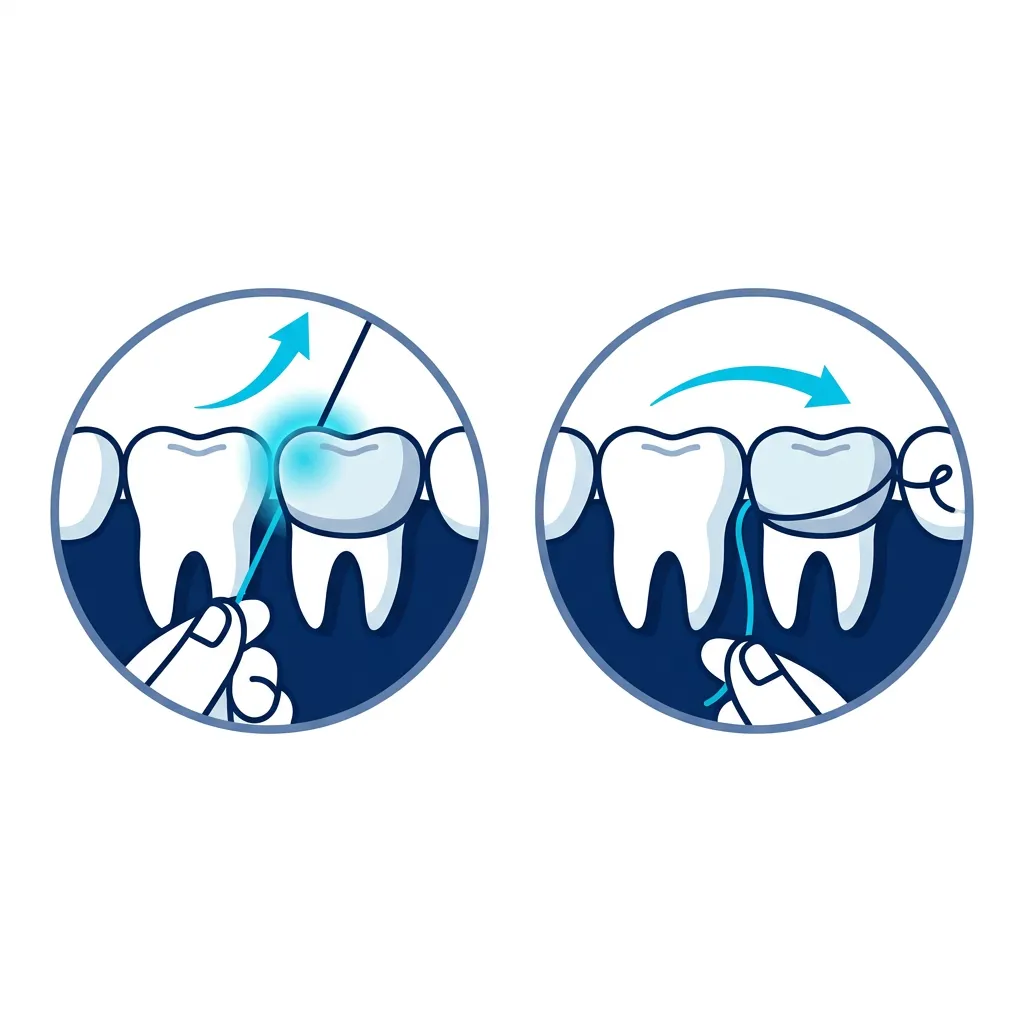
Floss around veneers and crowns by sliding the floss out sideways, not snapping it back up through the contact point. Thread it down gently, hug the side of each tooth in a C-shape, sweep below the gum line, then release one end and pull the floss through.
The snap is the problem. Yanking floss back up through a tight contact can catch a margin edge, and doing that twice a day for years is how well-fitted work gets levered at. Sliding out sideways removes the same plaque with none of the force.
Crowned teeth reward this care visibly. Gum that stays healthy hugs the crown edge and keeps it invisible; gum that recedes exposes the junction, which is one route to the grey shadow some people get with older metal-based work. We cover protecting the gum line around crowns in its own guide.
Still reaching for the whitening paste?
Why Is Whitening Toothpaste Pointless on Porcelain?
Whitening toothpaste does nothing for porcelain or zirconia because ceramic does not respond to peroxide or abrasion the way enamel does. The shade of a veneer or crown was fixed in the lab. No paste lightens it, and the scratchy ones dull it.
Whitening pastes work on natural teeth by scrubbing surface stain off with abrasives. Used on ceramic, those same abrasives scratch the glaze, and a scratched glaze loses its shine and starts holding tea and coffee stain in the scuffs. You pay extra for a paste that makes your veneers stainable.
The glaze is also the reason well-made ceramic barely stains in the first place. E-max and zirconia fire to a glass-smooth surface that red wine and curry mostly slide off, which is why Turkey veneers resist stains far better than composite or natural enamel. Your job is simply not to sand that surface away.
Which Products Should You Avoid With Veneers and Crowns?
The products to avoid with veneers and crowns are the abrasive, the alcoholic and the aggressive: whitening and charcoal pastes, hard-bristled brushes, alcohol mouthwashes and bicarbonate scrubs. Each one damages ceramic, bonding or gum in a different way.
| Product | Why to skip it |
|---|---|
| Whitening or smoker's toothpaste | High abrasivity scratches the glaze and cannot change the ceramic shade |
| Charcoal powders and pastes | Among the most abrasive products sold; dulls ceramic and wears enamel edges |
| Hard-bristled brushes | Wears the glaze and pushes the gum away from crown margins |
| Alcohol-based mouthwash | Dries the mouth and can degrade the surface of composite repairs over time |
| Bicarbonate of soda scrubs | A home abrasive with no upside on a surface that cannot whiten |
If a product's selling point is stain removal by scrubbing power, it was designed for enamel, not ceramic. Ordinary fluoride toothpaste, the plainest one on the shelf, is the right choice.
How Often Do Turkey Teeth Need Professional Cleaning?
Veneers and crowns need a hygienist visit every 6 months, the same schedule as natural teeth. A hygienist reaches the plaque and tartar your brush misses, especially along margins and behind lower front teeth, and spots early gum changes before you would notice them.
Tell the hygienist what you have and where. A good hygienist adjusts their approach around ceramic, polishing with a suitable paste and taking care with instruments at the margins.
Between visits, your daily routine is what does the real work of keeping turkey teeth looking new. The patients whose work still photographs well at year ten are almost always the ones with boring, consistent hygiene habits, not special products.
The Reading That Pairs With Your Cleaning Routine
Cleaning is one strand of a wider first-month routine that covers eating, sensitivity and knowing what is normal. If your veneers or crowns are new, the full 30-day aftercare plan walks through days 1 to 3, week 1 and weeks 2 to 4, including when to send the clinic photos.
What you eat decides how hard your cleaning has to work. Tea, red wine, turmeric and the rest of the foods you can and cannot eat with new veneers deserve a look if you have just had new veneers fitted, along with the timing rules for the first fortnight.
Cleaning Turkey Veneers FAQs
-
Can you use an electric toothbrush on veneers?
Yes. An electric toothbrush with a soft head and a pressure sensor is arguably the best option, because it standardises technique and warns you when you press too hard. Skip any abrasive "whitening" brush heads and let the brush do the work with light contact.
-
Do crowns need different cleaning than veneers?
No, the routine is identical: soft brush, non-abrasive paste, careful margin flossing. Crowns wrap the whole tooth, so their margin usually sits at or below the gum, which makes the gum-line angle of your brushing slightly more important than it is with veneers.
-
Are water flossers worth it with turkey teeth?
Water flossers are a useful addition, particularly around bridges, implant-supported teeth and tight contacts, but they rinse rather than scrape. Plaque is sticky and needs physical contact to remove, so use a water flosser alongside floss or interdental brushes, not instead of them.
-
What if your gums bleed when you floss around new veneers?
A little bleeding in the first week or two of proper flossing usually means the gums are inflamed and need more cleaning, not less. Keep going gently and it settles. Bleeding that continues beyond a fortnight, or gets worse, is worth showing to a dentist or hygienist.