

The Black Line at the Gum After Crowns: Why It Happens
The black line at the gum after crowns is usually the metal edge of a porcelain-fused-to-metal crown showing through as the gum recedes. It affects older metal-based crowns rather than modern all-ceramic ones, and it is often cosmetic rather than dangerous.
It is also the most visible way a crown ages, which is why so many people notice it in photographs before they notice it in the mirror.
What causes the black line at the gum?
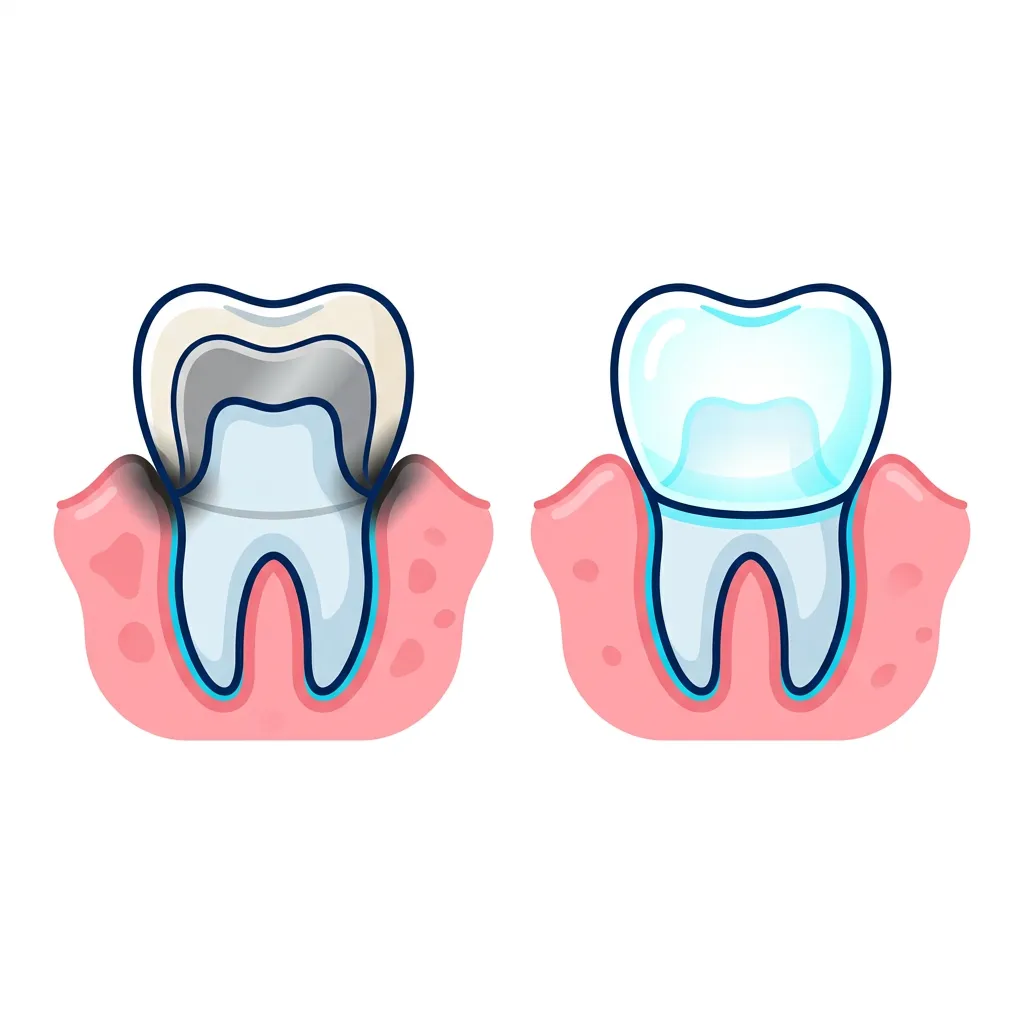
The black line has 3 possible causes: the metal collar of a porcelain-fused-to-metal crown becoming visible, gum recession exposing the crown margin and the darker root surface, or staining and decay collecting where the crown edge no longer seals.
- Metal showing through. A porcelain-fused-to-metal crown is porcelain baked over a grey metal shell. The porcelain stops just below the gum, so when the gum recedes even half a millimetre, the metal rim appears as a dark line.
- Recession exposing the margin. The junction between crown and root is naturally darker than porcelain, and root surfaces are yellower and darker than enamel. Receding gums put both on display.
- Stain or decay at the margin. A poorly fitting or ageing margin traps plaque, which stains dark and can progress to decay. This is the one cause that genuinely needs treatment rather than tolerance.
A fourth look-alike is worth knowing about. Teeth that have had root canal treatment can darken from within, and that darkness shows through the thin gum tissue near the crown edge. It reads as a black line but comes from the tooth, not the crown.
Wondering if yours is cause for worry?
Is the black line harmful or just cosmetic?
Metal showing through a receded gum is cosmetic; the crown can still be sealed, functional and safe. The line needs proper attention when it arrives with bleeding gums, ongoing recession, a bad taste, sensitivity or softness at the margin, because those point to disease rather than appearance.
A quick self-triage helps. If the line has been stable for years, the gum around it is pink and firm, and nothing hurts or bleeds, you are almost certainly looking at metal, and the decision in front of you is aesthetic.
If the gum bleeds when you brush, the line is spreading, or the area has started catching food or smelling, book an examination. Margins that leak do their damage quietly, and the visible line is the least of it.
Curious why modern crowns stay line-free?
Why don't all-ceramic crowns get the black line?
All-ceramic crowns contain no metal anywhere, so there is nothing grey to show through when gums move. Zirconium and E-max crowns are ceramic from core to surface, and they let light pass into the tooth the way enamel does rather than blocking it.
That light behaviour is the detail people underestimate. A metal-based crown blocks light at the gum line even before any recession, casting a subtle shadow along the gum. Ceramic transmits it, which is why all-ceramic crowns with no metal core keep looking like teeth as the years pass.
Recession changes the picture less, too. If gums pull back a little around an all-ceramic crown, the edge that appears is tooth-coloured ceramic against root surface, not a grey rim against pink gum. The ageing is gentler because the materials agree with each other.
Do crowns fitted in Turkey carry the black line risk?
Only if they are porcelain-fused-to-metal, and at a properly run Turkish clinic they almost never are. Zirconium and E-max are the standard materials for cosmetic crown work in Turkey, and neither contains metal, so the classic black line cannot develop.
The exception lives at the bottom of the market. Rock-bottom packages sometimes hit their price point by quoting metal-based crowns without saying so plainly, which saves money now and delivers a grey gum line in a few years.
The protection is one written question: which exact material is being used, and does it contain any metal. A clinic proud of its answer will name the ceramic and often the brand. A clinic that answers "porcelain" and moves on has told you something too.
Already staring at one in the mirror?
What can you do if you already have a black line?
You have 3 options: leave it and monitor, treat the gum problem that exposed it, or replace the crown with an all-ceramic one. The right choice depends on why the line appeared and how much the tooth shows when you smile.
Leaving it is legitimate. A stable line on a lower molar nobody sees, with healthy gum around it, justifies nothing beyond normal check-ups. Dentistry you don't need is dentistry you shouldn't buy.
If recession is still moving, the gum comes first, because a new crown fitted against a retreating gum line inherits the same fate. The logic of gum health before cosmetic work applies to replacement crowns exactly as it does to first-time veneers.
Replacement is the definitive fix for a visible front tooth. The old crown is cut away, the margin is refined, and a new all-ceramic crown goes on, typically E-max crowns that stay invisible at the gum for front teeth and zirconium further back. Done properly, the line does not return.
How do you stop a black line coming back?
Prevention rests on four things: an all-ceramic material, a margin placed correctly for your gum line, gums kept healthy, and daily cleaning where crown meets gum. Get those right and the black line stays a story about your old crowns.
Margin placement is the technical one worth asking about. A good dentist sets the crown edge just at or slightly below the gum line, matched to your gum thickness, so normal ageing does not expose it within a few years.
The rest is habit. A soft brush angled into the gum line, floss curved around the crown rather than snapped past it, and interdental brushes where they fit: cleaning along the crown margin is a two-minute routine that protects work you paid good money for.
Further reading on crowns and what sits beneath
A black line is one chapter in the longer story of how crowns age. Margins, materials, gum health and grinding habits all set the pace, and what determines a crown's lifespan covers that full picture, material by material.
It also helps to understand the tooth itself, because crowns and veneers are only ever as healthy as what's happening beneath the surface: the prepared tooth, the cement seal and the gum attachment doing quiet work underneath the ceramic.
Frequently asked questions
-
Can a dentist polish the black line away?
Not if it is metal, which most are. Polishing cannot change what the crown is made of. Surface stain trapped at the margin can sometimes be cleaned or polished off, which is why the first step is a proper look to establish which type of line you have.
-
Does a black line mean my crown has failed?
No. A visible metal rim says the gum has moved, not that the seal has broken. Plenty of crowns show a line for a decade while working perfectly. Failure looks different: looseness, a recurrent bad taste, sensitivity, bleeding gums or decay at the margin.
-
Will my gum grow back and cover the line?
Not on its own; gum tissue rarely regrows upward once it has receded. Grafting procedures exist for severe recession, but for a single dark crown margin the simpler and more predictable fix is usually a new all-ceramic crown with the margin set correctly.
-
How soon after getting crowns can a black line appear?
With metal-based crowns, usually years, appearing gradually as gums recede a fraction of a millimetre at a time. A dark margin showing within months of fitting suggests the margin sat too shallow or the gum was inflamed at fitting, and the clinic should look at it.