
Turkey Teeth Gone Wrong: What Actually Happens, and How Often
Turkey teeth go wrong in six main ways: over-preparation, infection, nerve damage, fractured crowns, misplaced implants and results that don't match what was agreed. Most failures trace back to planning and speed rather than geography, which is why the risk varies so sharply between clinics.
We say that as a clinic in Antalya. We treat UK patients every week, and we also see the repair cases that other clinics leave behind. This guide explains what actually fails, how often, and what to do if it has already happened to you.
What Does "Turkey Teeth Gone Wrong" Actually Mean?
"Turkey teeth gone wrong" describes cosmetic dental work from Turkey that fails early: crowns that chip or fall off, gums that stay inflamed, teeth that die under their new covers, and smiles that look nothing like the photos that sold them.
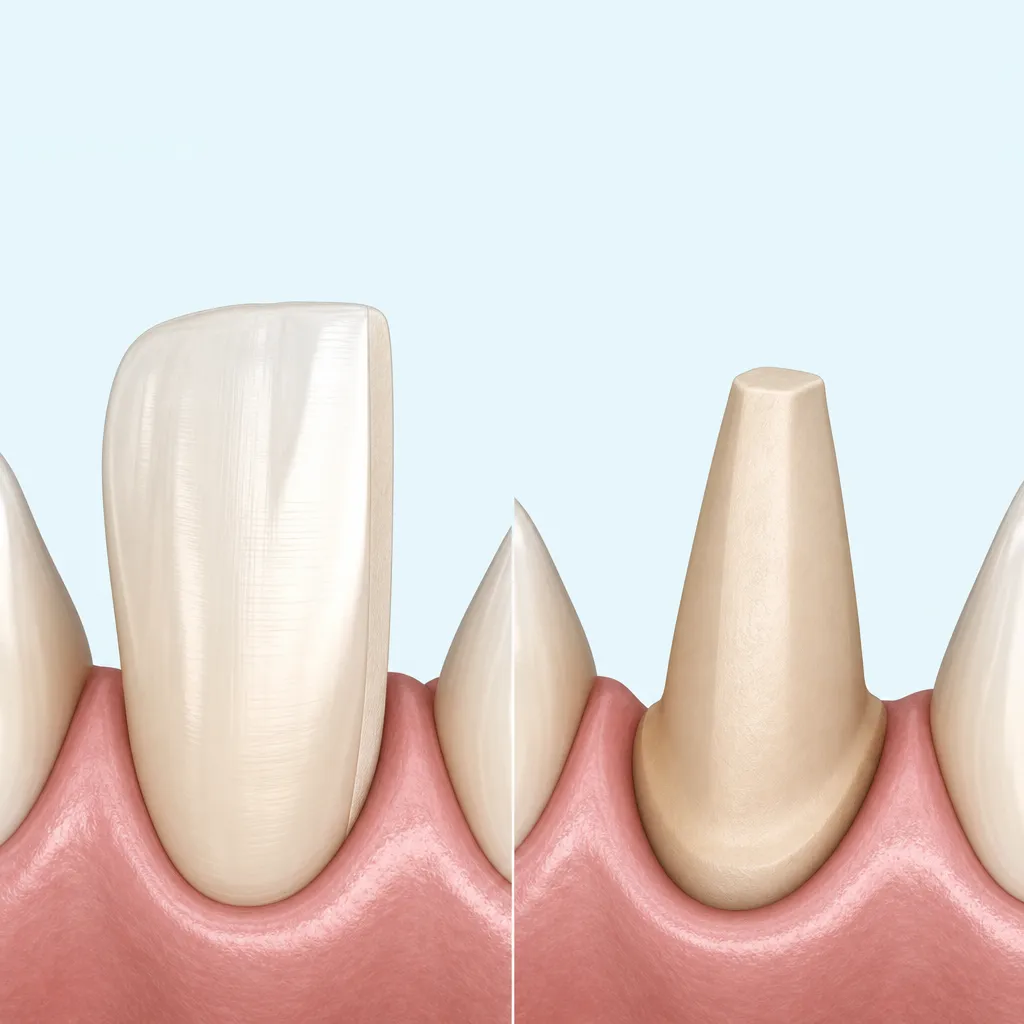
The phrase needs one correction before anything else. Most so-called Turkey veneers are not veneers at all. They are full crowns, which involve far more drilling, and most of the damage you read about starts with that single substitution.
The distinction matters because a veneer failure is usually repairable. A crown failure on a heavily cut tooth can mean root canal treatment or extraction. The treatment you were actually sold decides how bad "gone wrong" can get.
Want the six failure modes one by one?
What Are the 6 Ways Turkey Teeth Go Wrong?
The 6 failure modes for turkey teeth are over-preparation, infection, nerve damage, fractures and debonding, misplaced implants, and mismatched results. Each one has a different cause, a different timescale and a different repair bill, so they are worth separating properly.
| Failure mode | What happens | When it usually shows |
|---|---|---|
| Over-preparation | Healthy teeth cut down to small pegs for crowns that lighter veneers could have replaced | Immediately, and the loss is permanent |
| Infection | Bacteria get in through exposed dentine or poorly sealed crown margins | Days to months after fitting |
| Nerve damage | Aggressive drilling inflames or kills the pulp, so the tooth later needs root canal treatment | Weeks to two years |
| Fractures and debonding | Crowns chip, crack or come away because the bite was never properly balanced | Months to a few years |
| Misplaced implants | Implants placed at the wrong angle or depth, missing solid bone or crowding nerves | During healing, or once under load |
| Mismatched results | A shade, shape or size that suits neither your face nor the plan you agreed | The moment the mirror comes out |
Spotted the one that worries you most?
Over-preparation sits at the top because it causes half of what follows. A tooth filed to a peg has lost its enamel and much of its dentine, and nothing regrows. Every future restoration builds on that weakened core, and every replacement removes a little more.
Nerve damage is the quiet one. A tooth can take heavy drilling, seem fine for a year, then flare into an abscess on a Tuesday morning in Wigan, a long way from the dentist who caused it. UK dentists see these late pulp deaths regularly after aggressive crown preparation.
Infection and fractures usually share a root cause: speed. Gum disease left untreated under new crowns keeps smouldering out of sight, and a bite balanced in a hurry overloads porcelain until it cracks. Both are avoidable, given time that compressed schedules do not have.
Misplaced implants are the rarest of the six and the most serious, because removal and bone repair come before any second attempt. They belong to the same story: surgery planned from a quick scan, placed in days, reviewed by nobody.
Mismatched results are the failure nobody budgets for. The teeth function and nothing hurts, but the shade is a chalky monochrome white and the shape belongs to someone else's face. Clinically minor, personally miserable, and expensive to redo.
How Often Do Turkey Teeth Actually Go Wrong?
Nobody records a true failure rate for turkey teeth, because no register tracks dental tourism outcomes. The honest answer is a body of partial evidence, and the strongest of it comes from UK dentists rather than from clinics like ours.
In a British Dental Association survey of more than 1,000 dentists, 95% had examined patients who travelled abroad for dental treatment, and 86% of those had treated cases that developed complications [1]. Crowns were the treatment most likely to need follow-up work, closely followed by implants.
Read that carefully before panicking. It tells you complications are common enough that most UK dentists have handled them. It does not tell you what percentage of all treatments fail, because patients whose teeth are fine rarely feature in anyone's survey.
Our own repair caseload tells the same story from the other end. The patients who reach us with failed work were almost never treated by a licensed clinic working at a normal pace. They were treated by whoever quoted lowest that week.
The same survey sketches the repair economics. Two-thirds of dentists put the cost of putting things right at £500 or more, and one in five saw bills beyond £5,000. We break down botched turkey teeth and what it costs to fix them in the UK separately, repair by repair.
So why does this keep happening?
Why Do Turkey Teeth Go Wrong?
Turkey teeth go wrong for three business reasons: package-first planning, compressed timelines and missing aftercare. The drilling happens in a mouth, but the damage starts in a spreadsheet. This is the part of our industry we like least, so here it is plainly.
Package-first planning. A quote for "a full set of 20 crowns" sent over WhatsApp before anyone has seen an X-ray is not a treatment plan, it is a sales target. Proper planning starts with imaging and gum health, and sometimes ends with "you need six veneers and a hygienist", which sells fewer crowns.
Compressed timelines. Cutting, building and fitting a full set inside three or four days leaves no room for gum treatment, for root canals that show up on scans, or for a trial smile you can live with overnight before it becomes permanent. Biology does not care about your return flight.
No aftercare pathway. A crown fitted 2,000 miles from your home needs someone to answer when it aches in month three. Clinics without a review system, photo check-ins and a named contact let small problems grow into the failures in the table above.
Underneath all three sits the lab problem nobody mentions. Crowns and veneers are made by technicians, not dentists, and a lab given one day per case produces work a lab given four days would reject. You never meet the lab, but you wear its standards for a decade.
None of these are Turkish problems. They are cut-price business model problems, and plenty of Turkish clinics refuse to run that way. The difference between the horror stories and turkey teeth treatments done properly is the order of events: assessment first, quote second, flights last.
What Should You Do if Your Turkey Teeth Have Already Gone Wrong?
Act in a set order if your turkey teeth have gone wrong: stabilise anything painful, gather your records, then decide on repair. Jumping straight to an expensive full redo is the second most common mistake we see, after the original treatment.
- Deal with pain and infection first. Swelling, a bad taste or throbbing that wakes you at night needs a dentist within days, not a debate about who pays.
- Contact the clinic that treated you, in writing. Include photos and dates. A decent clinic responds with next steps. Silence tells you what your guarantee was worth.
- Request your full records. Treatment plan, X-rays and the materials used. You are entitled to them, and any dentist who helps you will want them.
- Get a UK assessment, not necessarily a rebuild. Ask what needs doing now, what can wait, and what each stage costs.
- Keep every receipt and message. If this ends in a refund negotiation or a formal complaint, the paper trail decides it.
Timing matters more than people realise. Records go missing when clinics rebrand, guarantees lapse quietly, and infections pick their own schedule. Two weeks of organised admin now usually beats six months of hoping it settles.
Step four worries people most, because stories circulate about British practices turning these cases away. The truth is more mixed than the stories suggest, and we answer will a UK dentist work on turkey teeth honestly: routine care almost always, repairs often, free warranty work never.
How Do You Stop Turkey Teeth Going Wrong in the First Place?
Preventing bad turkey teeth is mostly a screening job you do from your sofa, weeks before any drill starts. The clinics behind the failure photos share habits you can spot in a first email exchange.
- Insist on X-rays or a CT scan reviewed by a named dentist before any quote is final.
- Treat "we can do the whole set in three days" as a warning, not a convenience.
- Ask why the plan is crowns rather than veneers, and what each means for your enamel.
- Compare quotes against our guide to veneers in Turkey, costs and packages. A price 40% below the whole market has removed something you can't see, usually lab quality or planning time.
- Ask what happens if a crown chips in month six: a named contact and a review process, or a WhatsApp number that stops replying.
Do the checks in writing, and keep the replies. Not because you are building a court case, but because clinics answer differently when they know their answers are kept. The good ones do not change at all, which is itself the tell you wanted.
A clinic that passes all five checks can still be imperfect. It is very unlikely to be dangerous, and that is the bar this decision actually needs to clear.
Where This Fits in Your Research
Every failure mode in this guide announces itself before you book, if you know the tells. Same-day full sets, stock-photo smiles, pressure deposits and prices that undercut the entire market all predict trouble, and we walk through the worst turkey teeth red flags that predict a bad result one by one.
Licensing is the other half of screening a Turkish clinic. Ministry of Health permits, dentist registration and international quality marks each prove something different, and badge graphics on a homepage prove nothing without certificate numbers. Here is what accreditation a Turkish dental clinic should have, and how to verify every layer yourself.
Frequently Asked Questions
-
Can turkey teeth gone wrong be fixed?
Usually, yes. Chipped or debonded crowns can be remade, infections treated, and poor shades redesigned. The limiting factor is how much healthy tooth remains underneath. Heavily over-prepared teeth sometimes need root canal treatment or implants, which is why acting early protects your options.
-
Do all turkey teeth eventually go wrong?
No. Well-planned crowns and veneers on healthy teeth routinely last 10 to 15 years, in Turkey as anywhere else. The failures cluster around one model: maximum teeth, minimum days, no aftercare. Avoid that model and your odds resemble private dentistry in general.
-
How soon do problems usually appear?
Fit and shade problems show immediately. Gum inflammation tends to appear within weeks. Nerve damage is slower, often surfacing as toothache or an abscess six months to two years after treatment. That delay is exactly why review appointments and photo check-ins belong in any serious treatment plan.
-
Will the clinic that did the work pay to fix it?
Sometimes. Reputable clinics honour written guarantees covering remakes of failed work, although usually back in Turkey, and travel costs are rarely included. If the clinic has gone quiet, keep records of everything and get a UK assessment before deciding your next step.
-
Is the problem getting worse?
The volume certainly is: in the same BDA survey, nearly 85% of dentists described dental tourism as a growing trend. Whether the failure rate is rising is unknowable without a registry. Our view from Antalya is that both ends are growing, the careful clinics and the conveyor belts.
Get your free quote from UK Smiles
References
- [1] British Dental Association - survey of over 1,000 UK dentists on dental tourism, complication rates and repair costs - bda.org - accessed July 2026.