

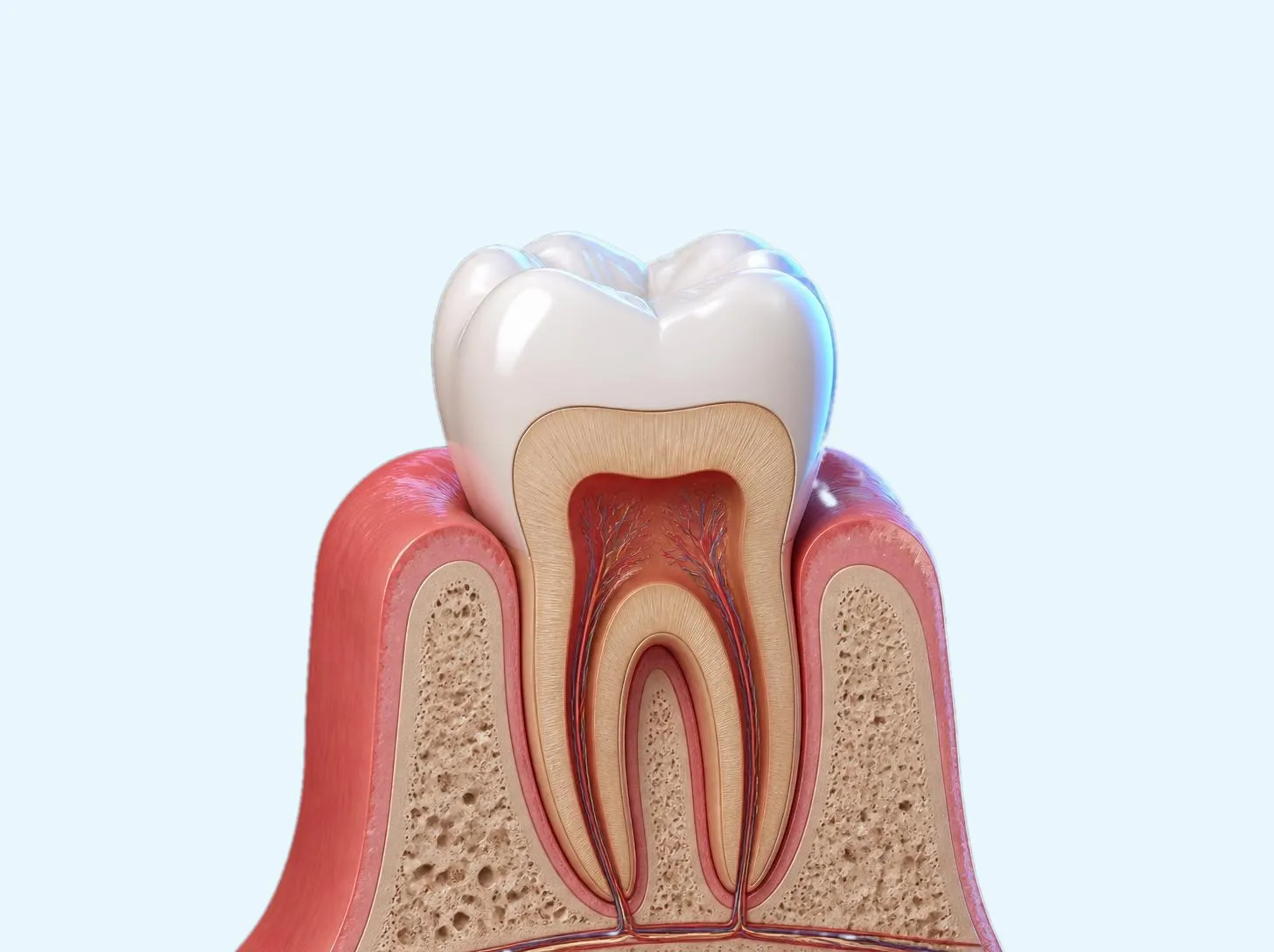
Types of Crowns in Turkey: Zirconia, Emax, Monolithic and Layered Compared
Most crowns in Turkey are made from one of two ceramics: zirconia, which is the strongest, or Emax, which looks the most like natural enamel. Zirconia then comes in three forms, monolithic, layered and premium multilayer. Which one is right depends on the tooth: strength at the back, looks at the front.
Why Does the Crown Material Matter?
A crown is a cap that covers a tooth on every side. Once it is fitted, you will bite, chew and smile with it every day for years.
The material decides three things: how strong the crown is, how natural it looks, and how likely it is to chip. No single material wins all three.
That is why a good treatment plan names the material for each tooth, rather than just saying "crowns". If your quote only says "porcelain" or "premium crowns", it is worth asking exactly what that means.
So what are the options?
What Are Monolithic Zirconia Crowns?
Monolithic means "one piece". A monolithic zirconia crown is milled from a single solid block of zirconia by a computer-guided machine, then stained and glazed.
Zirconia is an extremely tough ceramic, at around 1,200 MPa of strength on our spec sheet. Because the crown is one piece, there is no separate surface layer waiting to flake off.
That makes it the usual choice for back teeth, for people who grind, and for full sets of crowns that take real biting force.
The trade-off is looks. Basic single-shade zirconia lets less light through than natural enamel, so on its own it can look slightly flat on front teeth.
What Are Layered Zirconia Crowns?
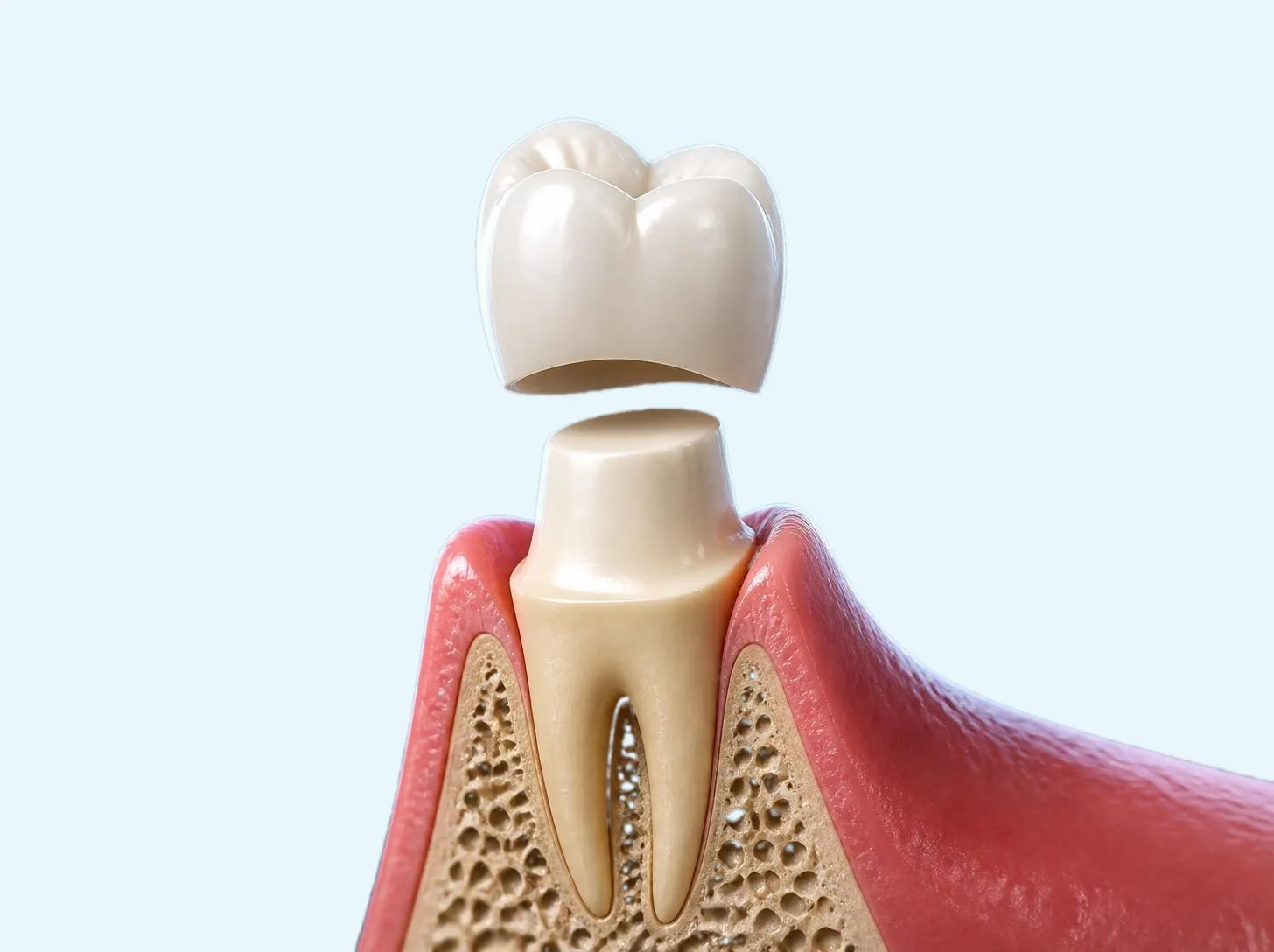
A layered zirconia crown has two parts: a strong zirconia core, with a thin layer of porcelain baked over the outside.
The porcelain adds translucency and fine surface detail, so layered crowns look closer to Emax. They are mostly used on front teeth, where looks matter most.
The catch is the join. The porcelain layer is weaker than the zirconia underneath, and in older research it was the part most likely to chip. More on that in the research section below.
Is there a way to get the looks without the layer?
What Is Premium Multilayer Zirconia?
Multilayer zirconia is still one solid piece, but the block it is milled from changes in shade and translucency from one end to the other.
The crown is positioned in the block so the warmer, stronger zirconia sits near the gum and the paler, more see-through zirconia forms the biting edge. That copies the way a natural tooth looks, without adding a porcelain layer.
The clinic in Antalya offers two premium multilayer options as upgrades to standard zirconia: IPS e.max ZirCAD Prime by Ivoclar, and Sagemax NexxZr. Our guide to Sagemax NexxZr zirconia and why people choose it goes into the materials in detail.
For many people having a full smile, multilayer zirconia is the middle ground: strongest at the gum end and a little less strong at the biting edge, with a much more natural finish.
What Are Emax Crowns?
Emax is the brand name of IPS e.max, a lithium disilicate glass ceramic made by Ivoclar. It is best known for veneers, but it is also used for crowns.
Its big strength is looks. Emax lets light through in a way that is very close to natural enamel, so it is the go-to material where a crown shows most, on the front teeth.
It is not as strong as zirconia, at around 400 to 500 MPa depending on the product, so it is a less natural fit for back molars or for people who grind heavily.
If you are weighing it up for your front teeth, our page on Emax crowns in Turkey and what they cost sets out the prices, the process and the warranty.
What About Porcelain-Fused-to-Metal Crowns?
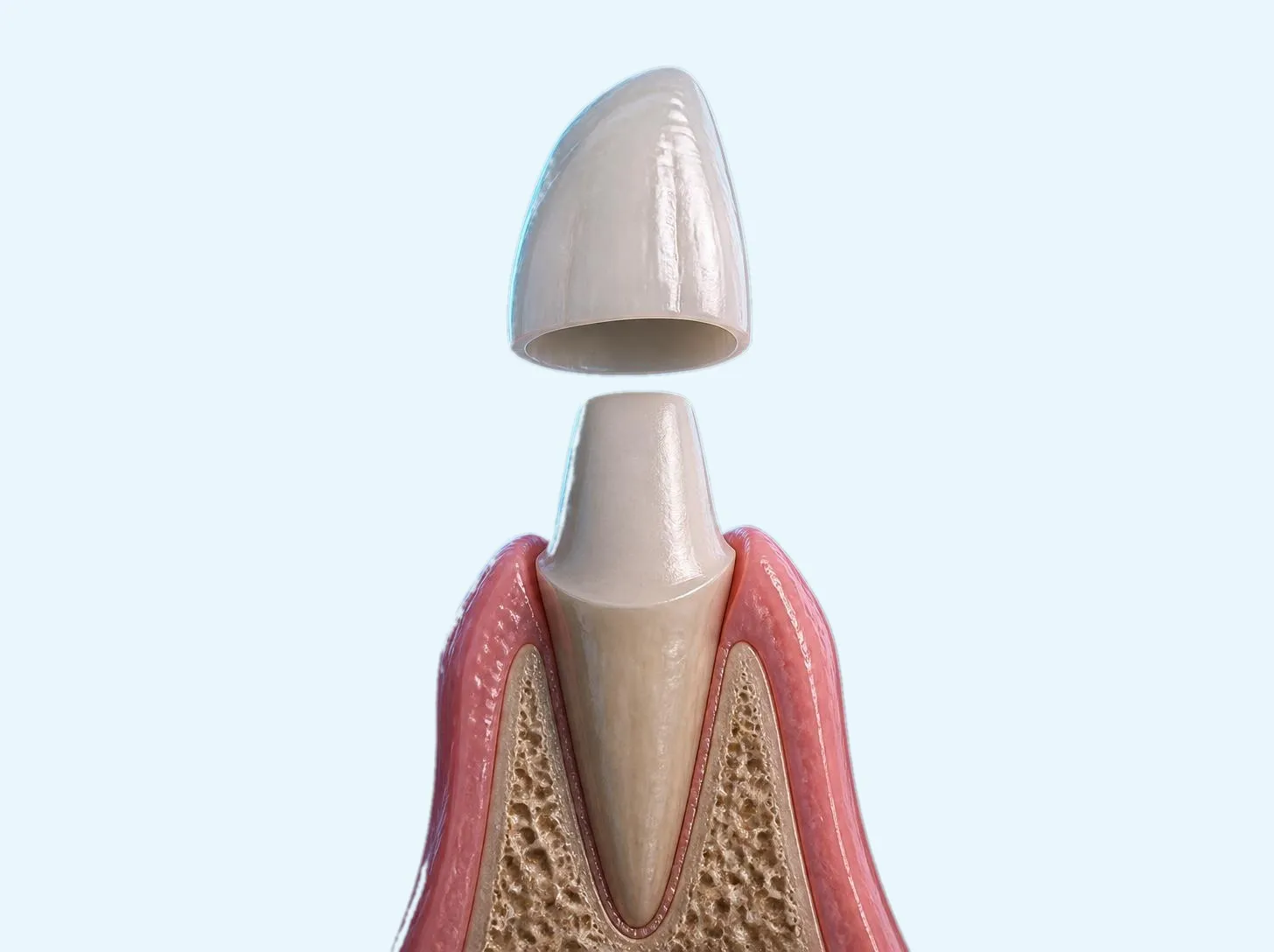
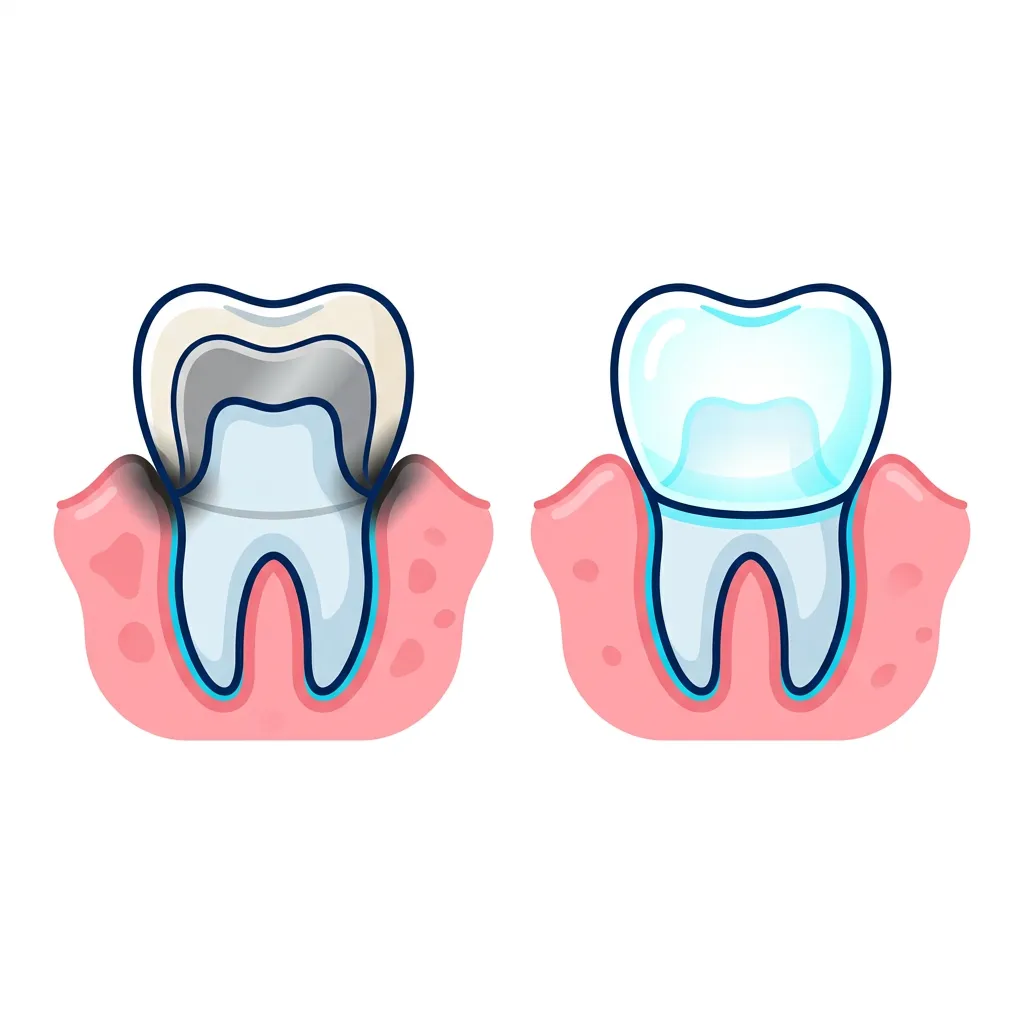
Porcelain-fused-to-metal crowns, often shortened to PFM, have a metal core with porcelain on top. For decades they were the standard crown, and some clinics still offer them because they are cheap to make.
They are strong and have a long track record. The problem is cosmetic: if the gum shrinks back over the years, the metal edge can show as a dark line, which we explain in our guide to the black line some crowns leave at the gum.
The metal core also blocks light, so the crown can look more opaque than the teeth around it.
UK Smiles does not use metal or porcelain-fused-to-metal crowns. Every crown we arrange is all-ceramic, either zirconia or Emax.
Every Type of Crown Compared
Here is how the crown types you are likely to see on a Turkey quote compare side by side.
| Crown type | Strength | Looks | Chip risk | Best for |
|---|---|---|---|---|
| Monolithic zirconia | Highest | Good, can look a little flat | Very low | Back teeth, grinders, full sets |
| Layered zirconia | Strong core | Very good | Low to moderate (porcelain layer) | Front teeth |
| Multilayer zirconia (ZirCAD Prime, Sagemax) | High | Very good, natural gradient | Very low | Full smiles, front and back |
| Emax (lithium disilicate) | Moderate | Excellent, most enamel-like | Low | Front teeth |
| Porcelain-fused-to-metal | High | Fair, can show a dark gum line | Moderate (porcelain layer) | Not offered by UK Smiles |
So which one should you have?
Which Crown Is Right for Which Tooth?
Most people do not need one material for every tooth. The dentist matches the material to the job each tooth does.
- Back teeth. Your molars take the most force, so monolithic zirconia is usually the first choice.
- Front teeth. These show most when you smile, so Emax or premium multilayer zirconia usually gives the most natural result.
- A full set. Many people have zirconia throughout for strength, upgraded to multilayer zirconia for a more natural look, or zirconia at the back with Emax at the front.
- If you grind your teeth. Zirconia is the safer choice, ideally with a night guard to protect both the crowns and the teeth they bite against.
- If you have a metal allergy. Zirconia and Emax are both metal-free.
Not sure whether you need crowns at all? Our comparison of crowns versus veneers in Turkey explains how much tooth each one removes and who suits which.
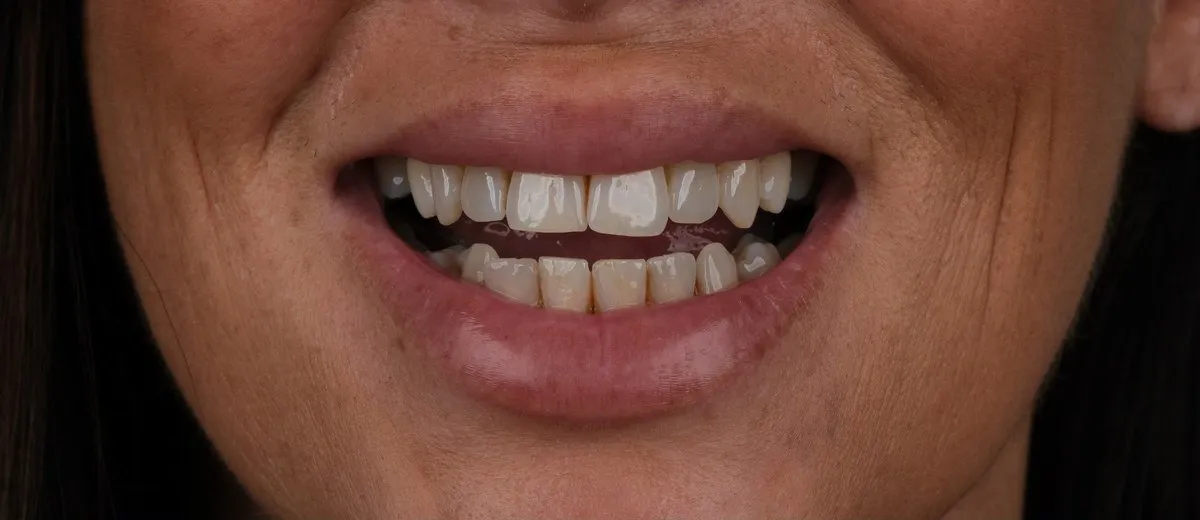
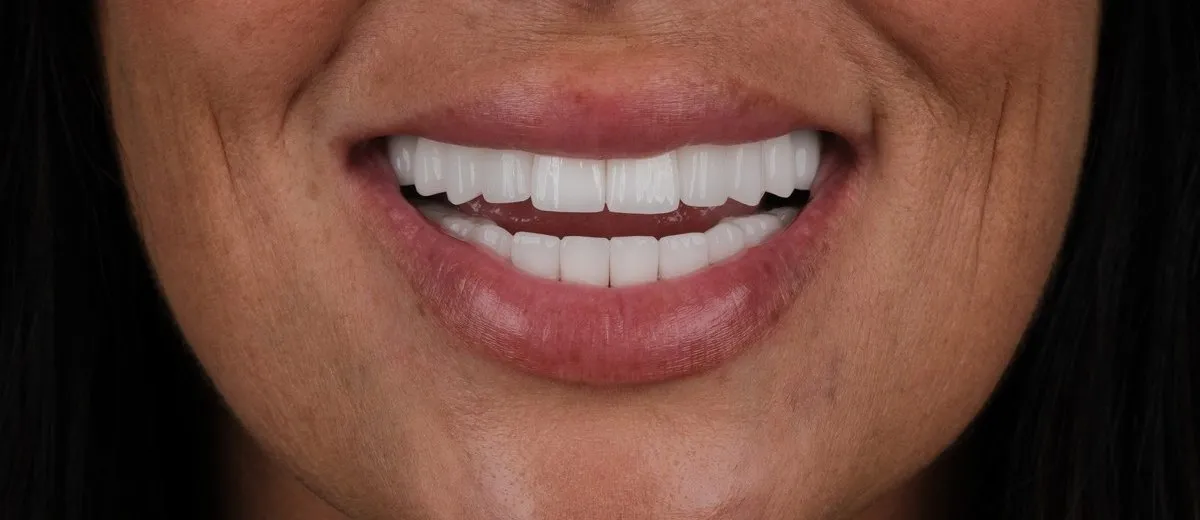
Before and after a full set of zirconia crowns, arranged through UK Smiles.
How Much Tooth Does a Crown Remove?
Every crown, whatever it is made of, needs the tooth to be shaped on all sides to make room. That is the biggest decision in the whole process, bigger than the material.
A Journal of Prosthetic Dentistry study measured it: on front teeth, full-coverage crown preparations removed roughly 63% to 72% of the tooth above the gum, against roughly 3% to 30% for veneer preparations.
The material changes this a little. Zirconia can be made thinner than many other ceramics and still be strong, so a monolithic zirconia crown may need slightly less shaping than a layered one. But a crown is always a bigger step than a veneer.
That is why a good dentist only recommends crowns where a tooth needs them: heavy fillings, cracks, root canal treatment, worn or badly shaped teeth. If your teeth are healthy and you only want a colour or shape change, ask whether veneers would do the job.
What if the tooth is missing altogether?
Which Crowns Go on Dental Implants?
When a tooth is missing, a dental implant replaces the root and a crown sits on top. The same materials are used, and zirconia is a popular choice because it is strong and does not show metal at the gum.
An implant crown is either screwed onto the implant or cemented. Screw-retained crowns can be removed by the dentist later if anything needs attention, which is why many dentists prefer them.
For a whole jaw of missing teeth, a full bridge on four or six implants is usually more practical and affordable than a crown per implant. Our guide to choosing All-on-4 or All-on-6 in Turkey explains how that works.
What Does the Research Say?
Layered zirconia had a chipping problem. A 2015 systematic review in Dental Materials estimated five-year survival of zirconia single crowns at 91.2%, against 95.7% for metal-ceramic crowns. A leading cause of failure was the porcelain layer on top of the zirconia fracturing.
One-piece zirconia changed that. In a 2021 study of 50 monolithic zirconia crowns on back teeth, 98% survived five years, with no fractures or cracks found.
Emax holds up well over time. A 2018 study of one-piece Emax crowns on back teeth found 83.5% survived ten years. That was on molars and premolars, the hardest job for a glass ceramic, which is why Emax is usually kept for the front.
The lesson from all three: keep the crown in one piece where you can, use zirconia where the load is highest, and save the most translucent materials for where they show.
How Long Does Each Type of Crown Last?
How long a crown lasts depends as much on you as on the material. Brushing, cleaning between the teeth, regular check-ups and a night guard if you grind all add years.
As a rough guide, with good care:
| Crown type | Typical lifespan with good care | What usually ends it |
|---|---|---|
| Monolithic zirconia | Expected around 15 to 20 years | Decay or gum problems at the edge, rarely the crown itself |
| Multilayer zirconia | Expected around 15 to 20 years | As above; the translucent edge is the weaker part |
| Layered zirconia | Around 10 to 15 years | Chipping of the porcelain layer |
| Emax | Around 10 to 15 years | Fracture under heavy biting, or decay at the edge |
These are typical ranges, not promises. The tooth underneath can still decay, so the edge where crown meets tooth is where most problems start.
So what should you ask before you choose?
What Should You Ask Before Choosing a Crown?
Whoever you book with, these questions tell you a lot about the quality of the plan.
- Which material is each tooth getting? A good plan names the material tooth by tooth, not just "crowns".
- Which brand of zirconia or Emax? Known makers such as Ivoclar publish their technical data, so you can check it.
- Is the zirconia monolithic or layered? This tells you how likely it is to chip.
- Will I see a trial before they are fitted? You should be able to check the shape and shade first.
- What is the warranty, and is it in writing? Ask what it covers and what you need to do to keep it.
- What happens if something goes wrong at home? Ask who you contact and what support there is in the UK.
How Much Do Crowns Cost in Turkey?
With UK Smiles, a full set of 20 zirconia crowns typically costs around £2,980, and 20 Emax crowns around £4,370, or around £3,626 for 16. Those are package prices, with your hotel in Lara and VIP airport transfers included.
Privately in the UK, crowns typically cost around £700 to £1,500 a tooth, so a full set of 20 often runs to £14,000 or more.
Premium multilayer zirconia is an upgrade on standard zirconia, and the price depends on how many crowns you are having. For the full breakdown, see our guide to dental crowns in Turkey, prices and materials.
Choosing Your Crowns With UK Smiles
You do not have to work this out alone. Send us photos or an X-ray, and the dentist will recommend a material for each tooth, with the reasons, in your treatment plan.
At the clinic in Antalya you see a trial version of your smile before anything is fitted, so you can check the shape and shade first.
There is nothing to pay up front, so you can book with complete peace of mind. All you need to do is book your flights and fill in our booking form, and we will sort the rest.
If you are leaning towards zirconia for a full set, our page on zirconia crowns in Turkey covers the options in more depth.
Frequently Asked Questions
-
What is the best type of crown to get in Turkey?
There is no single best crown. Monolithic zirconia is usually the right choice for back teeth, grinders and full sets because it is the strongest. Emax gives the most natural look on front teeth. Many people have zirconia at the back and Emax or premium multilayer zirconia at the front, matched to one shade.
-
What is the difference between monolithic and layered zirconia?
A monolithic zirconia crown is milled from one solid block, so there is no separate layer to chip. A layered zirconia crown has a zirconia core with a thin layer of porcelain baked on top for extra translucency. Layered crowns can look a little more lifelike, but the porcelain layer is the part most likely to chip.
-
Are Emax crowns better than zirconia crowns?
Emax is better for looks and zirconia is better for strength. Emax is a glass ceramic with an enamel-like glow, which suits front teeth. Zirconia is far stronger, which suits back teeth and people who grind. The right answer depends on which tooth is being crowned.
-
Do crowns in Turkey contain metal?
Some clinics still offer porcelain-fused-to-metal crowns because they are cheap to make. UK Smiles does not use them. Every crown is all-ceramic, either zirconia or Emax, so there is no metal core to show as a grey line at the gum.
-
How long do zirconia and Emax crowns last?
With good care, zirconia crowns are expected to last around 15 to 20 years and Emax crowns around 10 to 15 years. Brushing, cleaning between the teeth, regular check-ups and a night guard if you grind make the biggest difference.
-
Can I mix zirconia and Emax crowns in one smile?
Yes. It is common to have strong zirconia crowns on the back teeth and Emax or multilayer zirconia on the front teeth. The dentist and technician match the shades so the smile looks even from side to side.
-
Can zirconia or Emax crowns be whitened?
No. Ceramic crowns do not respond to whitening gel. If you want your natural teeth whiter, whiten them first and then have the crowns made to match the new shade.
-
Can a chipped crown be repaired?
Small chips on a layered crown can sometimes be polished or repaired with bonding, but a bigger fracture usually means replacing the crown. One-piece zirconia crowns rarely chip, which is one reason they are popular for back teeth.
-
Do zirconia crowns show up on X-rays?
Yes. Zirconia is radiopaque, so it shows clearly on an X-ray. Your dentist at home can still check the tooth and the edges of the crown, though they cannot see through the crown itself.
Sources
- Sailer I, Makarov NA, Thoma DS, Zwahlen M, Pjetursson BE. All-ceramic or metal-ceramic tooth-supported fixed dental prostheses? A systematic review of the survival and complication rates. Part I: Single crowns. Dental Materials, 2015.
- Solá-Ruiz MF, Baixauli-López M, Roig-Vanaclocha A, Amengual-Lorenzo J, Agustín-Panadero R. Prospective study of monolithic zirconia crowns: clinical behavior and survival rate at a 5-year follow-up. Journal of Prosthodontic Research, 2021.
- Edelhoff D, Sorensen JA. Tooth structure removal associated with various preparation designs for anterior teeth. The Journal of Prosthetic Dentistry, 2002.
- Rauch A, Reich S, Dalchau L, et al. Clinical survival of chair-side generated monolithic lithium disilicate crowns: 10-year results. Clinical Oral Investigations, 2018.