
What Do Teeth Look Like Under Turkey Veneers?
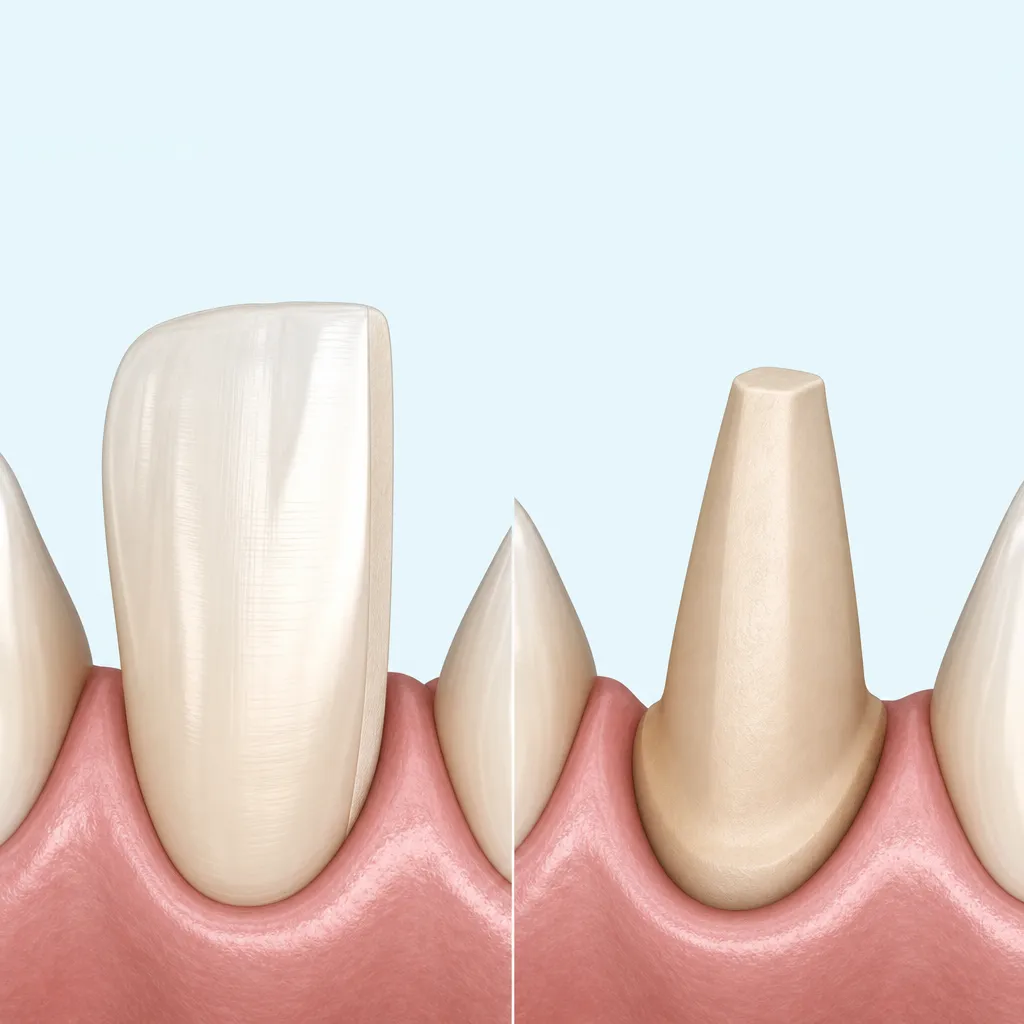
Teeth under Turkey veneers look like slightly matte, lightly buffed versions of themselves when the preparation is minimal. They only look like small tapered pegs when they have been heavily drilled, and that is crown preparation, not veneer preparation.
The difference between those two pictures is the most misunderstood thing in dental tourism. Here is what you would actually see at every stage.
What Do Minimally Prepared Teeth Look Like?
Minimally prepared teeth look almost unchanged, just less shiny. The dentist removes 0.3 to 0.7 millimetres of surface enamel, which leaves the tooth its full shape and length with a finely roughened front face, similar to glass that has been sandblasted.
Stand a metre from the mirror and you would struggle to spot the difference. Up close, the prepared surface looks matte and very slightly chalky, with soft edges where the polish has gone. The tooth is still recognisably yours.
Dentists start this stage by cutting shallow depth grooves, tiny tramlines 0.3 to 0.5 millimetres deep, then buffing the surface down until the grooves vanish. The grooves are the guarantee: when they disappear, exactly the planned amount has gone and no more.
Some patients see their prepared teeth in the clinic mirror and visibly relax. After a diet of horror videos, ordinary-looking teeth with a matte finish are an anticlimax, and that is exactly the point.
That is the standard with minimal-preparation laminate veneers, because E-max ceramic is strong enough at 0.3 to 0.5 millimetres that the dentist only needs to create a whisper of space for it.
So where do the peg photos come from?
Why Do Some Photos Show Teeth Shaved to Pegs?
Teeth shaved to pegs have been prepared for crowns, not veneers. Crown preparation removes 1 to 2 millimetres from every surface, including the biting edge, leaving the small tapered stumps you have seen in viral videos filmed in hotel bathrooms.
A veneer covers only the front of the tooth, so the back and biting edge are largely left alone. A crown wraps the whole tooth, so everything gets reduced. Same drill, completely different amount of tooth left behind.
Plenty of what is sold abroad as a full set of veneers is actually a full set of crowns, which is why the pegs keep appearing on social media under the wrong label. If you are researching with photos, it is worth learning the habit of reading turkey teeth photos properly before you let any single image settle your decision.
To be fair to crowns, pegs are not automatically malpractice. A tooth that is heavily broken, root-treated or badly rotated can genuinely need a crown, and preparing it properly means reducing it properly. The problem is crown preparation applied to 20 healthy teeth for speed, not the existence of crown preparation.
What Colour Are Teeth Under Veneers?
Teeth under veneers are usually a shade or two deeper than they were before preparation. Thinning the enamel lets more of the dentine underneath show through, and dentine carries the yellower tone in every natural tooth.
That warmer colour is normal and healthy, not a sign the tooth is rotting under there. It also explains a design point most people never hear: the veneer's ceramic has to mask the prepared shade while still letting light through, which is a balancing act.
It is one of the reasons choosing a natural shade from the colour chart matters so much before treatment starts. The final colour you walk around with is the ceramic and the tooth working together, not the ceramic alone.
One colour you should never see on a freshly prepared tooth is black or brown. Dark patches mean decay that should have been treated before any cosmetic work began, and a single dark grey tooth usually points to an old root canal rather than anything the drill did.
Curious what you'll see mid-treatment?
What Do Teeth Look Like Between Preparation and Fitting?
Between preparation and fitting, your teeth sit under temporary veneers, slim acrylic covers worn for the few days while the lab presses your final set. In the mirror they look like a decent preview: smooth, tooth-coloured, slightly more plasticky than ceramic.
Temporaries are deliberately a working draft. Expect a less refined finish, a join you can find with your tongue, and a shade that is close rather than exact. In Antalya this stage usually lasts two to four days, and you eat carefully but normally through it.
Treat them gently: nothing chewy or sticky, because toffee lifts acrylic with ease. Losing a temporary is inconvenient rather than serious, and the clinic can re-cement it the same day while you wait.
What Do Teeth Look Like if a Veneer Comes Off Years Later?
A tooth that loses its veneer years later looks like its prepared self: matte, slightly darker than its neighbours, with traces of grey-white cement where the bond let go. With conservative preparation there is still a full, healthy tooth in view, just an unpolished one.
What you should not see is a blackened or crumbling surface. Dark, soft or painful means decay got under the margin, and that needs treating before anything is rebonded. A dentist can polish off old cement remnants and reassess the surface in one visit either way.
This is also the moment a dentist audits the original work. How much enamel survived the first preparation decides whether the tooth can take a straightforward new veneer or has to step up to a crown, which is why conservative first preparations pay off decades later.
Prefer to keep yours looking like teeth?
How Do You Make Sure Yours Stay Recognisable Underneath?
You protect what is under your veneers before treatment starts, not after. Three requests do most of the work.
- Ask the clinic to confirm in writing whether you are getting laminate veneers or full crowns.
- Ask how much reduction is planned, in millimetres, and why.
- Ask to see photos of your own teeth after preparation, before the final set is bonded.
A good clinic answers all three without flinching. A clinic that dodges the millimetre question is telling you something useful, just not in words.
Keep the answers with your treatment records. If you ever change clinic or need work in the UK, the next dentist will know exactly what sits under your veneers without guessing from X-rays alone.
Where to Go Next With This
Appearance is only half the story, because the surface you can see says little about the seal, the bond and the nerve below it. We cover what actually happens to teeth under Turkey veneers, from enamel removal to decay risk to what a debond means, in a companion guide worth reading before you book anything.