

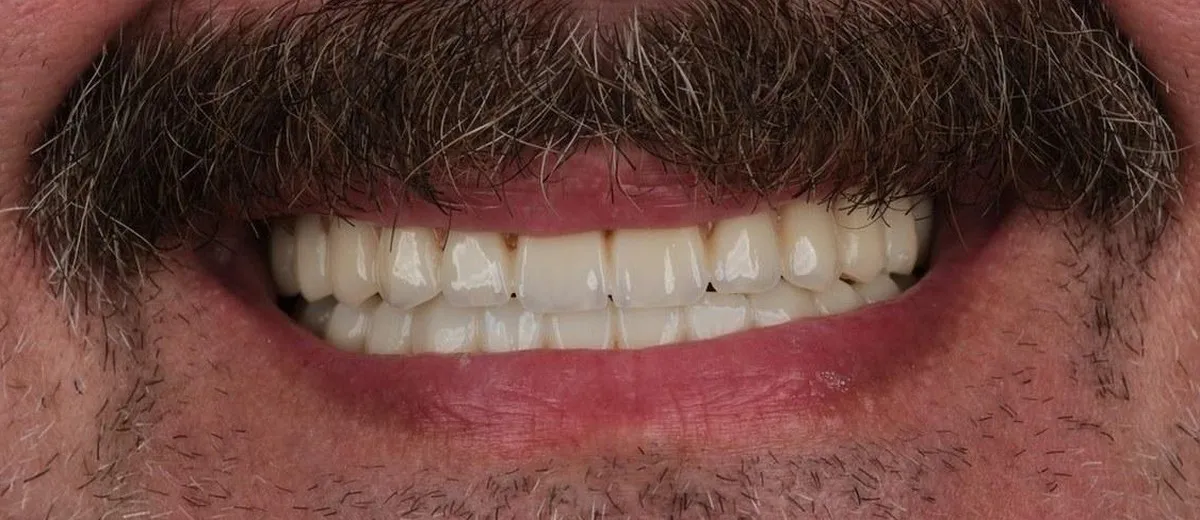
How Long Do Turkey Teeth Last? Veneers, Crowns And Implants
Turkey teeth last as long as the same treatment done anywhere else: typically around 10 to 15 years for Emax veneers, around 15 years or more for zirconia crowns, and decades for a dental implant that has fused with the bone.
They do not last forever, and a badly planned set can fail in a few years. Below is what each treatment should give you, what the research shows, and what makes the difference.
Quick answer · Updated
Turkey teeth typically last around 10 to 15 years for Emax veneers and around 15 years or more for zirconia crowns. A dental implant that has fused with the bone is designed to last for decades, though the tooth fixed to it may need renewing. The materials are the same as in the UK, so lifespan depends on the planning, the fit and how you look after them, not the country.
- Emax veneers
- Around 10 to 15 years
- Zirconia crowns
- Around 15 years or more
- Dental implants
- Decades, once fused with the bone
- Do they last forever?
- No. Veneers and crowns need renewing
- Biggest factor
- Planning, fit and daily care
- Our warranties
- 2 years veneers, 5 crowns, 20 implants
How Long Each Treatment Lasts
"Turkey teeth" is a nickname, not a treatment. It covers veneers, crowns and implants, and each one lasts a different length of time. So the first question is which of the three you are having.
| Treatment | Typical Lifespan | Our Written Warranty |
|---|---|---|
| Emax veneers | Around 10 to 15 years, often longer | 2 years |
| Emax crowns | Around 10 to 15 years, often longer | 5 years |
| Zirconia crowns | Around 15 years or more | 5 years |
| Dental implant | Designed to last for decades once fused with the bone | 20 years, once fused |
| Teeth fixed to implants | Around 10 to 15 years before they may need renewing | 5 years |
These are guides, not guarantees. Plenty of sets pass these figures, and some fall short. Our separate guides go deeper on how long crowns fitted in Turkey last and the lifespan of dental implants from Turkey.
What The Research Says
We are not aware of a published long-term study that follows teeth fitted in Turkey as a group. What exists is good evidence on the materials themselves, which are the same wherever they are fitted.
Emax Ceramic
97.8%
Of single crowns in lithium disilicate, the ceramic sold as Emax, were still in service after five years in a 2014 systematic review [1].
Dental Implants
96.4%
Of implants were still in place after ten years in a 2019 review that pooled 18 studies. Adjusted for patients who dropped out, the figure was 93.2% [2].
The pattern is the same in both. The material rarely fails on its own. When a set fails early, the cause is usually the planning, the fit or the care afterwards.
Do Turkey Teeth Last Forever?
No. Veneers and crowns are a long-term commitment, but the ceramic itself will need renewing at some point. Once a tooth has been prepared for a veneer or crown, it will always need a covering.
That is why whether Turkey veneers are permanent has two answers: the decision is permanent, the veneer is not. It is worth budgeting for a new set roughly every 10 to 15 years.
Implants are different. The implant in the bone is designed to stay for life. The tooth on top wears like any other and can be replaced without touching the implant. Our guide to replacing veneers and crowns fitted in Turkey explains what renewal involves and who can do it.
Get your exact price
Answer a few quick questions and the team will come back to you with exactly what you need and what it costs, fixed in writing. Free, no obligation, and nothing to pay up front.
- 4.9 from 310 reviews
- Licensed dental centre in Antalya
- UK office in Leeds
Free online quote form
Why Some Sets Fail Early
The sets that fail in two or three years have usually been let down by one of these, not by the country they were fitted in.
- Too much tooth removed. Crowns on healthy teeth that only needed veneers leave less tooth to hold everything in place.
- A poor fit at the gum line. Edges that do not sit flush trap plaque, which leads to decay and sore gums underneath.
- Problems left untreated first. Gum disease or decay covered over, not treated, carries on under the new teeth.
- Grinding without a night guard. Clenching in your sleep can chip or loosen ceramic years early.
- Smoking after implants. A 2015 review found smokers had poorer implant outcomes than non-smokers [3].
- No check-ups once you are home. Small problems that a dentist would catch early are left to grow.
Most of these are decided before any treatment starts. Our guides on how much tooth is filed down for Turkey teeth, getting veneers when you have gum disease and veneers for people who grind their teeth cover each one.
How To Make Yours Last
Once the work is done well, how long it lasts is mostly down to you. None of this is complicated.
- Brush twice a day with a non-abrasive toothpaste, paying attention to where the tooth meets the gum.
- Clean between your teeth daily with floss, interdental brushes or a water flosser.
- Wear a night guard if you grind or clench.
- See a dentist once a year and a hygienist as often as they advise.
- Do not use your teeth as tools. No bottle tops, packaging or ice.
- Get small problems looked at early. A chip or a loose edge is usually simple to fix when caught quickly.
Our step-by-step guide to cleaning veneers and crowns covers the daily routine, and aftercare in the first weeks after treatment covers the early days.
What Our Warranties Cover
A lifespan is an estimate. A warranty is a commitment in writing. With UK Smiles you leave the clinic with a written warranty and your treatment record.
- 2 years on veneers.
- 5 years on crowns and on the teeth fixed to implants.
- 20 years on the implants themselves, from the point they have fused with the bone.
Warranties have conditions, such as keeping up with check-ups, and you will see them in writing before you book. Once you are home, our Leeds team is your first contact. See how UK aftercare works after treatment in Turkey, or start with the complete guide to Turkey teeth if you are still deciding.
Frequently Asked Questions
-
How long do Turkey teeth last?
It depends on the treatment. Emax veneers typically last around 10 to 15 years, zirconia crowns around 15 years or more, and a dental implant that has fused with the bone is designed to last for decades. Cleaning, check-ups and whether you grind your teeth matter far more than the country they were fitted in.
-
Do Turkey teeth last forever?
No. Veneers and crowns will need renewing at some point, typically after 10 to 15 years or more. Once a tooth has been prepared it will always need a covering. An implant in the bone is designed to stay for life, but the tooth fixed to it may need replacing.
-
Do Turkey teeth last as long as teeth done in the UK?
They can, because the materials are the same. Emax is the same branded ceramic wherever it is fitted, and zirconia is a standard dental material used in both countries. What decides the lifespan is the planning, how much tooth is removed, the quality of the laboratory work and how you look after them.
-
What happens when Turkey teeth wear out?
They are replaced. The old veneer or crown is removed, the tooth is checked and a new one is made. Any qualified dentist can do this, in the UK or in Turkey. With an implant, the tooth on top can usually be replaced without touching the implant.
-
Do veneers or crowns last longer?
Zirconia crowns usually last a little longer than Emax veneers because they are thicker and stronger. That does not make crowns the better choice. Crowns need more of the natural tooth removed, so the right option is the least invasive one that suits your teeth.
-
How long is the warranty on Turkey teeth with UK Smiles?
Two years on veneers, five years on crowns and on the teeth fixed to implants, and twenty years on the implants themselves once they have fused with the bone. You receive the warranty in writing, with its conditions, before you book.
The quickest way to know what would suit your own teeth is a real plan. Answer a few questions, send a photo of your smile, and the team will come back with what you need and the full price in writing. There is no payment up front.
Sources
- Pieger S, Salman A, Bidra AS. Clinical outcomes of lithium disilicate single crowns and partial fixed dental prostheses: a systematic review. The Journal of Prosthetic Dentistry, 2014. PubMed.
- Howe MS, Keys W, Richards D. Long-term (10-year) dental implant survival: a systematic review and sensitivity meta-analysis. Journal of Dentistry, 2019. University of Liverpool repository.
- Chrcanovic BR, Albrektsson T, Wennerberg A. Smoking and dental implants: a systematic review and meta-analysis. Journal of Dentistry, 2015. Summary: The Dental Elf.